

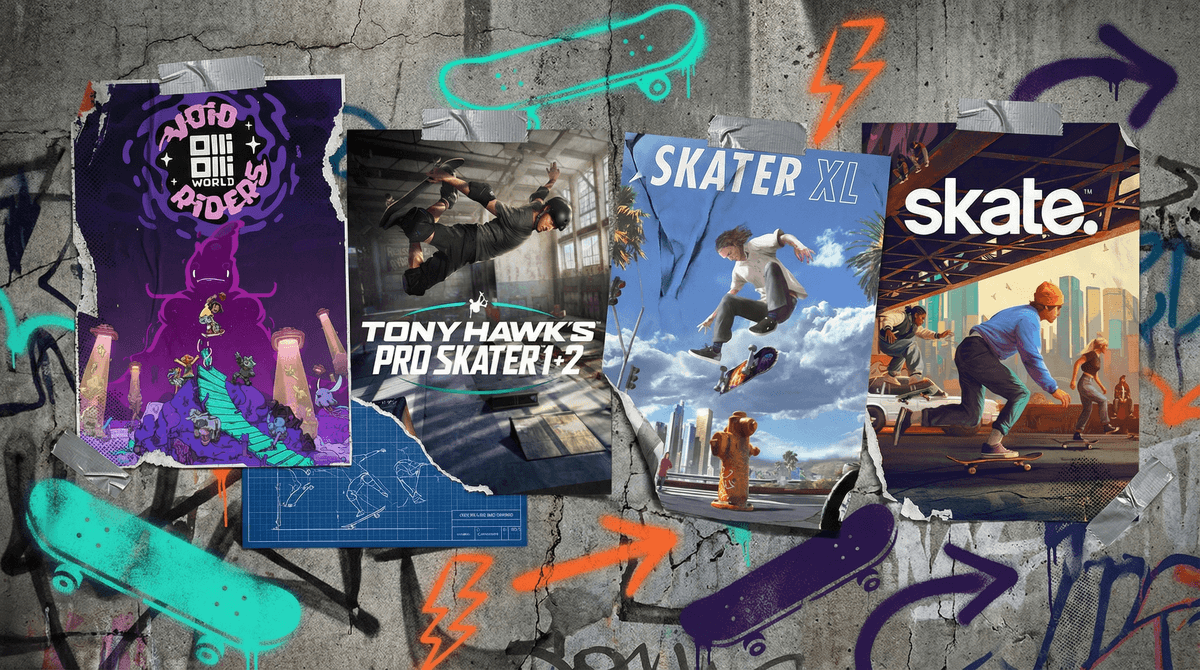
Skateboarding games are video games where players perform tricks, build combos, and navigate skate parks or open-world environments on a virtual skateboard. The genre exploded in the late '90s with the Tony Hawk's Pro Skater series and has evolved into something surprisingly sophisticated—blending arcade action with realistic physics simulations.
The modern landscape includes everything from the pick-up-and-play fun of OlliOlli World to the hardcore realism of Skater XL. Then there's Session: Skate Sim, which treats skateboarding like a genuine sport requiring practice and patience, and the upcoming Skate reboot that has the skateboarding community genuinely excited.
Unlike many competitive shooters or battle royale games, skateboarding games tend to be solo experiences focused on personal progression. There's competition, sure, but it's often against your own previous best score rather than toxic voice chat with strangers.
The appeal is pretty straightforward: skateboarding looks cool, but learning to actually skateboard is hard, painful, and requires a skate park. Skateboarding games let kids experience the creative flow state of landing a perfect line without the scraped knees and $150 setup cost.
But here's what surprised me when I dug into this genre—kids aren't just button-mashing. They're learning combo systems that reward creativity and experimentation. In Tony Hawk games, you're chaining grinds, flips, and manuals into increasingly complex sequences. In the more realistic sims, you're learning actual skateboarding terminology and physics—how weight distribution affects your board, why timing matters for flip tricks, how momentum works.
There's also a genuine creative element. Many skateboarding games include park editors where kids design their own skate spots. They're essentially doing level design—thinking about flow, challenge progression, and aesthetic. Some of these custom parks show real spatial reasoning and design thinking.
And let's be honest: the soundtracks absolutely slap. Tony Hawk's Pro Skater introduced an entire generation to punk, hip-hop, and ska. These games are often kids' first exposure to music curation as an art form.
Here's where skateboarding games get interesting from a developmental perspective: they teach persistence through failure in a way that feels natural.
In a realistic skateboarding sim, you're going to bail. A lot. Landing a kickflip down a stair set might take 50 attempts. But because skateboarding culture celebrates the grind (pun intended), this repetition doesn't feel like grinding—it feels like practice. Kids internalize that mastery requires repetition, which is honestly a better lesson than many "educational" games teach.
There's also legitimate physics learning happening, even if kids don't realize it. Understanding how angular momentum affects rotation, how gravity impacts hang time, how friction works on different surfaces—this is all embedded in gameplay. The realistic sims especially require players to develop an intuitive understanding of physics to succeed.
And the combo systems? Those are teaching pattern recognition, timing, and risk-reward calculation. Do you end your combo now for a guaranteed score, or risk it for one more trick that might complete a challenge but could also cause you to bail and lose everything?
Ages 6-9: OlliOlli World is your sweet spot here. It's colorful, welcoming, has a positive vibe, and is forgiving enough for younger kids while still teaching the core concept of chaining tricks. The 2D perspective makes it easier to grasp than 3D games.
Ages 10-13: This is prime Tony Hawk's Pro Skater 1+2 territory. The remastered version looks gorgeous, the gameplay is accessible but deep, and the music is legitimately good. It's arcade-style enough to be fun immediately but has enough depth to reward practice. Also works great for the whole family—parents who played the originals will have a blast.
Ages 14+: If your teen is genuinely interested in skateboarding culture or wants a challenge, the realistic sims like Skate or Session: Skate Sim offer something special. These require patience and practice, but they're teaching actual skateboarding fundamentals. Fair warning: the learning curve is steep, and some teens will bounce off. That's fine—not every game needs to be for everyone.
Content-wise, skateboarding games are remarkably clean. Most are rated E10+ or Teen. You're not dealing with violence, sexual content, or the toxic social dynamics of online multiplayer games. The worst you'll encounter is some punk rock lyrics and the occasional cartoon bail animation.
The online components, when they exist, are usually pretty chill. Skateboarding culture tends to be more supportive than competitive. Players share custom parks, clips of cool tricks, and tips. It's one of the few gaming communities where "that was sick!" is more common than trash talk.
Microtransactions exist but aren't predatory. Some games sell cosmetic items (different boards, outfits, etc.), but the core gameplay is never locked behind paywalls. This isn't Fortnite or Roblox where kids feel pressure to spend.
Screen time consideration: These games naturally create stopping points. You complete a challenge, land a specific trick, finish a park. Unlike open-world games that use psychological tricks to keep you playing "just one more mission," skateboarding games have clear endpoints that make it easier for kids to self-regulate.
The real skateboarding connection: Some kids who get into skateboarding games develop genuine interest in actual skateboarding. If your kid starts asking about a real board, that's honestly a great sign—they're interested in translating a digital skill into physical activity. Learn more about supporting this transition from screen to street .
.
Skateboarding games are one of those rare genres where the benefits genuinely outweigh the concerns. They're teaching perseverance, creativity, physics, and risk assessment while being relatively low on the parental worry scale.
If your kid is into them, you're probably fine. If they're not, no need to force it—but if you're looking for a game that you can feel good about, that might actually teach something useful, and that won't result in rage-quitting or toxic online interactions, skateboarding games are worth considering.
And hey, if you grew up playing Tony Hawk's Pro Skater, this might be one of those rare opportunities to share something from your gaming past that actually holds up. The remaster is genuinely excellent.
- Try before you buy: Many skateboarding games have demos or are available through subscription services like Xbox Game Pass
- Start accessible: OlliOlli World or Tony Hawk's Pro Skater 1+2 are better entry points than the realistic sims
- Watch together: Skateboarding games are actually fun to watch—the creative combos and spectacular bails make for good shared screen time
- Explore the culture: If your kid gets into these games, YouTube has tons of actual skateboarding content that's positive and skill-focused
- Consider the real thing: If interest develops, skateboarding is genuinely great exercise that builds confidence and community
Want to explore more games that teach without preaching? Check out our guide to games that build real skills.