

SciShow Kids: Science Education That's Actually Fun
TL;DR: SciShow Kids is one of the best science YouTube channels for elementary-aged kids, hosted by Jessi Knudsen Castañeda and featuring Squeaks the chinchilla puppet. It covers everything from animal senses to volcanoes with genuine educational value and zero brain rot. Perfect for ages 4-9, though older kids who love science will enjoy it too.
SciShow Kids is a YouTube channel that makes science accessible and exciting for young learners. It's part of the larger SciShow family (which creates science content for adults and teens), but this channel is specifically designed for elementary-aged viewers.
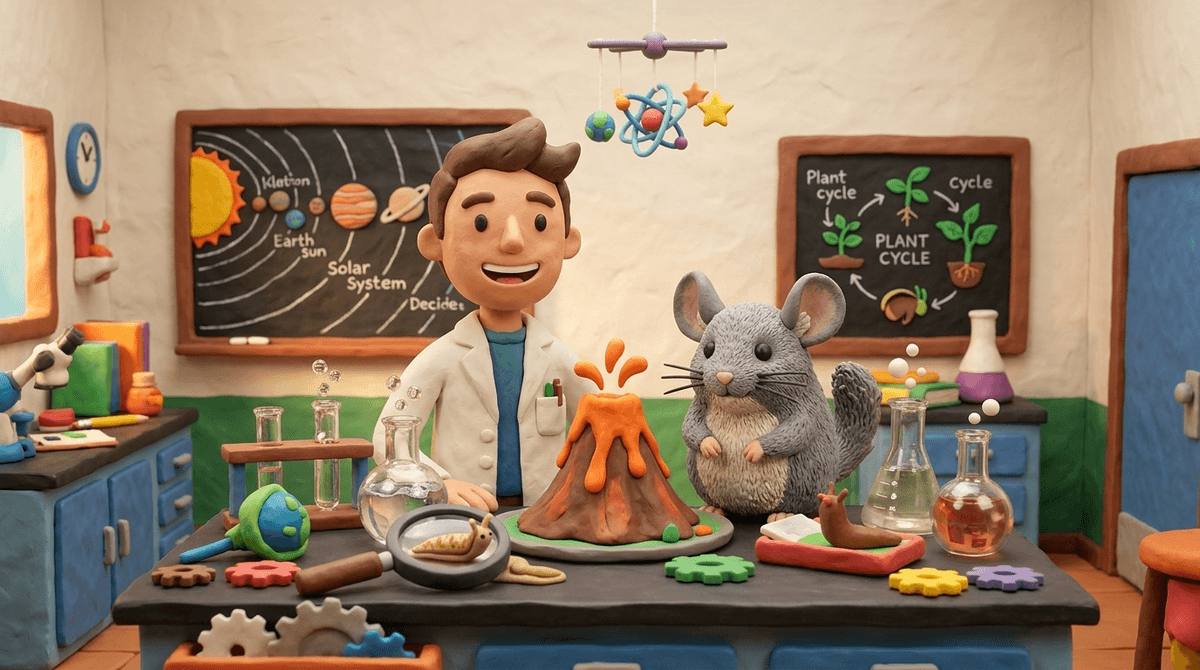
The format is simple but effective: host Jessi Knudsen Castañeda teams up with Squeaks, an adorable chinchilla puppet, to explore scientific concepts through experiments, observations, and kid-friendly explanations. Think of it as a modern-day Bill Nye or Magic School Bus, but optimized for the YouTube generation.
Recent compilations include topics like "The Yuckiest Animals" (covering slimy slugs and dung beetles) and "Your Body's Senses" (exploring how we have more than just five senses). The channel also dives into geology with volcano episodes and animal science with explorations of different species' unique abilities.
Squeaks is the secret weapon here. The puppet sidekick asks questions the way kids actually think, makes mistakes, and gets excited about gross or weird things. When you're explaining why slugs are slimy or how volcanoes explode, having a relatable character who thinks poop is funny makes the science feel less like a lecture and more like a conversation with a friend.
The pacing is also spot-on for younger attention spans. Videos typically run 4-6 minutes for individual topics, with longer compilation videos available for kids who want to go deeper. There's no filler, no annoying sound effects, and no hyperactive editing that makes you want to throw your phone out the window.
Plus, the topics genuinely match what elementary kids are curious about. Volcanoes? Check. Gross animals? Double check. How your body works? They're all over it. The channel respects kids' natural curiosity instead of dumbing things down.
Here's where SciShow Kids stands out from the ocean of YouTube content competing for your kid's attention. The channel is produced by Complexly, a company founded by Hank and John Green (yes, the Vlogbrothers/Crash Course folks), and the educational rigor shows.
The science is accurate. They're not making stuff up or oversimplifying to the point of being wrong. When they explain concepts like different types of volcanoes or how animal senses work, they're teaching real scientific vocabulary and processes.
They model scientific thinking. Episodes often include experiments, observations, and the kind of questioning that actual scientists use. "Let's find out" is a recurring theme, not "here's what you need to memorize."
The content aligns with elementary science standards. Topics like life cycles, habitats, earth science, and body systems are all core curriculum areas. Your kid watching SciShow Kids isn't just being entertained—they're actually reinforcing what they're learning in school.
About 42% of families let their elementary-aged kids use YouTube solo, while 38% supervise, and 20% don't use YouTube at all. If you're in that supervised or solo group, SciShow Kids is exactly the kind of channel you want in the rotation.
Only 20% of families use YouTube Kids (the separate app designed for younger viewers), which means most parents are navigating regular YouTube with their kids. SciShow Kids works great on either platform, but if you're on regular YouTube, you'll want to be more intentional about setting up parental controls or creating a supervised account.
The channel has over 1.9 million subscribers and videos regularly get hundreds of thousands of views, so there's a massive library of content to explore. That's both good (lots of material!) and potentially overwhelming (where do you even start?).
Ages 4-6: Perfect entry point for preschool and kindergarten kids, especially with parent co-viewing. The puppet format and visual demonstrations work really well for this age. Start with animal episodes—they're the most engaging for younger viewers.
Ages 7-9: The sweet spot. Second through fourth graders can watch independently and will absorb the most from the content. They're old enough to follow more complex explanations but young enough to still be charmed by Squeaks.
Ages 10+: Still valuable for science-loving kids, though some may feel they've outgrown the puppet format. If your older elementary kid is into this, that's great—it means they're prioritizing learning over looking "cool," which is honestly a win. They might also enjoy the main SciShow channel for more advanced content.
Start with compilations. The longer compilation videos (20-30 minutes) are great for when you need a chunk of screen time that's actually worthwhile. They're themed, so you can pick based on your kid's current interests.
Use it as a springboard. After watching an episode about volcanoes, pull out baking soda and vinegar for a hands-on experiment. After learning about animal senses, go outside and observe how your pet or local wildlife behaves. The channel works best when it sparks curiosity that extends beyond the screen.
Make it part of "learning screen time." If you're trying to balance entertainment and education in your family's media diet, SciShow Kids is an easy win. It's engaging enough that kids don't feel like they're being forced to watch something educational, but substantive enough that you feel good about the time spent.
Create a playlist. YouTube's algorithm isn't always kid-friendly, even on great channels. Take 10 minutes to build a playlist of SciShow Kids videos you've previewed and approved. This prevents the autoplay rabbit hole that leads to... less desirable content.
It's genuinely ad-free on the educational level. There are no product placements, no toy reviews disguised as content, no "subscribe and smash that like button" nonsense. The channel is supported by viewers through Patreon and doesn't rely on the typical YouTube creator monetization tactics.
The host is consistent. Jessi has been the primary host for years, which means there's a reliable, familiar presence. No random guest hosts or format changes that throw off younger viewers who like routine.
Topics can get "gross" in a good way. The channel doesn't shy away from things like animal poop, mucus, or bugs. For most kids, this is a feature, not a bug. But if you have a particularly squeamish child, you might want to preview episodes about bodily functions or "yucky" animals.
It's not interactive. Unlike some educational platforms, SciShow Kids is passive viewing. There are no quizzes, no games, no pause-and-answer moments. That's fine for what it is, but it means you might want to supplement with hands-on activities or discussion.
Compared to other science content on YouTube, SciShow Kids hits a rare sweet spot. It's more educational than Blippi (which is more entertainment than education), more age-appropriate than the main SciShow channel, and more engaging than many school-produced educational videos.
If your kid likes SciShow Kids, they might also enjoy Crash Course Kids (for slightly older elementary students) or Brains On! (a science podcast that's perfect for car rides).
For families trying to find alternatives to mindless YouTube watching, this channel is proof that the platform can be used intentionally. The key is curation—choosing specific channels and videos rather than letting the algorithm decide what's next.
SciShow Kids is one of those rare YouTube channels that delivers on the promise of educational entertainment. It's well-produced, scientifically accurate, age-appropriate, and actually engaging for kids. If you're going to have YouTube as part of your family's media diet, this is exactly the kind of content worth prioritizing.
The channel won't replace hands-on science exploration, but it's an excellent complement. It can spark curiosity, introduce vocabulary, and make concepts more concrete when your kid encounters them in school.
Next Steps:
- Check out the SciShow Kids channel and watch a few episodes with your kid
- Create a playlist of approved videos to prevent algorithm drift
- Set up YouTube parental controls if you haven't already
- Find other educational YouTube channels for your kid's age
 for your kid's age and interests
 - Follow up episodes with hands-on activities or library books on the same topics
Science education doesn't have to be boring, and SciShow Kids proves it. Your kid learning about dung beetles while genuinely laughing? That's a screen time win.