

School-issued software designed to keep students safe is being used to punish them instead, with the heaviest burden falling on students with disabilities and those in the LGBTQ+ community.
Remote monitoring and content filtering tools disproportionately flag marginalized students for disciplinary action, often without clear rules or parental consent.
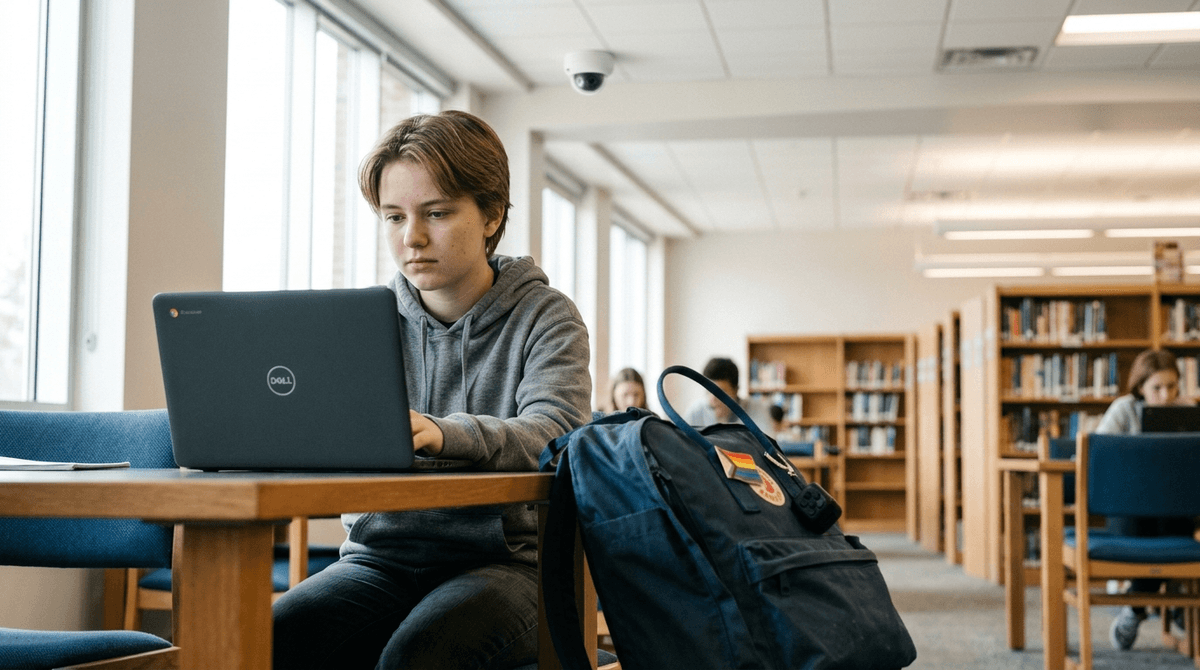
Your child’s school laptop is likely a surveillance device that can trigger law enforcement contact or "out" them without your knowledge. While these tools are marketed as suicide prevention or safety measures, they are frequently used to police behavior and academic integrity in ways that create permanent disciplinary records.
For parents of children with learning differences or those in the LGBTQ+ community, the stakes are higher. These automated systems are more likely to flag non-standard behaviors or identity-related research, leading to unfair scrutiny and a loss of trust between the student and the institution.
Schools rushed to adopt digital monitoring tools during the pandemic to bridge the gap between home and classroom, but the policy guardrails never caught up with the technology. The Center for Democracy and Technology found a growing "surveillance gap" where the tools intended to protect students are being repurposed for discipline.
This shift is happening because automated monitoring is cheaper and faster than hiring more human counselors. School districts often sign contracts for these services without a full understanding of the algorithms involved or a plan for how to handle the data they collect, leaving students and parents in the dark about how "safety" is actually being defined.
Monitoring software is creating a pipeline from digital activity to disciplinary records that targets specific demographics.
- Special education teachers report that their students are flagged or disciplined by surveillance technology at significantly higher rates than their peers in general education.
- Title I schools—those serving higher concentrations of low-income students—often implement more intrusive monitoring than wealthier districts, further widening the equity gap.
- Content filters originally designed to block adult content are now being used to restrict access to legitimate educational resources about race, gender history, and LGBTQ+ issues.
- Discipline for AI use is occurring in a vacuum; many students are being punished for using generative AI before their schools have established clear rules or provided any training on what constitutes "cheating."
- Lack of transparency is the norm; a majority of students, parents, and teachers say they want more involvement in how this technology is selected and used, yet they remain excluded from the decision-making process.
Schools are essentially using "black box" algorithms to make life-altering decisions about student safety and discipline. Because these tools are often proprietary, parents can't see the specific keywords or behaviors that trigger an alert. This creates a "chilling effect" where students avoid searching for mental health resources or participating in academic discussions because they know they are being watched.
The report also implies a massive tech-debt problem: schools have the budget to buy the software, but they don't have the staff to interpret the data responsibly. This leads to automated reports being sent directly to law enforcement or administrators who lack the context of the student’s specific situation or learning plan.
These findings are based on self-reported survey data from mid-2023, which relies on the perceptions and memories of students and teachers rather than a direct audit of school records. The report was produced by the Center for Democracy and Technology, an advocacy group, and while they follow a longitudinal research track, this specific paper has not undergone the same peer-review process as an academic journal. Additionally, the summary does not specify the exact sample size for the most recent cohort, which makes it harder to determine the precise margin of error.
- If your child has an IEP or 504 plan, ask the school's technology coordinator for a written list of all monitoring software installed on their device and how "off-task" behavior is defined for students with learning differences.
- If your child is starting a research project on social issues, test the school’s filters with them to see if legitimate educational sites are being blocked, and request an override from the librarian if necessary.
- If your school uses AI detectors, ask for the district's policy on "false positives," as many of these tools incorrectly flag students who use assistive technologies or who are English language learners.
- If you are concerned about privacy, ask the school board to clarify if student search data is shared with third-party law enforcement agencies and what specific "keywords" trigger an automatic report.
You have the right to demand that "safety" software isn't used as a tool for automated discipline or the restriction of educational content. Schools must prioritize student privacy and equity over the convenience of a dashboard that flags kids for being different or for using the tools they were given to learn.
Unknown authors (n.d.). Report - Off Task: EdTech Threats to Student Privacy and Equity in the Age of AI. Center for Democracy and Technology. — cdt.org