

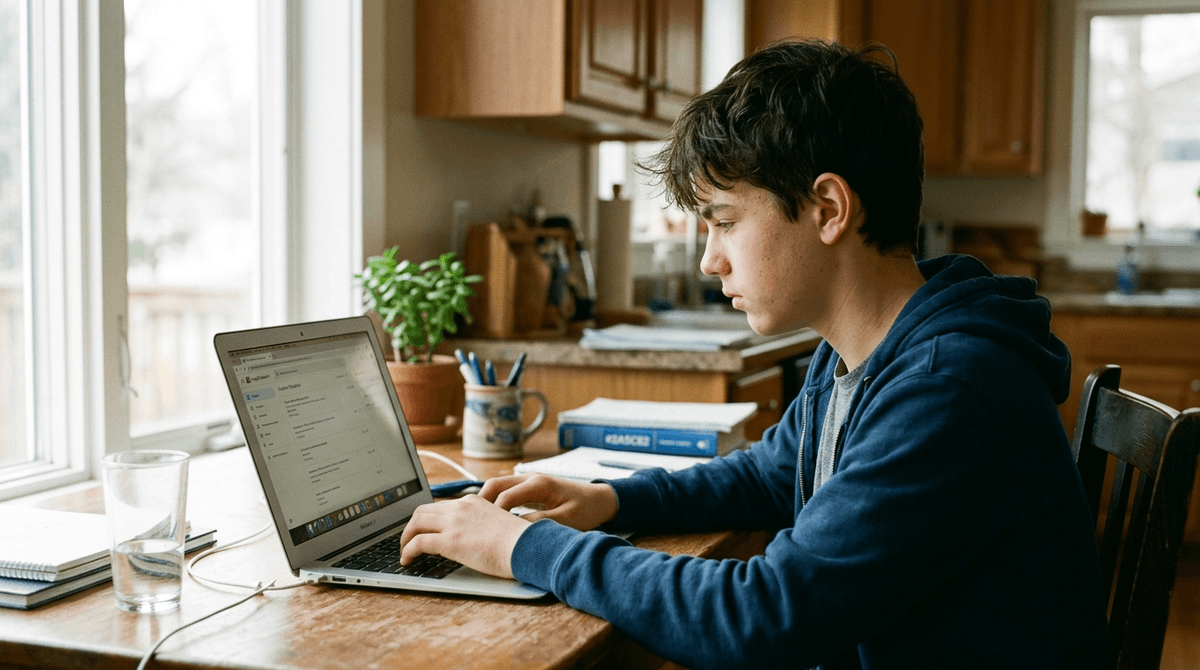
School monitoring software intended to keep students safe often triggers disciplinary action or police intervention instead of providing mental health support. This technology creates a "chilling effect" that discourages kids from using the internet to learn about sensitive topics like identity or mental health.
Software used by schools to monitor student devices frequently triggers disciplinary actions or police involvement rather than providing support. It creates a digital surveillance environment where kids avoid researching sensitive but important topics—like mental health, sexual health, or identity—to avoid being flagged by an algorithm.
This isn't just about what happens during school hours; it is about the device sitting on your kitchen table tonight. If your child uses a school-issued laptop to search for help with depression or to understand their identity, an automated alert could notify school administrators or even local law enforcement before you are ever contacted.
For many families, especially those without multiple computers at home, the school-issued device is the only gateway to the internet. This means the most vulnerable students are often the most heavily surveilled. Understanding that these devices are not private tools but monitored terminals changes how you must talk to your child about their digital footprint and their safety.
School districts have rapidly adopted AI-driven monitoring software, often motivated by a desire to prevent self-harm or school shootings. Federal funding and pressure to ensure student safety have led to a "safety at all costs" mentality. However, there has been very little public data on the unintended consequences—specifically how these systems function as a digital pipeline to the principal's office rather than a bridge to a counselor.
Schools are watching, and the results are often punitive.
- Nine out of ten secondary school teachers report that their schools use student activity monitoring technology.
- Forty-four percent of teachers say a student in their school has been contacted by law enforcement because of these software alerts.
- About a third of LGBTQ+ students report that they or someone they know were involuntarily "outed" to adults by this software.
- Black, Hispanic, and LGBTQ+ students experience disproportionate harms and disciplinary consequences compared to their peers.
- Monitoring often targets "inappropriate content," which leads students to restrict their own speech and research to avoid being flagged.
While marketed as a safety net, these systems often lack the human context necessary to distinguish between a cry for help and a homework assignment. The software essentially outsources "safety" to algorithms that prioritize flagging over understanding. This creates a trap: the very students who need the most support are the ones most likely to be punished because their private struggles are instantly visible to school authorities.
The "chilling effect" is perhaps the most insidious outcome. When kids know they are being watched, they stop seeking information that could actually help them. A student struggling with their identity or a mental health crisis may avoid life-saving resources because they don't want an automated alert to land them in the principal's office or lead to an uncomfortable conversation with a parent they aren't ready to talk to yet.
The primary data in this report is based on a small sample of 20 parent interviews. These parents were specifically chosen because their children had already experienced negative consequences from monitoring, which naturally focuses the findings on harms rather than potential "saves" where a life might have been protected. While the report uses broader 2022 survey data to provide context, the specific stories here illustrate worst-case scenarios rather than the average student experience.
- If your child uses a school-issued device at home... assume it is being monitored 24/7 and instruct them to treat it as a public computer rather than a private personal device.
- If your child needs to research sensitive topics... encourage them to use a personal device, a library computer, or your own phone if they want to ensure their search doesn't trigger a school alert.
- If you are concerned about school overreach... ask your school district for a clear, written policy on what triggers an alert and exactly who is notified (police vs. parents) when one occurs.
- If you want to protect your child's record... advocate for a "parent-first" response model where the school is required to contact the family to resolve non-emergency alerts before involving disciplinary channels or law enforcement.
School-issued devices are surveillance tools, not private property, and the software watching them often prioritizes discipline over actual student well-being. You should talk to your kids about the reality of being watched and ensure they have a "safe" way to access information that doesn't involve a school-monitored screen.
Unknown authors (n.d.). Report – Beyond the Screen: Parents’ Experiences with Student Activity Monitoring in K-12 Schools. Center for Democracy and Technology. — cdt.org