

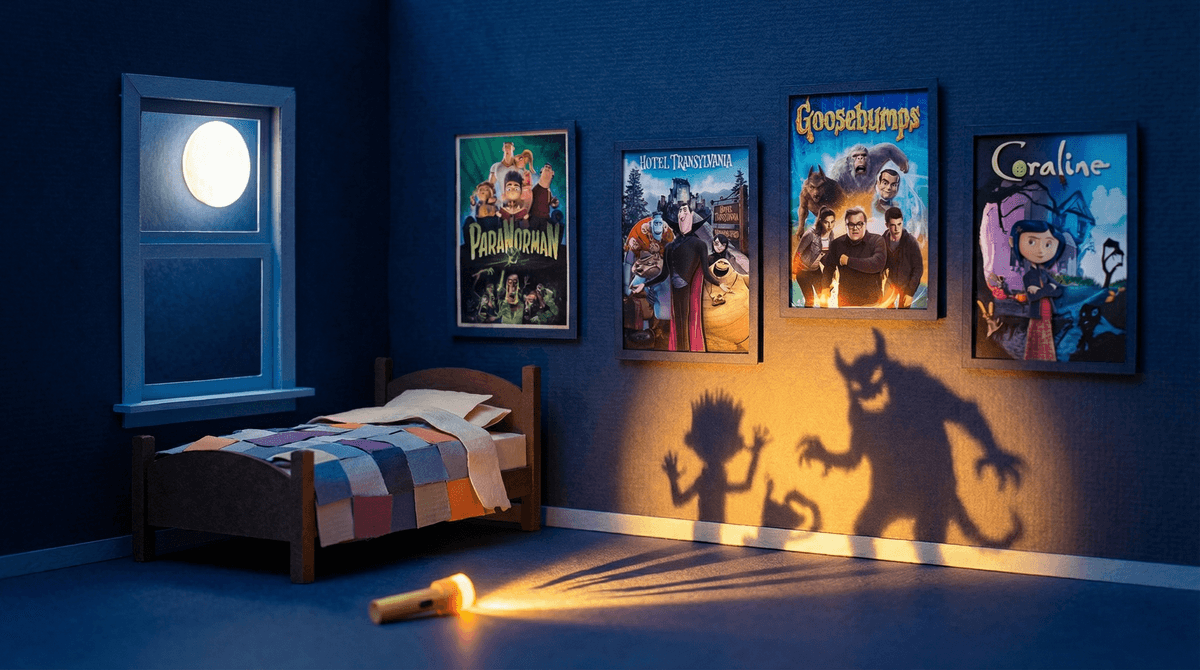
Look, "scary movies for kids" sounds like an oxymoron, right? Like "jumbo shrimp" or "fun dental work." But here's the thing: kids are obsessed with being scared. They want to test their bravery, experience adrenaline in a safe way, and honestly? They want to feel like they're getting away with something slightly forbidden.
The tricky part is finding that sweet spot between "wow, that was thrilling!" and three weeks of sleeping with the lights on. Because let's be real—one kid's exciting adventure is another kid's ticket to your bed at 2am for the next month.
Scary movies for kids range from the genuinely age-appropriate spooky content (think Coraline or Goosebumps) to the stuff that's technically rated PG-13 but might be fine for your mature 11-year-old. Or might not be. It's complicated.
Kids seek out scary content for a bunch of legitimate developmental reasons:
They're testing boundaries. Scary movies let them practice managing fear in a controlled environment. It's like emotional weightlifting—they're building their capacity to handle uncomfortable feelings.
It makes them feel grown up. Being able to handle something scary is a badge of honor. It's social currency at school. "Oh, you watched Goosebumps? I watched A Quiet Place" (which, by the way, is NOT for most kids, despite what they tell you).
The adrenaline rush is real. That spike of cortisol followed by the relief of safety? It's genuinely pleasurable for many kids. It's why they love roller coasters and haunted houses too.
Peer pressure is intense. If everyone at school is talking about the latest horror movie on Netflix, your kid wants in on that conversation. FOMO is powerful.
Here's the reality: age ratings are guidelines, not gospel. You know your kid better than the MPAA does. But here's a general framework:
Ages 5-7: Gateway Spooky
At this age, we're talking about mild scares with clear resolution. Think:
- Hotel Transylvania (monsters are silly, not scary)
- Monsters, Inc. (the whole point is monsters aren't actually scary)
- Casper (friendly ghost vibes)
The scary elements should be brief, clearly fantasy, and resolved quickly. No lingering dread, no jump scares that actually land, no threatening the safety of beloved characters in believable ways.
Ages 8-10: Creepy But Safe
This is the Goosebumps sweet spot. Kids can handle:
- Sustained suspense (but not dread)
- Mild peril to characters they care about
- Spooky atmospheres and creepy visuals
- Jump scares that are more surprising than traumatizing
Good picks:
- Coraline (genuinely creepy but ultimately about bravery)
- ParaNorman (zombies, but make it heartfelt)
- The Spiderwick Chronicles (fantasy creatures with some genuine scares)
- Gremlins (PG but has some intense moments—preview first)
Ages 11-13: Real Scares Territory
Middle schoolers can often handle PG-13 horror, but this is where individual differences matter most. Some 11-year-olds are ready for A Quiet Place, others are still perfectly happy with Hocus Pocus.
At this age, they can process:
- Sustained tension and dread
- More realistic threats (not just fantasy monsters)
- Complex themes about death and danger
- Strategic jump scares
- Some gore (but this varies wildly by kid)
Consider:
- The Goonies (adventure with scary moments)
- Jurassic Park (PG-13 for good reason)
- Jaws (classic suspense, but the shark scenes are intense)
- Stranger Things (TV-14, but wildly popular with this age group)
Ages 14+: Entering Real Horror
High schoolers can generally handle actual horror films, but you still want to be thoughtful about extreme violence, sexual content, and psychological horror that might hit too close to home.
The "everyone else has seen it" claim is usually exaggerated. When your 10-year-old says everyone in their class watched Five Nights at Freddy's, they mean like three kids who have older siblings and no bedtime. Don't let FOMO drive your decisions.
Preview it yourself or use detailed reviews. Common Sense Media is your friend here. Read the parent reviews, not just the age recommendation. One person's "mild peril" is another person's nightmare fuel.
The scariest part might not be what you expect. Sometimes it's not the monster—it's the scene where the parents don't believe the kid, or when the dog is in danger, or the moment of betrayal. Kids process threats differently than adults.
Desensitization is a real concern. If your kid is binging horror content constantly, they're either building genuine resilience or becoming numb to things that should bother them. Pay attention to whether they're processing what they're watching or just consuming it.
Watch together when possible. Your presence is a buffer. You can gauge their reactions in real-time, pause if needed, and talk through scary parts. Plus, you're there for the inevitable "can we talk about something else before bed?" conversation.
Have an exit strategy. Make it clear before you start that it's totally fine to turn it off if it's too much. No shame, no teasing. This isn't about toughness—it's about finding appropriate challenges.
Some signs a movie was too much:
- Sleep disruption lasting more than a few days
- New fears or anxieties that persist
- Aggressive or violent play that mimics the content
- Wanting to watch it over and over (sometimes kids do this to process, but it can also indicate they're trying to master anxiety)
- Nightmares or night terrors
If you see these, dial it back. There's no prize for pushing through.
Scary movies can be a genuinely positive part of childhood—they teach emotional regulation, provide shared cultural experiences, and help kids practice courage. But the key word is appropriate.
Start mild and work your way up. Trust your gut about your specific kid. A sensitive 12-year-old might not be ready for what a tough 9-year-old can handle, and that's completely fine.
And remember: if you accidentally let them watch something too scary, you haven't ruined them forever. You've just signed up for some extra cuddles and maybe a few nights of musical beds. We've all been there.
Want age-specific recommendations? Check out our guides for movies for 8-year-olds, movies for 10-year-olds, or movies for tweens.
Dealing with scary content on YouTube or TikTok? That's a whole different animal. Learn about managing scary content on social platforms .
.
Already dealing with nightmares? Here's how to help your kid process scary content they've already seen.
The goal isn't to shield kids from all fear—it's to help them build the skills to handle it. You've got this.