

TL;DR
Saving Private Ryan is the gold standard for WWII films, but it’s also one of the most visceral, violent experiences in cinema history. If your teen is asking to watch it, they’re likely ready for a history lesson, but maybe not for the sheer trauma of the opening 20 minutes.
- Best for: Ages 15+ (with a few exceptions for mature 14-year-olds).
- The Vibe: Intense, heartbreaking, and deeply respectful of history.
- Key Media Mentions: Call of Duty, Band of Brothers, 1917, Dunkirk.
- Quick Recommendation: Watch it with them. This isn't a "leave them alone with the iPad" kind of movie.
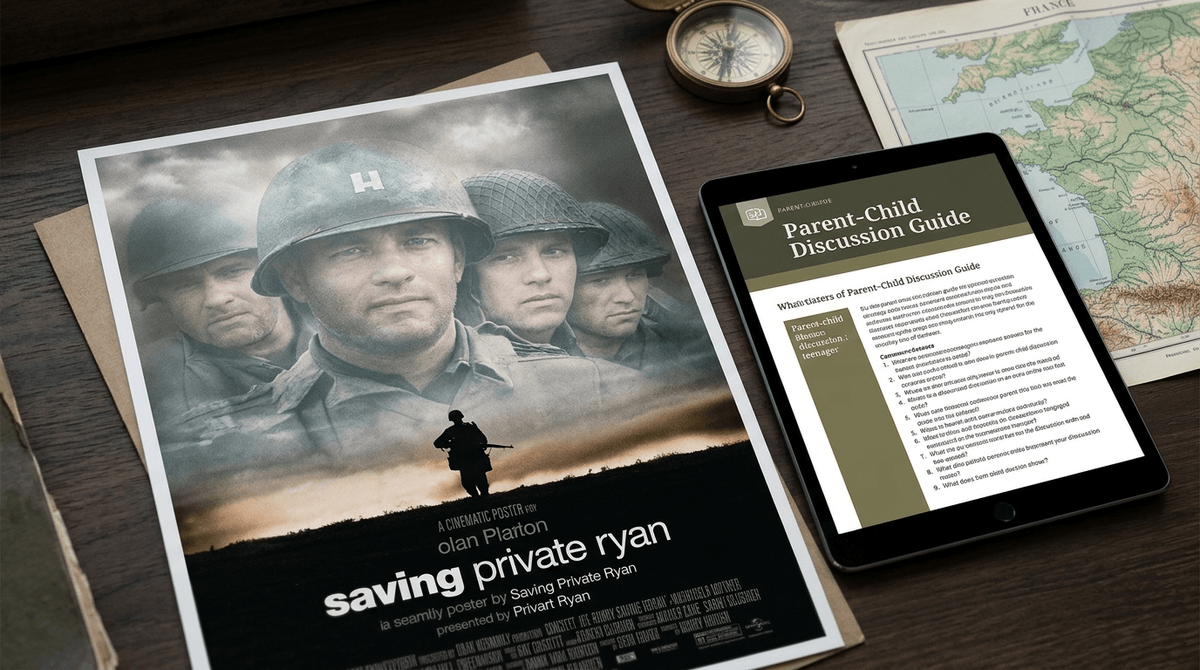
Released in 1998, Steven Spielberg’s masterpiece follows Captain John Miller (Tom Hanks) and his squad as they go behind enemy lines in Nazi-occupied France to find Private James Ryan. Why? Because Ryan’s three brothers were all killed in action within days of each other, and the U.S. military wants to send the last surviving son home to his mother.
It’s a story about the "math" of war—is the life of one man worth the lives of eight others? But more than the plot, the movie is famous for its hyper-realistic depiction of the D-Day invasion at Omaha Beach. It changed how war movies were made forever.
If your kid is into gaming, they’ve likely "played" D-Day a dozen times in Call of Duty or Battlefield. In those games, war is a challenge to be won, a series of respawns, and a way to level up. Saving Private Ryan is the necessary antidote to that "gamified" version of combat.
It shows the "Ohio" of 1944—meaning, the absolute weirdness, chaos, and terrifying reality of what these 19-year-olds actually went through. It bridges the gap between a history textbook and the lived experience of veterans. In fact, when it was released, the VA had to set up a special hotline for WWII vets because the movie was so accurate it triggered their PTSD. That’s the level of intensity we’re talking about.
We need to talk about the "gore" factor without pulling punches. This isn't Marvel "disappearing into dust" violence.
- The Beach: You will see limbs lost, intestines exposed, and men screaming for their mothers while they bleed out in the sand.
- The "Knife Scene": There is a hand-to-hand combat scene later in the movie that many parents (and kids) find even more disturbing than the big explosions because it is slow, intimate, and agonizing.
If your kid is sensitive to "body horror" or realistic suffering, this movie will be a lot. However, unlike "brain rot" horror movies that use gore for cheap thrills, every drop of blood here is intended to honor the sacrifice of the soldiers.
Ages 12 and Under: Hard No
Even if they play Fortnite or watch older war movies, Saving Private Ryan is too much. The psychological weight and the graphic nature of the injuries are likely to cause nightmares. There are better ways to introduce WWII history to this age group, like The Book Thief.
Ages 13-14: The "Maybe" Zone
This depends entirely on your kid's maturity. Are they asking because they want to see "cool explosions," or are they genuinely interested in history? If you decide to let them watch, be the "cool but cautious" parent: sit on the couch with them. Be ready to hit pause and talk. If they look like they’re checking out or getting overwhelmed, it’s okay to turn it off and try again in two years.
Ages 15-17: The Sweet Spot
At this age, most teens are ready to handle the themes of sacrifice and the brutal reality of combat. It’s a rite of passage. Many high school history teachers actually show clips of this movie. It’s a great time to discuss the ethics of the mission and the "fubar" (an acronym they'll learn in the movie) nature of bureaucracy.

If you’re not sure they’re ready for the full Spielberg experience, or if they loved it and want more "intentional" media, check these out:
Often considered the companion piece to Private Ryan, this miniseries follows Easy Company from jump training through the end of the war. It’s still very violent, but because it’s a series, you get much deeper character development. It feels like a long-form history lesson.
Christopher Nolan’s take on the British evacuation. It’s PG-13, so it’s much less "bloody" than Private Ryan, but it is incredibly tense. It uses sound and editing to create anxiety rather than relying on gore. It's a great "starter" serious war movie.
If your teen is a gamer, they will love the "one-shot" cinematography of this WWI film. It feels like a high-stakes mission in a video game but maintains the gravity of the Great War.
For a weird, "history-adjacent" vibe that’s a bit more sci-fi but uses real archival footage styles, this is an interesting pivot for kids who like "What If?" scenarios.
Don't just finish the movie and say "Well, that was sad." Use these prompts to see if they actually processed what they saw:
- The Mission: Captain Miller says, "I just hope that with everything we're going through to find him, that he's worth it. He'd better go home and cure a disease, or invent a longer-lasting light bulb." Does James Ryan have to be a "hero" to be worth saving?
- The Gaming Gap: How does this compare to playing Call of Duty? Does it make the game feel different now?
- The Opening: Why do you think Spielberg chose to make the first 20 minutes so hard to watch? Why not just skip to the story?
- The Ending: What does "Earn this" mean to you?
Saving Private Ryan is a masterpiece, not "brain rot." It is a heavy, meaningful, and educational experience that can spark incredible conversations about history, ethics, and masculinity.
However, it is graphically violent. If your teen is still in the "everything is a joke/Ohio" phase and can't take the subject matter seriously, wait. But if they’re starting to ask big questions about the world and how we got here, this movie is a powerful tool in your parenting kit.
- Check the WISE score: Head over to the Saving Private Ryan media page to see how other parents in the Screenwise community rated the "trauma" factor.
- Pre-screen the beach: If you haven't seen it in 20 years, watch the first 20 minutes yourself tonight. Your memory might have softened how intense it actually is.
- Set the stage: If you watch it with your teen, put the phones away. This isn't a "second screen" movie. It requires—and deserves—full attention.