

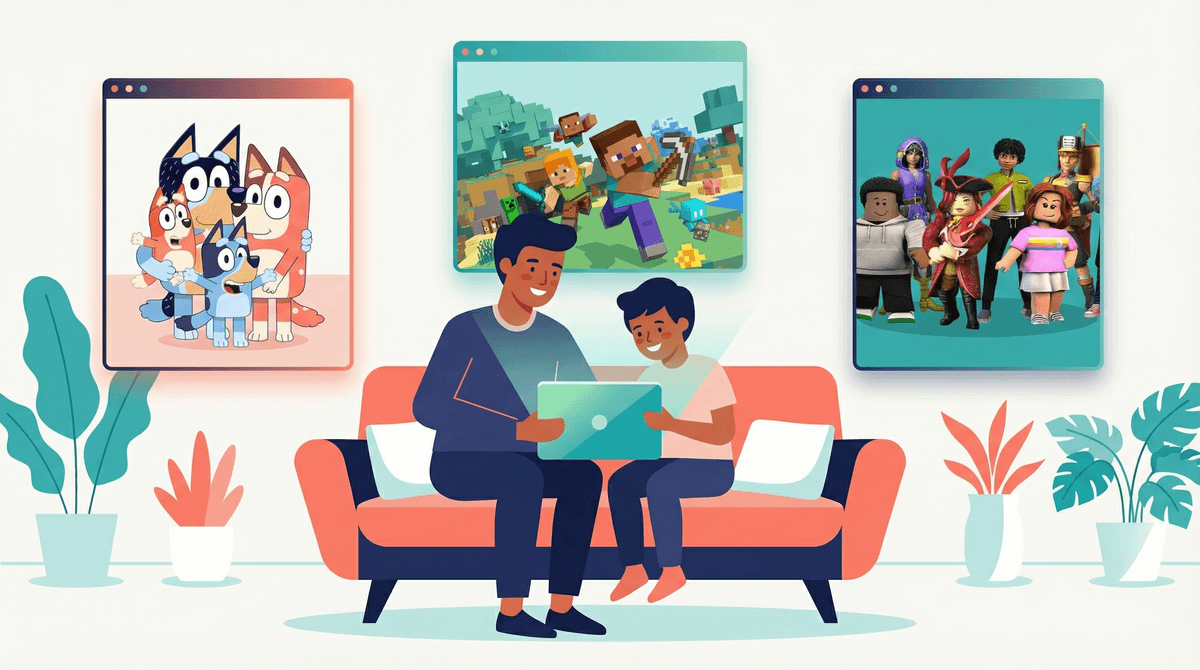
Safe online behavior isn't about scaring kids away from the internet (good luck with that). It's about teaching them to navigate digital spaces the same way we teach them to navigate the real world: with awareness, critical thinking, and a healthy dose of "wait, does this feel right?"
The internet is where your kids are learning, creating, connecting with friends, and yes—occasionally stumbling into weird corners that make you wonder what happened to the innocent days of Club Penguin. Teaching safe online behavior means helping them develop the judgment to know when something's sketchy, the confidence to walk away from uncomfortable situations, and the trust to come to you when things get weird.
And here's the thing: this isn't a one-and-done conversation. It's an ongoing dialogue that evolves as your kid grows from watching Bluey clips to playing Roblox to eventually (deep breath) getting their own social media accounts.
The stats are pretty wild: most kids are online by age 3, and by middle school, they're navigating multiple platforms, group chats, and digital spaces without much adult supervision. The average 8-year-old has more access to information and strangers than most adults had at 18.
But here's what keeps me up at night—it's not just about predators or explicit content (though those are real concerns). It's the everyday stuff: kids sharing personal information without thinking, falling for scams, getting pressured into sending photos, believing everything they see, or getting manipulated by that one "friend" who screenshots private conversations.
The digital world moves fast, and consequences can be permanent. A thoughtless comment at 13 can haunt college applications. A shared photo can't be unshared. And kids' brains literally aren't wired yet for long-term consequence thinking—that's just neuroscience.
Ages 5-8: Building the Foundation
Start with the basics while they're still young enough to think you're cool:
- No personal information sharing: Name, address, school, age—none of it goes online without asking a parent first
- Screen sharing: Keep devices in common areas. This isn't about distrust; it's about availability for questions
- The "uh oh" feeling: Teach them to recognize when something feels wrong and come to you immediately, no questions asked, no punishment
- Stranger danger, digital edition: Just because someone seems nice online doesn't mean they are who they say they are
At this age, you're still in control of most of their digital life. Use it to model good behavior and establish patterns.
Ages 9-12: Developing Critical Thinking
Middle elementary through middle school is when things get real:
- Digital footprint awareness: Everything online is potentially permanent and public, even in "private" chats
- Reverse image search: Show them how to check if photos are fake or stolen (seriously, this is a life skill now)
- Phishing and scams: Teach them that nobody's giving away free Robux, V-Bucks, or Nitro. If it sounds too good to be true, it is

- Privacy settings matter: Walk through privacy settings together on every platform they use
- The screenshot exists: Nothing is truly private. If you wouldn't want it on a billboard, don't send it
This is also when you need to talk about online reputation. That edgy joke might seem funny now, but context collapses online. What's hilarious to friends can look very different to a future employer or college admissions officer.
Ages 13+: Practicing Independence (With Guardrails)
Teens need increasing autonomy, but they still need guidance:
- Consent and boundaries: Just because someone asks for a photo doesn't mean you owe them one. Just because you can share something about someone else doesn't mean you should
- Recognizing manipulation: Whether it's an influencer selling garbage products or a peer pressuring them into something uncomfortable, help them identify manipulation tactics
- News literacy: How to spot misinformation, check sources, and understand that algorithm-driven content isn't neutral
- Mental health awareness: Recognizing when online spaces are affecting their mental health and knowing when to take breaks
At this age, you're shifting from gatekeeper to consultant. They'll make mistakes—that's part of learning. Your job is to be the safe person they can come to when things go wrong.
The "Just Ask" Rule Is Everything
Create a family culture where kids can ask about anything they see online without fear of losing device privileges. Yes, even the really uncomfortable stuff. Especially the really uncomfortable stuff.
If your kid stumbles onto something inappropriate and their first thought is "I'll get in trouble," they won't tell you. And that's when small problems become big ones.
You Can't Monitor Everything (And That's Okay)
Some parents try to read every message, track every click, monitor every interaction. Here's the truth: you can't, and even if you could, you'd be teaching surveillance instead of judgment.
The goal isn't to prevent every bad experience—it's to give your kids the tools to handle bad experiences when they happen. Because they will happen.
That said, younger kids absolutely need more oversight. Parental controls and monitoring tools have their place, especially for elementary schoolers. Just be transparent about what you're monitoring and why.
Model What You Want to See
Kids learn more from watching you than listening to you. If you're constantly on your phone, oversharing on social media, or raging in comment sections, guess what they're learning?
Show them what healthy digital citizenship looks like: fact-checking before sharing, treating people with respect online, taking breaks from screens, protecting your own privacy.
The Platforms Aren't Helping
Let's be real: most platforms have a financial incentive to keep kids engaged as long as possible, regardless of safety. The "13+" age limits are mostly about legal liability, not actual safety. And those safety features they tout? Often buried in settings that require a PhD to navigate.
You're not paranoid for being skeptical of tech companies' commitment to child safety. You're paying attention.
"Someone I don't know wants to be my friend" Default answer: No. If they're actually a friend from school, they can talk to you at school. Random friend requests are almost always a red flag, especially from accounts with few followers or generic profile photos.
"My friend is being mean in the group chat" Time to talk about digital courage and being an upstander. It's easier to be cruel online because you don't see the person's face. It's also easier to stay silent. Neither is okay.
"I accidentally clicked something and now there are weird pop-ups" This is why we don't punish kids for coming to us. Close the browser, run a malware scan, and use it as a teaching moment about clicking links.
"Everyone else's parents let them..."
Maybe they do, maybe they don't. Every family has different rules. But also—this is a good time to actually check in with other parents. Sometimes kids are right, and community norms have shifted. Understanding what's typical for their age can help you make informed decisions.
Start the conversation today—not with a lecture, but by asking what they're into online right now. Watch them play Minecraft, scroll through their favorite YouTube channels together, ask them to explain the latest meme. Show genuine interest in their digital world.
Establish a family media agreement that everyone (including parents) signs. Include rules about screen time, privacy, respect, and what happens when rules are broken. Revisit it every six months as kids grow and circumstances change.
Practice scenarios like you'd practice fire drills. "What would you do if someone asked for your password?" "What would you say if someone sent you a weird photo?" Role-playing feels dorky but it works.
Keep devices charging in a common area overnight—not as punishment, but as a family norm. Late-night is when kids are most vulnerable to poor decisions and when predators are most active.
Stay educated about the platforms your kids are using. You don't need to be an expert, but you should know the basics of how Roblox works, why kids love Discord, or what BeReal is actually about.
Teaching safe online behavior isn't about creating paranoid kids who are terrified of the internet. It's about raising digitally literate humans who can think critically, protect themselves, and make good choices even when no one's watching.
The internet is amazing and terrible and everything in between—just like the real world. Your job isn't to shield your kids from every possible danger (impossible), but to give them the judgment and confidence to navigate it safely.
Start early, stay involved, keep talking, and remember: every kid will make mistakes online. The question is whether they'll feel safe enough to tell you about them.
And when in doubt? Trust your gut. If something feels off about an app, a person, or a situation your kid is in online, it probably is. You know your kid better than any algorithm or platform does.