

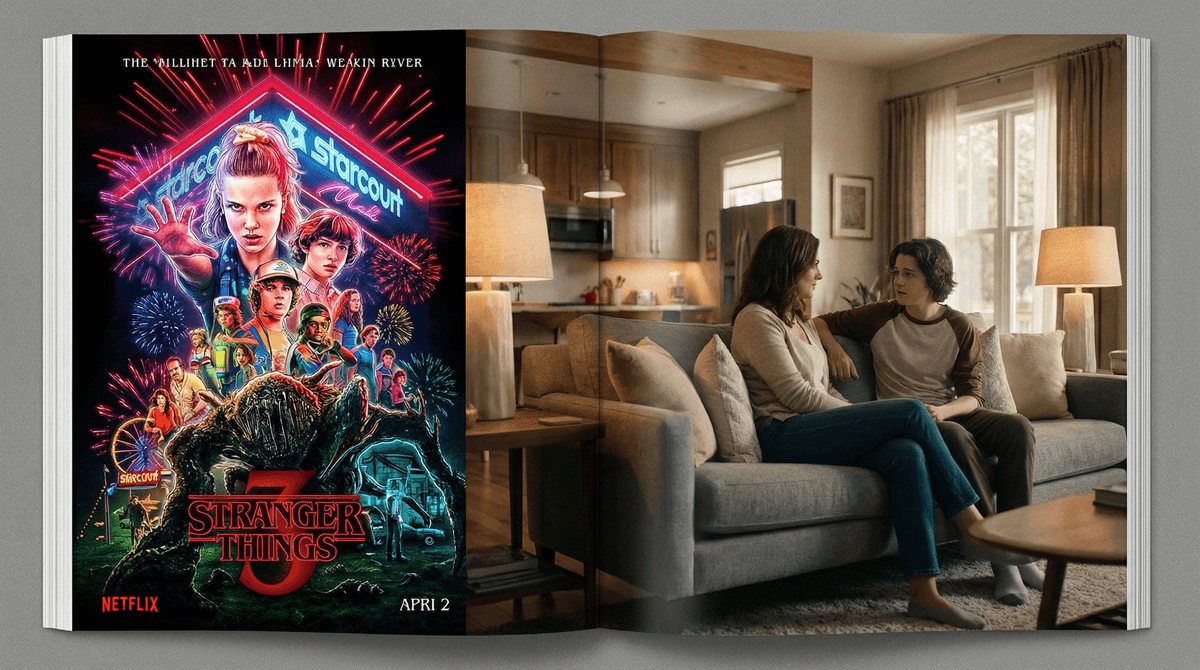
Robin Buckley from Stranger Things: Why This Character Matters for Teen Conversations
TL;DR: Robin Buckley's coming-out scene in Stranger Things Season 3 is one of the most thoughtfully written LGBTQ+ storylines in mainstream teen entertainment. If your teen is watching the show (or has already binged it), Robin's character offers a natural entry point for conversations about identity, friendship, rejection, and what good representation actually looks like.
In Season 3, Episode 7 ("The Bite"), Steve Harrington confesses his feelings for Robin while they're drugged and tied up in a Russian base under Starcourt Mall. Normal Tuesday in Hawkins. Robin responds by coming out to him, explaining that she had a crush on a girl in band class—and that girl turned out to be Steve's girlfriend at the time.
What makes this scene remarkable isn't just that Robin is gay. It's how the show handles what happens next.
Steve processes this information for about ten seconds, then moves on. No melodrama. No "I'm so confused" speech. No making it about him. They remain best friends, their dynamic stays intact, and the show never treats Robin's sexuality as a problem to solve or a "very special episode" moment to milk for drama.
For teens watching—whether they're LGBTQ+ themselves, have friends who are, or are just trying to understand what the fuss is about—this is a masterclass in how to react when someone comes out to you. Which is exactly why it's worth talking about with your kids.
She's not defined by being gay: Robin is a band nerd, fluent in multiple languages, works at Scoops Ahoy with Steve, and helps crack a Russian code. Her sexuality is one part of her character, not her entire personality. This matters because it shows teens that LGBTQ+ people are just... people. With jobs and hobbies and annoying coworkers.
The show doesn't sensationalize her relationships: In Season 4, Robin has a crush on Vickie, another girl from band. It's awkward and sweet and exactly like any other teenage crush storyline. There's no tragic queer narrative, no "bury your gays" trope. Robin gets to be a regular teenager dealing with regular crush anxiety.
Steve's reaction becomes the model: After Robin comes out, Steve doesn't distance himself or get weird. He becomes her wingman, helps her talk to girls, and their friendship actually deepens. For straight teens watching, this is a blueprint. For LGBTQ+ teens, it's validating to see a friendship survive—and thrive—after coming out.
The 1980s setting adds context: Stranger Things is set in 1985-86, during the height of the AIDS crisis and widespread homophobia. The show acknowledges this reality without dwelling on trauma porn. Robin is cautious about who she tells, which makes sense historically, but the show doesn't punish her for existing.
Let's be real about Stranger Things first: this show has body horror, violence, kids in danger, and some genuinely scary moments. Robin's storyline is the least of your concerns if you're trying to decide whether your kid is ready for the series.
Ages 11-12: If they're watching Stranger Things at all (and many are), Robin's coming-out scene is actually one of the safest, most age-appropriate moments in the entire series. It's a conversation in a bathroom. No violence, no monsters, just two friends talking.
Ages 13-15: This is the sweet spot. Teens this age are navigating their own identities and friendships. Robin's story gives them language for how to be a good friend when someone comes out, or what it might feel like to come out themselves.
Ages 16+: Older teens can appreciate the nuance—how the show balances historical accuracy with hopeful storytelling, why representation matters, and how Robin's character challenges stereotypes about LGBTQ+ people in media.
If your teen is watching Stranger Things, you don't need to make this a Big Formal Talk. Here are some natural entry points:
After Season 3, Episode 7: "That bathroom scene with Robin and Steve was really well done. What did you think about it?" Then shut up and listen. Teens will tell you what they think if you're not immediately jumping in with your own agenda.
If they bring up Robin unprompted: "Oh yeah, I like her character too. What do you like about her?" This gives them space to talk about representation without you forcing it.
When discussing friendships: "Steve and Robin's friendship is pretty great. What makes a good friend when someone tells you something important about themselves?" This works whether or not you're specifically talking about coming out.
If they're struggling with their own identity: Having watched Robin's story together gives you shared language. "Remember how Steve just... accepted Robin and moved on? That's what I want you to know—nothing you tell me will change how much I love you."
Robin's character is a case study in why representation matters—and what good representation looks like:
It's not about teaching straight people a lesson: Robin exists for herself, not to educate Steve or the audience about LGBTQ+ issues. Her storyline isn't an after-school special.
It normalizes LGBTQ+ identities: When teens see gay characters who are just... there, living their lives, solving mysteries, working retail jobs, it chips away at the idea that being LGBTQ+ is inherently dramatic or tragic.
It shows multiple types of acceptance: Steve accepts Robin immediately. Vickie seems interested but cautious. Robin's parents (we assume) don't know. The show acknowledges that coming out isn't one universal experience.
It matters who writes these stories: The Duffer Brothers (the show's creators) consulted with LGBTQ+ writers and actors to get Robin's story right. This is worth pointing out to teens—representation works best when the people being represented have a voice in the storytelling.
"Is the show pushing an agenda?": Nope. LGBTQ+ people existed in the 1980s (shocking, I know), and they exist now. Including a gay character in a show about teenagers isn't activism, it's realism. About 5-10% of teens identify as LGBTQ+ , so statistically, a friend group of eight kids having one gay member is pretty accurate.
"My kid is too young to learn about this": If they're old enough to watch Stranger Things—with its violence, horror, and mature themes—they're old enough to know that some people are gay. Robin's storyline is significantly less intense than, say, the Mind Flayer possessing Billy or the demogorgon eating people.
"What if this confuses them about their own identity?": Seeing LGBTQ+ representation doesn't make kids gay any more than seeing straight relationships makes them straight. It just gives them language and examples for understanding different types of people and relationships. If your kid is questioning their identity, seeing positive representation like Robin might help them feel less alone—which is a good thing.
"I don't know how to talk about this": You don't need to be an expert. "I'm still learning about this stuff too, but I want you to know I'm here if you ever want to talk" is a perfectly good response.
Robin Buckley is a well-written character in a popular show your teen is probably already watching. Her coming-out scene is a gift to parents because it models exactly what good allyship looks like: Steve listens, accepts, and moves on without making it weird.
You don't need to turn this into a lecture about LGBTQ+ rights or force a conversation your teen doesn't want to have. But if they're watching Stranger Things, Robin's story is sitting right there, ready to be a natural entry point for discussions about identity, acceptance, and what it means to be a good friend.
And honestly? In a show full of interdimensional monsters and government conspiracies, the most radical thing Stranger Things does might be letting a gay teenage girl just... exist. No trauma, no tragedy, just a band nerd with a crush trying to save the world.
That's the kind of storytelling worth talking about.
- Watch Season 3 together (or rewatch Episode 7 if they've already seen it) and see what conversations come up naturally
- Ask what other characters they relate to in Stranger Things or other shows—this can open up broader conversations about identity and representation
- Check out other shows with thoughtful LGBTQ+ representation if your teen responds well to Robin's storyline
- Talk about what makes a good friend when someone shares something vulnerable—use Steve as the example
- If your teen is questioning their own identity, let them know you're a safe person to talk to, and consider connecting them with resources like PFLAG or The Trevor Project