

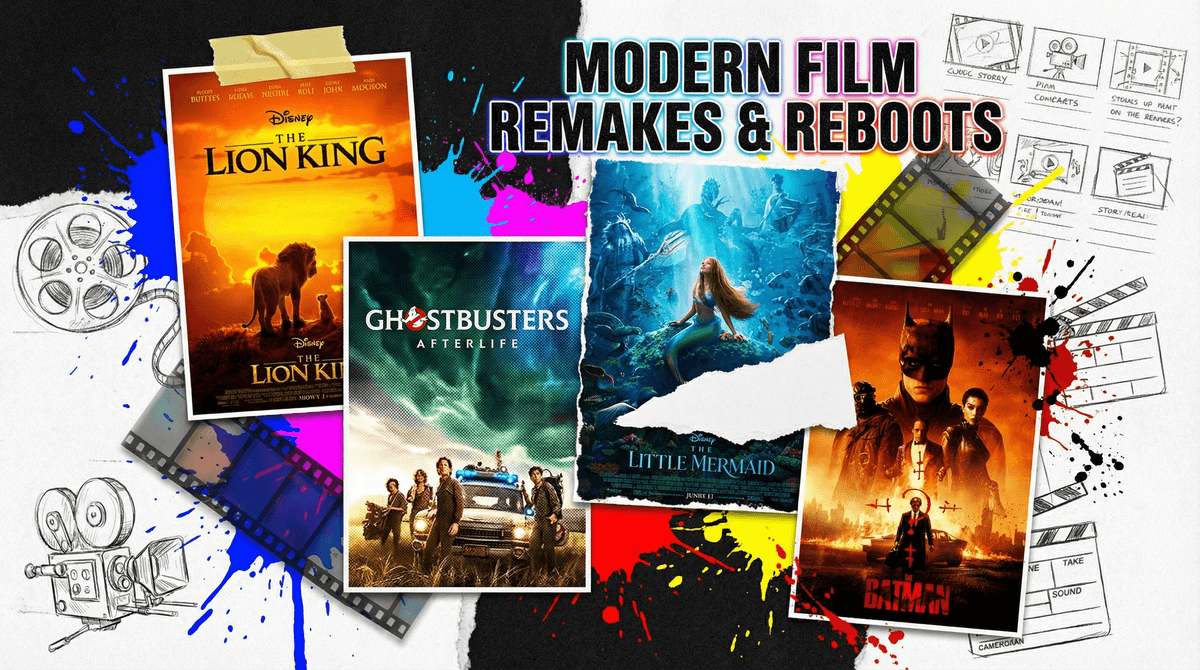
Here's the thing: Hollywood has basically been doing a ctrl+C, ctrl+V on your childhood for the past decade, and it's not slowing down. A remake takes an existing movie, show, or franchise and retells it with modern updates—new actors, updated effects, sometimes tweaked storylines. A reboot is similar but usually implies starting fresh, often ignoring previous continuity entirely.
Think The Little Mermaid (2023 live-action), the new Percy Jackson Disney+ series, or the endless parade of Spider-Man origin stories. Sometimes it's a straight-up do-over. Sometimes it's "let's take this beloved thing and make it darker/funnier/more diverse/CGI-heavy."
Your kids are growing up in an era where nearly everything they watch has been done before—just not in their lifetime. Which creates this weird generational moment where you're like "I loved that as a kid!" and they're like "What do you mean this is OLD?"
Let's be real: it's about money. Remakes and reboots come with built-in audiences. Studios know that nostalgic parents will take their kids to see the new Lion King, and Gen Z will show up for a grittier take on Batman. It's less risky than betting on original IP.
But it's not just cynical cash-grabbing. Sometimes these updates genuinely improve on the original—better representation, more complex characters, themes that resonate with modern audiences. The 2023 Little Mermaid gave us a Black Ariel and expanded her agency in ways the 1989 version didn't. The new Percy Jackson series is actually staying true to the books in ways the movies completely botched.
Other times? It's a soulless CGI fest that makes you wonder if anyone involved actually understood what made the original special. Looking at you, live-action Mulan.
Your kids don't care that you watched the "real" Ghostbusters. To them, the 2021 Ghostbusters: Afterlife is their Ghostbusters. And that's actually fine.
Kids love remakes because:
- They're designed for them. Modern pacing, current humor, effects that don't look dated.
- Everyone at school is watching. The cultural moment is now, not 1984.
- They don't have nostalgia baggage. They can enjoy it without comparing it to something "better."
The mistake parents make is assuming their kids should have the same emotional connection to the original. They won't. They can't. They weren't there.
Here's where it gets tricky: You show your kid the original, expecting them to love it as much as you did. They're bored. The pacing is slow. The effects look "fake." They don't get why it's such a big deal.
You feel weirdly betrayed. They feel like they disappointed you.
This happens constantly with Star Wars, The NeverEnding Story, even Teenage Mutant Ninja Turtles. What felt groundbreaking in 1985 might feel clunky now. That doesn't mean your kid has bad taste—it means context matters.
The move: Share what YOU loved about it, but don't force them to feel the same way. "I loved how scary the Nothing was in NeverEnding Story—it gave me nightmares for weeks. What did you think?" is better than "This is a CLASSIC, you should appreciate this."
Sometimes the changes are cosmetic—new actors, better effects, updated music. Sometimes they're bigger: gender-swapped characters, race-swapped leads, altered storylines, different endings.
Kids notice. And depending on their age and what they're exposed to online, they might come home with opinions about it.
"Why is Ariel Black now?" "Why did they make Velma gay?" "Why is this version so different from the one you showed me?"
These are actually great teaching moments about adaptation, representation, and how stories evolve. The answer isn't "stop noticing differences"—it's helping them think critically about why changes are made and what they add or take away from the story.
Here's how to talk to kids about representation in media if you want a deeper dive.
Ages 5-8: They probably don't care about the original. Let them enjoy the remake on its own terms. If you want to share the original, frame it as "here's the version I watched when I was little" rather than "this is the REAL one."
Ages 9-12: They're starting to understand the concept of originals vs. remakes. Good time to introduce compare-and-contrast conversations. "What did you like better about this version? What do you think they changed and why?"
Ages 13+: They're seeing the discourse online. They know people have Big Feelings about remakes. Help them develop their own critical lens—what makes a good adaptation? When do changes enhance vs. detract? When is a remake just a cash grab?
Not all remakes are created equal. Some are genuinely great—Spider-Man: Into the Spider-Verse took a character we'd seen a million times and made something fresh and innovative. Others are... The Emoji Movie. (Yes, that's technically not a remake, but it's the same cynical energy.)
Ratings can shift. The original might have been PG, but the remake could be PG-13 or vice versa. Don't assume they're equivalent just because they share a title. Always check current ratings.
Your nostalgia isn't their problem. If you're mad about a remake "ruining your childhood," that's a you thing, not a them thing. It's okay to have feelings about it, but don't make your kid responsible for validating your nostalgia.
Some originals haven't aged well. Stuff that was fine in the '80s and '90s might have casual sexism, racism, or just deeply weird messaging that you didn't notice as a kid. Sometimes the remake is actually... better? Or at least less problematic?
Remakes and reboots aren't going anywhere. Your kids will grow up with their own versions of your favorite stories, and that's okay. The goal isn't to make them love what you loved the way you loved it—it's to help them develop their own taste, think critically about what they watch, and maybe, just maybe, understand why you got weirdly emotional when they rebooted Fraggle Rock.
Let them enjoy the new stuff. Share the old stuff if you want. Have conversations about what changes and why. And if they think the original is boring? Well, maybe it is. Or maybe they'll come back to it in 20 years and get it. Either way, you'll survive.
- Watch together. If there's a remake of something you loved, make it a family movie night. Watch the new one, then the old one, and talk about the differences.
- Read reviews together. For older kids, reading parent reviews or critical takes on remakes can be a good media literacy exercise.
- Let them lead. If they love something you think is a terrible remake, let them love it. You can have your opinions, but their enjoyment doesn't require your approval.
Want to dig deeper into specific remakes and whether they're worth your time? Check out our media reviews for age-appropriate guidance on basically everything Hollywood has recycled lately.