

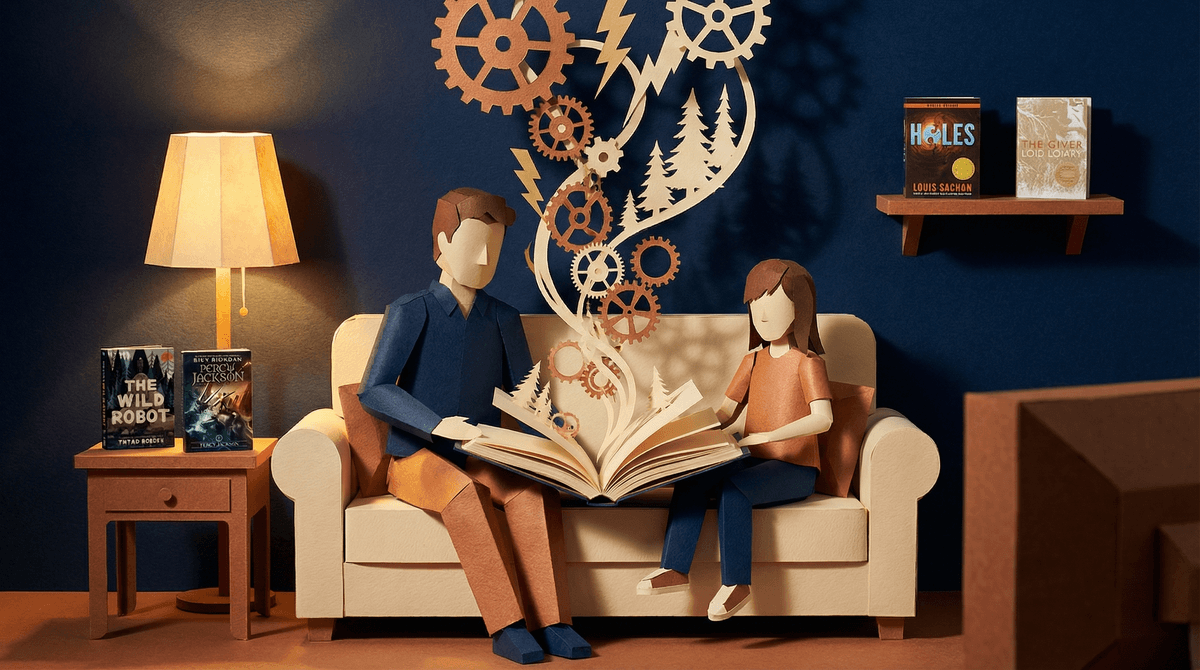
Here's something that might sound counterintuitive: your 10-year-old who devours graphic novels and stays up past bedtime with a flashlight under the covers? They still need you to read to them.
I know, I know. They've been reading independently since first grade. They're probably reading books you haven't even heard of. But here's the thing—reading aloud to older kids isn't about literacy skills anymore. It's about connection, comprehension, and honestly? It's one of the last bastions of guaranteed together-time that doesn't involve a screen.
Reading aloud to tweens and even teens means tackling more complex books together—stories with challenging vocabulary, nuanced themes, and moral complexity that's actually worth discussing. It's Percy Jackson, not Goodnight Moon. It's The Giver, not The Very Hungry Caterpillar.
The research on this is actually pretty compelling. Kids who are read to through middle school show:
- Better comprehension of complex texts - Hearing sophisticated language patterns helps them decode harder books when reading solo
- Expanded vocabulary - They encounter words in context they wouldn't choose to read themselves
- Stronger family bonds - It's predictable, screen-free connection time
- Exposure to diverse genres - You can introduce books they might not pick up on their own
But beyond the academic benefits, there's something else happening. In an age where your kid's digital life feels increasingly opaque (what are they watching on YouTube? who are they chatting with on Discord?), reading aloud creates a shared cultural reference point. You're literally on the same page.
Yeah, and they can also make themselves a sandwich, but you still probably cook dinner together sometimes, right?
Reading independently and being read to serve completely different purposes. When kids read alone, they're building fluency and following their interests. When you read aloud together, you're:
- Tackling books slightly above their independent reading level
- Pausing to discuss confusing parts or interesting themes
- Modeling how to think critically about text
- Creating space for questions they might not ask otherwise
Also, let's be real: after a day of school, homework, and staring at screens, sometimes kids just want to receive a story rather than work for it. There's a reason audiobooks are having a moment—learn more about why audiobooks count as "real reading" .
.
Ages 8-10: This is the sweet spot where they're independent readers but still openly enthusiastic about storytime. Try:
- Harry Potter series (if you haven't already)
- Wonder by R.J. Palacio
- The Wild Robot by Peter Brown
- Hatchet by Gary Paulsen
Ages 11-13: They might act too cool for it, but most tweens still want this connection. Try:
- The Giver by Lois Lowry
- Holes by Louis Sachar
- A Long Walk to Water by Linda Sue Park
- The Hunger Games (if they're ready for the themes)
Ages 14+: Yes, really. High schoolers benefit too, especially with:
- The Book Thief by Markus Zusak
- The Hate U Give by Angie Thomas
- Short story collections you can finish in one sitting
- Plays (seriously, reading Shakespeare aloud makes it actually make sense)
1. Make it routine, not optional Just like you don't negotiate whether they brush their teeth, reading aloud should be part of the daily rhythm. Before bed is classic, but after dinner or during weekend mornings works too.
2. Let them choose (mostly) Alternate who picks the book. This prevents you from forcing your childhood favorites on them while ensuring you don't end up reading 47 books about fart jokes.
3. Do the voices I don't care if you feel ridiculous. Character voices make it memorable and fun. Your terrible British accent while reading Harry Potter will become a family legend.
4. Pause for discussion "Wait, why do you think he did that?" or "What would you do in this situation?" These organic conversations are where the magic happens.
5. Don't stress about finishing If a book isn't working, bail. Life's too short for books that feel like homework.
6. Consider audiobooks as a hybrid Long car rides? Family road trip? A well-narrated audiobook counts. Check out alternatives to screen time for long car rides for more ideas.
Look, I get it. Between homework battles, sports schedules, and the fact that your tween now needs to shower for 45 minutes every day for some reason, finding 20 minutes feels impossible.
But here's the thing: you're already spending time getting them to sleep or wind down. This just makes that time more intentional. And honestly? It's one of the few activities that:
- Requires zero prep or supplies
- Costs nothing (library cards are free)
- Works for multiple ages at once (siblings can listen together)
- Doesn't generate more laundry, dishes, or mess
- Actually reduces the bedtime screen time battle
Reading aloud to older kids isn't about teaching them how to read—it's about showing them why reading matters. It's about creating a shared story world when so much of their digital life is fragmented and private. It's about having something to talk about that isn't grades, chores, or whether they can download Snapchat.
Will they remember the plot of every book you read together? Probably not. But they'll remember that you showed up, every night, to share a story. And in a world where their attention is being monetized and algorithmically manipulated by every app on their phone, that kind of focused, screen-free connection is increasingly radical.
- Tonight: Ask your kid if they want to start a new book together. Let them browse the library website or your bookshelf.
- This week: Set a realistic goal (3 nights a week? Every night? You decide what's sustainable).
- This month: Check out age-appropriate book recommendations and let your kid pick one that sounds interesting.
The read-aloud years with little kids are sweet, but the read-aloud years with big kids? Those are the conversations you'll both remember.