

TL;DR
If your child is suddenly enthusiastic about multi-digit subtraction, there’s a 90% chance they’ve discovered Prodigy Math. It’s a fantasy RPG that looks like Pokémon but runs on math problems. While it’s a brilliant way to get kids to do "drills" without complaining, the aggressive "Membership" marketing can turn your peaceful afternoon into a negotiation about credit card numbers.
Quick Links for the Math-Minded:
- Best for "Stealth Learning": Prodigy Math
- Best for Deep Conceptual Understanding: Zearn
- Best for Younger Kids (K-2): MathTango
- Best "No-Fluff" Mastery: Khan Academy Kids
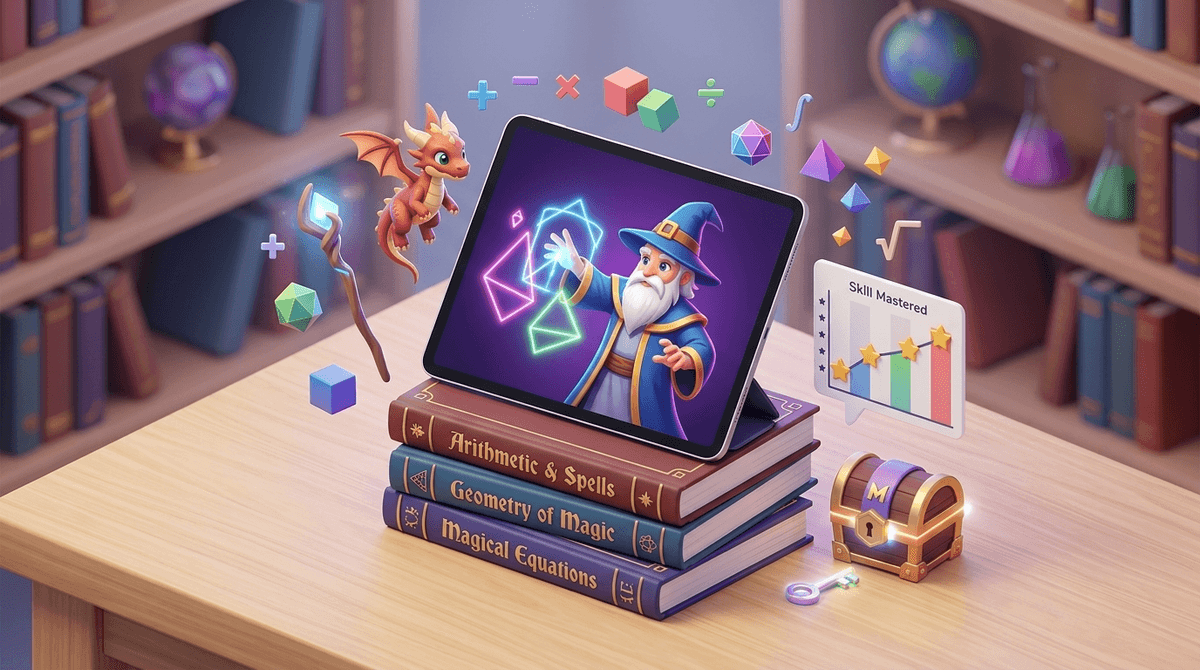
Imagine a world where you defeat fire-breathing dragons and capture mythical pets, but instead of just pressing an "attack" button, you have to correctly identify a trapezoid or solve a word problem. That’s Prodigy Math in a nutshell.
It is a browser-based website (though they have apps for tablets) designed for students in grades 1 through 8. It’s incredibly popular in schools because it’s free for teachers and keeps kids "quietly engaged" during math centers. In the game, your child creates a wizard avatar, explores a sprawling map, and engages in turn-based battles. To cast a "spell" and deal damage, they have to answer a math question tailored to their grade level.
If you’ve ever seen your kid play Roblox or Minecraft, you know they live for "the grind"—the process of collecting rare items and showing them off. Prodigy taps into that same lizard-brain dopamine loop.
- The Pet System: Much like Pokémon Go, kids can "rescue" (capture) pets. Some are rare, some are "epic," and all of them are status symbols.
- The Gear: Wizards can be decked out in cool armor, hats, and wands.
- The Social Element: While there is no open-text chat (a huge safety win), kids can see each other’s wizards in the game world. If your kid is rocking a basic starter outfit and their friend from school has a glowing dragon and a legendary cape, the "social comparison" engine starts humming.
Here is where the "no-BS" part comes in: Prodigy is a masterclass in "freemium" psychological pressure.
The game is technically free to play, and all the educational content is accessible without paying a dime. However, the game constantly reminds non-paying players of what they are missing. In the middle of a battle, a chest might appear that can only be opened by members. Or a cool pet will appear that only members can catch.
Your child will eventually come to you claiming they "need" the membership to "get better at math." Let's be clear: they don't. They want the membership because they are tired of being the "noob" in the classroom world.
The "Level Up" and "Ultra" memberships range from about $6 to $15 a month. For that price, they get:
- Faster leveling (which means more math, technically)
- Exclusive gear and pets
- Access to "Epic" battles
The Verdict on Membership: If your child is genuinely struggling with math and this is the only thing that gets them to practice, $10 a month might be a cheaper tutor than anyone on Craigslist. But if they’re already a math whiz and just want the shiny digital dragon, feel free to say no. The "social FOMO" is a feature, not a bug.
Check out our guide on navigating "freemium" games without losing your mind
This is the "chocolate-covered broccoli" question. Does the chocolate (the game) make them eat the broccoli (the math)? Yes. But is it the most nutritious broccoli?
Prodigy is excellent for fluency and drill. It’s great for practicing things like multiplication tables, identifying shapes, or basic fractions. It is not great at teaching new, complex concepts. If a child gets a question wrong, the game provides a hint, but it doesn't offer the deep, conceptual scaffolding you’d find in something like Zearn or Khan Academy.
A common critique from educators is that the "game-to-math ratio" can get skewed. As kids get higher in level, they might spend 5 minutes decorating their wizard's house for every 2 minutes they spend solving problems.
Prodigy Math vs. Other Platforms
- Prodigy: High engagement, low conceptual depth. Best for kids who "hate math."
- Zearn: Low "game" feel, high educational value. Best for actually learning how numbers work.
- DragonBox Algebra: A brilliant puzzle game that teaches algebra without the kid even realizing it.
- MathTango: A great middle-ground for younger kids (ages 5-9) that balances monster-building with solid arithmetic.
Grades 1-3: This is the sweet spot. The math is simple enough that the game doesn't feel like a chore, and the "collecting pets" hook is incredibly strong. Grades 4-6: Still very popular, but you might see kids start to "hack" the game or look for cheats on YouTube. Grades 7+: Most kids this age will find the graphics a bit "kiddie," though some still play it for the nostalgia or because it's a sanctioned way to "play games" in class.
From a digital wellness perspective, Prodigy is one of the "safer" corners of the internet.
- Chat: There is no open-text chat. Players can only communicate using pre-set phrases (e.g., "Hello!", "Good game!", "Follow me!"). This eliminates the risk of cyberbullying or predatory behavior found on platforms like Discord.
- Data: They are COPPA and FERPA compliant, which is a fancy way of saying they take student privacy seriously because they want to stay in schools.
- Screen Time: The "battle" loop can be addictive. It’s easy for a child to say "just one more battle" and look up an hour later. Because it's "educational," parents often give it a pass, but it still triggers the same reward centers as "brain rot" games.
If you're talking to another parent at school and they ask about Prodigy, here is the 30-second download:
"It's basically Pokémon but they have to solve math problems to attack. It's safe, it's actually kind of fun, and the school probably uses it. The only annoying part is that the game constantly nags them to buy a membership so they can get 'cool capes' and 'legendary pets.' If your kid is doing their homework, you don't need to pay for it. But if they’re obsessed, it’s a decent 'reward' for a good report card."
If the begging for a membership has reached a fever pitch, use it as a teaching moment about Digital Literacy and Marketing:
- The "Why" Question: "Do you want the membership because the math is too hard, or because the game is making you feel like you're missing out?"
- The Value Conversation: "That membership costs the same as two months of Disney+. Is having a digital owl worth more to you than watching movies?"
- The "Grind" Talk: Explain that games are designed to make you want things right now, and that part of the fun of a game is earning things through effort (solving math!) rather than just buying them.
Prodigy Math is a "Net Positive" in the world of digital media. It turns a subject that many kids find stressful into a world of adventure. While the aggressive upselling is annoying, the core product is safe and educationally sound for what it is: a drill tool.
If your kid is playing it, don't sweat it. Just be prepared for the "But Mom, I need the Ultra Membership to save the Fire Tower!" conversation.
- Check their progress: Log in to the parent dashboard. It will show you exactly what math skills they are struggling with.
- Set a timer: Even "educational" games can lead to eye strain and irritability. 30-45 minutes is usually plenty.
- Explore alternatives: If you want something with more "soul" and less "marketing," check out Mathalicious or Numberphile for older kids.
Compare Prodigy with other top-rated math websites
Learn how to set up the Prodigy Parent Dashboard