

Prenatal exercise won’t give your child a lower-than-average BMI, but it might nudge them toward more active daily habits by age seven. Moving during pregnancy appears to act less like a metabolic "fix" for a child's weight and more like the start of a healthier family baseline.
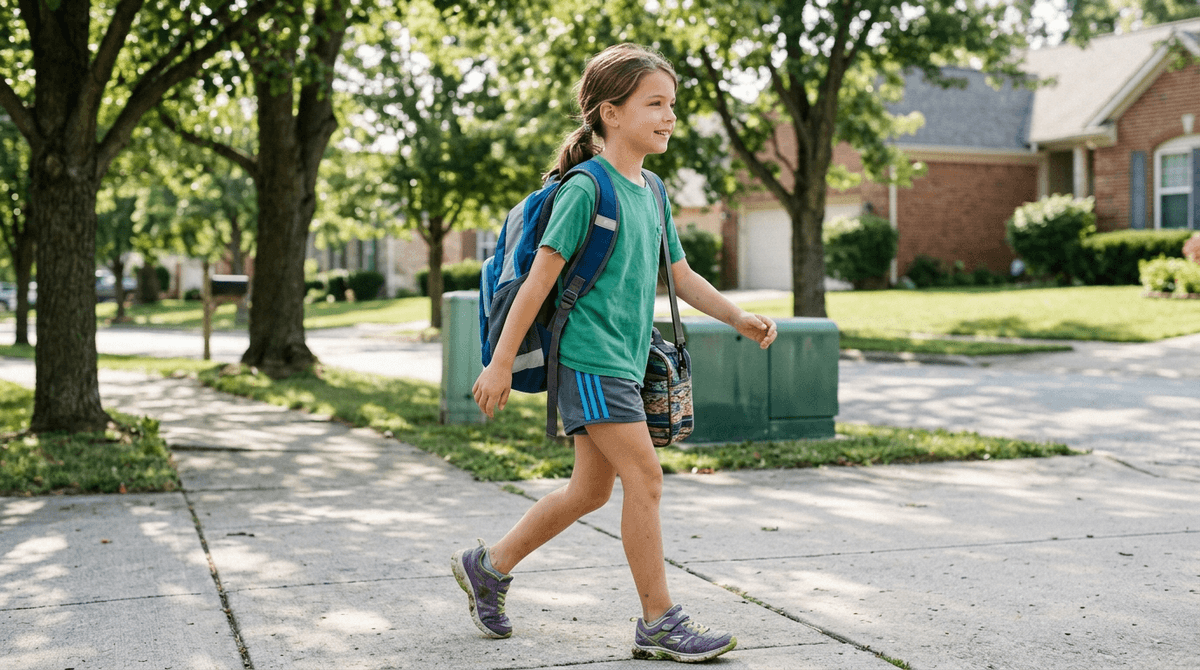
Exercise during pregnancy does not dramatically shift a child’s average BMI by age seven, but it may help prevent them from falling into extreme weight categories. Mothers who were coached to exercise during pregnancy had children who were significantly more likely to walk or bike to school years later, suggesting that the most lasting benefits of prenatal movement are behavioral rather than strictly biological.
The "fetal programming" theory suggests that what happens in the womb dictates a child’s health for life. This concept often creates a massive amount of pressure on expectant mothers to "get it right" or risk setting their child up for a lifetime of metabolic struggle. For parents, this study provides a necessary reality check: prenatal exercise is not a magic wand that overrides a child's future environment, but it is a valuable tool for shaping daily routines.
Knowing that prenatal movement has a greater impact on lifestyle habits—like how a child gets to school—than on a rigid BMI number should lower the parental stakes. It shifts the focus from managing a child's future weight to modeling a culture of movement. If you can establish a baseline of activity before the child even arrives, you are more likely to maintain the types of active transportation habits that keep a seven-year-old moving.
Researchers have long debated whether maternal exercise can "protect" offspring from obesity by altering the intrauterine environment. While many studies look at birth weight or infant growth, very few follow children into middle childhood to see if those early interventions hold up against the pressures of school, snacks, and screens.
This study followed 80 mother-child pairs in Oslo, Norway, for seven years. The mothers were all initially inactive, first-time parents. By comparing a group that received supervised exercise counseling during pregnancy to a group that received standard care, researchers aimed to fill the gap in long-term data regarding how a mother's pregnancy habits influence a child's "adiposity" (body fat) and health behaviors as they grow up.
The average BMI for seven-year-olds in both groups was nearly identical—roughly 15.4. However, the researchers found a "narrowing" effect in the exercise group that suggests a healthier middle ground.
- Extreme weights were rarer: The exercise group had only one child classified as overweight or obese, compared to four in the control group. They also had fewer underweight children (three versus six).
- The school commute changed: About 72% of children in the exercise group used "active transport" like walking or biking to get to school, compared to only 57% in the control group.
- Activity guidelines were met: Nearly every child in the exercise group (97.5%) met the World Health Organization’s physical activity guidelines, a 10% jump over the control group.
- No "halo effect" on other habits: Prenatal exercise didn't change how much screen time kids got or what they ate. Both groups showed similar patterns in sedentary behavior and dietary choices seven years later.
The study suggests that prenatal exercise isn't a silver bullet against the modern food and tech environment. Because there was no difference in diet or screen time between the two groups, it implies that the prenatal intervention specifically influenced the "movement" side of the family ledger.
The most likely explanation for the increase in kids walking to school isn't that their cells were "programmed" in the womb to like walking. Instead, it is likely that the mothers who were coached to exercise during pregnancy internalized those values and continued to prioritize movement as their children grew. This "social modeling" is a powerful force; a mother who learns to prioritize a workout during pregnancy is more likely to be the parent who encourages a bike ride to school when that child is seven.
The data is based on a small sample of 80 mother-child pairs, which is a low number for a longitudinal study. Small samples are more susceptible to "noise," meaning a few children with unique habits could significantly swing the percentages.
The reliance on "proxy-reported" data is also a major limitation. Researchers didn't weigh the children on professional scales; they conducted telephone interviews where mothers reported their child's height, weight, and activity levels. This is notoriously prone to error, as parents may overestimate their child's height or underestimate their weight. Finally, the study was conducted in Oslo among previously inactive women. The findings might not apply to women who were already highly active or to families living in "car-dependent" areas where walking to school is physically impossible.
- If you are currently pregnant and have been mostly inactive... starting a supervised, moderate exercise routine is a safe way to potentially nudge your child toward a healthier weight distribution by age seven.
- If you want to maximize the long-term health benefits of your pregnancy workout... focus on making movement a functional part of your day—like walking for errands—as these "active transport" habits are the most likely to stick with your child.
- If you are worried that your pregnancy activity wasn't "enough" to prevent childhood obesity... remember that screen time and diet habits showed no link to prenatal exercise, meaning you have plenty of opportunities to influence those factors through house rules and meal planning now.
- If your child is approaching school age... prioritize walking or biking to the campus if safe, as this specific behavior showed the strongest correlation with the mothers who exercised during pregnancy.
Moving during pregnancy is safe and beneficial, but it isn't a biological guarantee against a child having a high BMI. Its real power lies in helping parents establish a family culture where walking and biking are the default, helping children stay active and within a healthy weight range as they navigate their school years.
Haakstad LAH, Kissel I, Dalhaug EM (2026). What is the Influence of Prenatal Physical Activity on Body Weight, BMI, and Health Behavior in Seven-Year-Old Children?. Translational sports medicine. doi:10.1155/tsm2/3876111 — pubmed.ncbi.nlm.nih.gov