

There's a whole universe of podcasts out there made by kids, for kids — and honestly, it's one of the more wholesome corners of digital media right now. We're talking about shows where actual children (usually ages 8-16) are the hosts, producers, writers, and creative directors. They're interviewing authors, reviewing books and games, telling stories, sharing science facts, discussing current events, and basically doing what adult podcasters do, just with higher voices and occasionally more fart jokes.
Some of these are passion projects recorded in bedrooms with a USB mic and Audacity. Others are more polished productions with adult producers helping behind the scenes (think NPR-quality editing but kid-led content). Either way, the kids are driving the creative vision, and it shows.
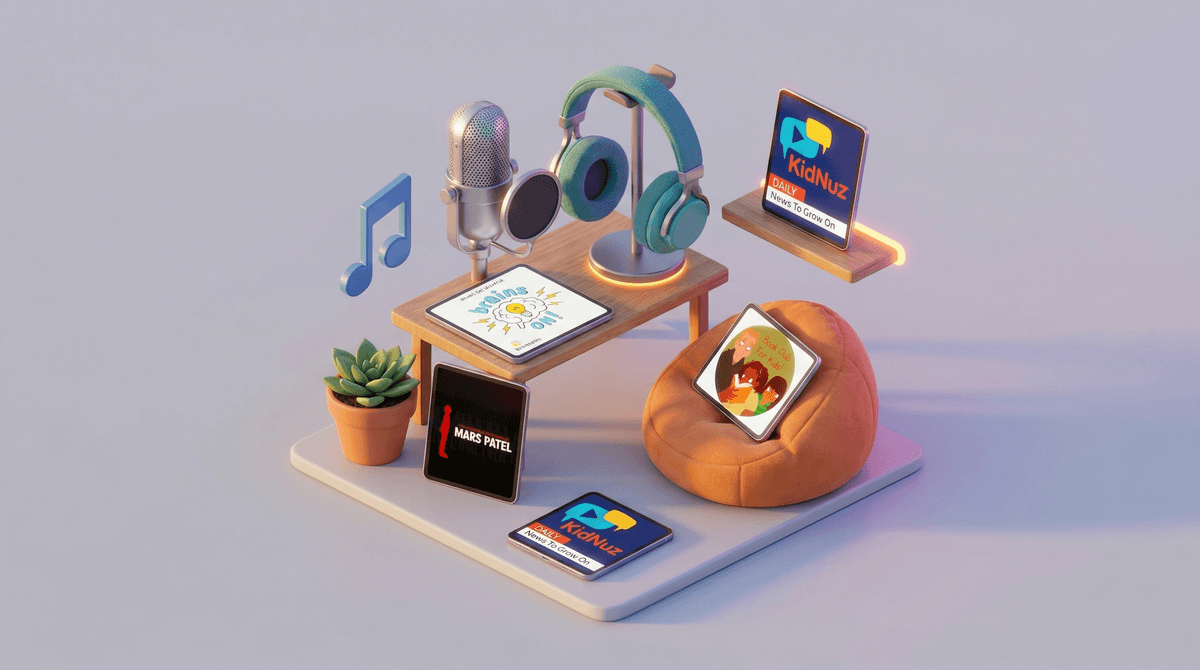
Popular examples include The Unexplainable Disappearance of Mars Patel (a serialized mystery drama performed by kids), Book Club for Kids (exactly what it sounds like), and KidNuz (daily news for kids, by kids). There are also tons of smaller indie shows where your neighbor's 10-year-old might be interviewing their favorite author or hosting a Pokémon strategy show.
It's made for them, by people like them. When a 12-year-old explains why The Wild Robot is amazing, other 12-year-olds actually trust that opinion more than when an adult says it. There's an authenticity here that's hard to fake.
It's not talking down to them. Kid podcasters treat their audience like peers, not like little humans who need everything dumbed down. They discuss complex topics — climate change, social justice, mental health — in ways that feel accessible without being patronizing.
It's audio, which means multitasking. Kids can listen while drawing, playing Minecraft, doing chores, or lying in bed. It's screen-free but still feels like "content."
It's inspiring. Hearing other kids create something real makes them think "I could do that too." And honestly? They could.
The Good Stuff
Media literacy in action. When kids listen to podcasts created by other kids, they're learning to think critically about media production. They notice editing choices, interview techniques, sound design, script quality. They're becoming more sophisticated consumers of content, which is a skill that transfers to everything else they watch, read, or scroll.
It's teaching actual skills. If your kid decides to start their own podcast (and many do after listening to these), they're learning research, writing, interviewing, public speaking, editing, project management, and persistence. These aren't theoretical skills — they're doing the actual work of creating something and putting it out into the world.
It's mostly safe. Unlike YouTube or TikTok, podcast platforms don't have comment sections or algorithmic rabbit holes designed to keep kids engaged forever. You listen to an episode, it ends, you move on with your life. Revolutionary concept.
Community and connection. Kid podcasters often interview guests, collaborate with other young creators, and build communities around shared interests. It's social media without the toxicity.
The Things to Watch For
Production quality varies wildly. Some kid podcasts are genuinely great. Others are... well, imagine listening to your kid's friend tell a rambling story about their Roblox game for 45 minutes. Not every kid is a natural broadcaster, and not every show has adult producers helping with pacing and editing.
Content accuracy isn't always vetted. If a kid is hosting a science or history podcast, they might get facts wrong. They're learning, which is great, but you might want to listen along if your kid is treating it as educational content.
Time commitment creep. Just because it's audio doesn't mean it can't become excessive. A kid who listens to 4 hours of podcasts a day is still consuming 4 hours of media. It's better than 4 hours of YouTube shorts, but it's still worth monitoring.
Some shows have ads or sponsors. Even kid-created podcasts sometimes have sponsorships or ads, and kids don't always recognize when they're being marketed to.
Ages 6-8: Start with professionally produced shows that feature kid voices but have adult oversight — Brains On!, Wow in the World, or Story Pirates. These aren't technically "by kids" but they center kid perspectives and are great gateways.
Ages 9-12: This is the sweet spot for kid-created content. Try Book Club for Kids if they're readers, or KidNuz for daily news. Listen to a few episodes together first to make sure the content and tone match your family's values.
Ages 13+: At this age, they can explore more independently, but it's still worth checking in. Some teen-created podcasts tackle mature topics (mental health, identity, relationships) in thoughtful ways, but others might wade into territory you'd want to discuss together.
Start with curated lists. Common Sense Media, NPR, and various parenting sites maintain lists of recommended kid podcasts. These are vetted for content and quality.
Listen to the first episode together. Production quality, content accuracy, and tone become obvious pretty quickly. If it's not working for your family, move on — there are thousands of options.
Check who's behind it. Some "kid" podcasts have significant adult production support (which usually means better quality and safety). Others are truly independent kid projects. Neither is better, but it's good to know what you're getting.
Look for shows with a clear purpose. Whether it's book reviews, science explanations, or storytelling, shows with a defined focus tend to be more engaging and educational than random chat shows.
First: this is actually a great idea. Seriously.
Start simple. They don't need fancy equipment. A smartphone, a free recording app, and a quiet room are enough to start. You can upgrade to a USB mic later if they stick with it.
Help them plan. What's the show about? Who's the audience? How long will episodes be? Having a clear concept makes everything easier.
Teach them about consent and privacy. If they're interviewing friends or family, everyone needs to agree to be recorded. No full names, no addresses, no personal information that could identify them or their school.
Set boundaries around publishing. Maybe the first few episodes stay private, just for practice. Or maybe you review each episode before it goes live. You'll want to have a conversation about digital footprints and what it means to put content online.
Manage expectations. Most podcasts have tiny audiences, and that's okay. The value is in the creating, not the download numbers.
Kid-created podcasts are one of the healthiest digital media trends happening right now. They're teaching kids to be creators instead of just consumers, they're building media literacy skills, and they're providing screen-free content that's actually age-appropriate and engaging.
Are all kid podcasts great? No. Will your kid love every show they try? Also no. But the format itself is worth exploring, whether your kid is listening or creating.
The best part? Unlike most digital media, podcasts don't have an algorithm trying to keep kids engaged for as long as possible. An episode ends, and then... silence. Your kid can go do something else. In 2026, that feels almost revolutionary.
Start exploring together. Pick a topic your kid is interested in (books, science, gaming, whatever) and search for kid-created podcasts in that space. Listen to one episode together and talk about what worked and what didn't.
Set listening boundaries. Just because it's audio doesn't mean it's unlimited. Decide together when podcast time makes sense — during car rides, before bed, while doing chores.
If they want to create, support it. This is a project-based learning opportunity disguised as fun. Help them plan, give them space to figure it out, and celebrate the effort regardless of the outcome.
And if you need recommendations for specific topics or age ranges, find kid-created podcasts — we can help you find shows that match your kid's interests and your family's values.