

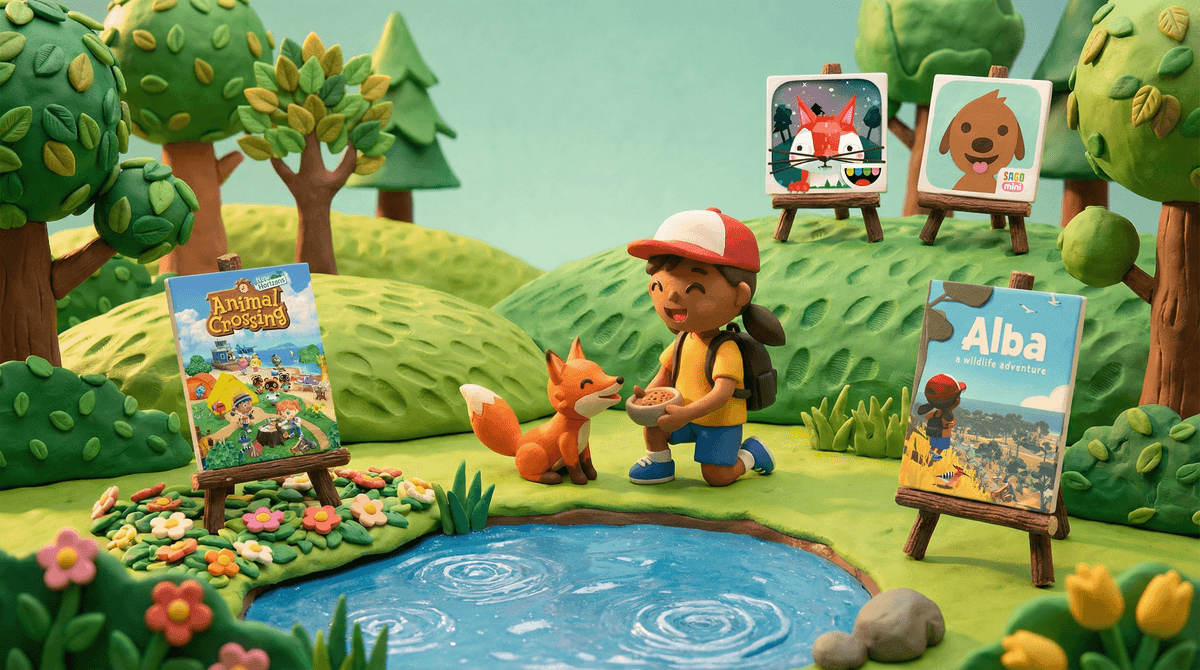
Look, we all know that kids are basically hardwired to love animals. From the toddler who won't stop making elephant noises to the third-grader who's suddenly an expert on axolotls, animal obsession is real. And honestly? There are some genuinely great games out there that tap into this fascination while actually teaching kids something useful.
Animal-themed games for young kids typically combine care-taking mechanics (feeding, grooming, habitat-building) with educational content about real animals, their behaviors, and ecosystems. The best ones manage to be engaging without the predatory monetization that makes you want to throw your phone into the ocean.
We're talking about games that let kids explore wildlife, learn about conservation, practice responsibility, and develop empathy—all while having fun. Not every animal game is created equal though. Some are basically digital pet rocks that drain your wallet, while others are legitimately enriching experiences.
The appeal is pretty straightforward: kids get to be in charge of something. In a world where adults are constantly telling them what to do, animal games give them agency. They make decisions, see consequences, and feel like they're caring for something that depends on them.
Plus, there's the collection aspect. Whether it's discovering new species in Pokémon or building out habitats, kids love the sense of progress and completion. It scratches that same itch that makes them want to catch 'em all, whether that's Pokémon cards or facts about marine mammals.
And let's be real—animals are just cute. A well-designed animal game hits that sweet spot of "aww" factor combined with just enough challenge to keep kids engaged.
Here's where we need to talk honestly. Not all animal games are created equal, and some are straight-up designed to extract money from your credit card via your child's enthusiasm.
The Good Stuff:
Games like Pokémon (the mainline titles, not Pokémon Go necessarily) teach strategy, reading, and problem-solving. Minecraft has animal-care elements that encourage creativity and resource management. Animal Crossing is basically a masterclass in delayed gratification and community building.
For younger kids (ages 4-7), games like Toca Nature and Sago Mini Pet Cafe offer open-ended play without timers, ads, or in-app purchases trying to guilt-trip your kid into spending money. These are designed for exploration and creativity, not addiction.
The Money Pit Category:
Then you've got games that are essentially slot machines wrapped in fur. They use every psychological trick in the book—wait timers, premium currency, limited-time offers, social pressure. Your kid can't just play; they're constantly being nudged to spend.
The key differentiator? Can your kid have a complete, satisfying experience without spending money? If the answer is no, or if the game is designed to make free play frustrating, that's a red flag.
Ages 4-7:
- Toca Nature - Create ecosystems, no pressure, no timers
- Sago Mini Ocean Swimmer - Adorable underwater exploration
- PBS Kids Games app - Includes several animal-focused games from shows like Wild Kratts
- Pokémon Playhouse - Simplified Pokémon care for little ones
Ages 8-12:
- Pokémon mainline games (Scarlet/Violet, etc.) - Strategy, reading, problem-solving
- Animal Crossing: New Horizons - If you have a Switch, this is the gold standard
- Minecraft - The animal husbandry aspects teach resource management
- Wildcraft - Actually teaches kids about animal behavior and survival
- Alba: A Wildlife Adventure - Beautiful game about conservation and photography
The Educational Value Is Real (Sometimes): Quality animal games can actually teach kids about ecosystems, animal behavior, conservation, and responsibility. They can spark interest in biology and environmental science. I've seen kids go from playing a game about marine life to checking out actual books about oceanography from the library.
Watch for the Monetization Model: Before letting your kid dive in, spend 10 minutes playing yourself. Are there constant prompts to buy things? Wait timers that can be bypassed with real money? "Special offers" that pop up every five minutes? These are designed to wear down resistance—yours and your kid's.
Screen Time That Builds vs. Screen Time That Drains: Not all screen time is created equal. A kid who plays Animal Crossing for an hour and then wants to draw their island or talk about what they built? That's different from a kid who's zombie-scrolling through a game designed to trigger dopamine hits without any real engagement.
The Social Element: Many animal games have social features. This can be great (kids sharing their creations, learning from others) or problematic (strangers, pressure to spend money to keep up, comparison). Know what you're signing up for and whether your kid is ready for it.
Instead of just handing over a device, try asking:
- "What did you learn about [animal] today?"
- "If you could design a habitat for any animal, what would you choose?"
- "What's the hardest part about taking care of your virtual pets?"
These questions help kids process what they're experiencing and connect digital play to real-world concepts.
Animal games can be genuinely enriching—or they can be glorified cash grabs wearing a cute animal costume. The difference comes down to design intent: Is this game designed to engage a child's curiosity and creativity, or is it designed to extract money?
The best animal games teach kids about responsibility, ecosystems, and empathy while letting them explore and create. They don't pressure, they don't manipulate, and they respect your child's (and your) time and money.
Start with the free or one-time purchase options, see what resonates with your kid, and be willing to have honest conversations about why some games feel good to play and others leave them feeling frustrated or pressured.
And hey, if your kid becomes obsessed with axolotls or red pandas because of a game? That's a win. Real curiosity about the natural world is always worth encouraging—even if it starts on a screen.
Want to explore specific games in more depth? Check out our guides on Pokémon games, Minecraft animal mechanics, or how to evaluate apps before downloading.
And if you're trying to balance screen time with real-world animal experiences, See nature activities that complement digital play .
.