

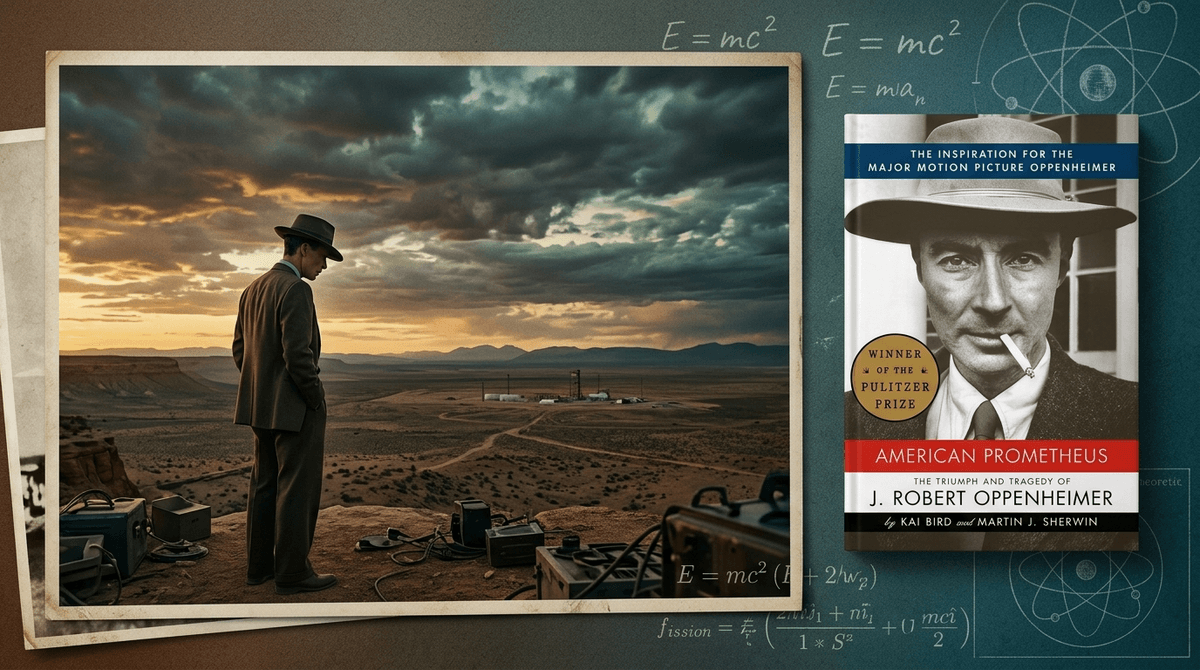
TL;DR: Oppenheimer is a three-hour, R-rated masterclass in tension, physics, and moral gray areas. It’s seeing a massive resurgence right now because of the hype surrounding Christopher Nolan’s 2026 film, The Odyssey. While it’s technically "educational" history, the R-rating is real—mostly due to a few scenes of full-frontal nudity and some very intense psychological spiraling. Best for ages 15+.
Quick Links:
- The Movie: Oppenheimer
- The Source Material: American Prometheus
- The "Next Step" Watch: Interstellar
- For Younger History Buffs: Hidden Figures
If your teen has suddenly traded "Skibidi" memes for conversations about theoretical physics and the ethical implications of the 1945 Trinity test, you’re witnessing the "Nolan Effect."
With Christopher Nolan’s new epic, The Odyssey, slated for release later this year, the internet has decided that being a "Nolan completionist" is the ultimate flex. For Gen Z and Gen Alpha, watching Oppenheimer isn't just a history lesson; it’s a vibe. It represents the "anti-brain rot" movement—long-form, high-intellect content that demands you actually put your phone down for three hours (because if you blink, you’ll miss three different timelines and about fourteen famous character actors).
We’re in an era where "fast content" is the default. Seeing kids gravitate toward a three-hour dialogue-heavy biopic is actually a huge win for their attention spans. However, Oppenheimer isn't a standard "school-friendly" history doc. It’s a visceral, loud, and sometimes uncomfortable look at the man who changed the world—and not necessarily for the better.
If your kid is asking to watch it, they’re likely looking for something "mature" that isn't just mindless violence or a typical slasher. They want to be in on the cultural conversation.
See Christopher Nolan movies ranked by age-appropriateness
Let's skip the fluff and talk about why this movie earned its R-rating. It wasn't for the explosions (though the Trinity test scene is loud enough to rattle your windows).
The Nudity and Romance
This is the part most parents want to know about before they hit play in the living room. There are two specific scenes involving J. Robert Oppenheimer and Jean Tatlock (played by Florence Pugh) that feature full-frontal nudity. One of these scenes is particularly "artsy" and happens during a security hearing, which can feel a bit jarring if you aren't expecting it. It’s not "gratuitous" in the way a 90s thriller might be, but it’s definitely not something you want to be surprised by while sitting next to your 14-year-old.
The Intensity and Sound
Nolan uses sound as a weapon. The "bomb" scene is famously silent at first, followed by a roar that has actually blown out theater speakers. But beyond the volume, the psychological intensity is high. The third act of the movie is essentially a courtroom drama on steroids, focusing on betrayal, political "red-baiting," and Oppenheimer’s own mental health as he realizes the magnitude of what he’s created.
Language
There’s a fair amount of "grown-up" language, including a few F-bombs, but it’s used in the context of high-stakes government stress. It doesn't feel like a "profanity-heavy" movie, but it’s there.
Ages 0-13: Skip it. Not because it’s "evil," but because it is long. Most kids under 13 will find the non-linear timeline and the deep dives into quantum mechanics and communist party meetings incredibly boring. If they want a "science" movie, try The Martian or Apollo 13 instead.
Ages 14-15: Parental Discretion. If your teen is mature and interested in history or film, this is a great watch, but you might want to give them a heads-up about the Jean Tatlock scenes. It’s a great opportunity to talk about how movies use nudity to show vulnerability or intimacy rather than just "sex."
Ages 16+: Green Light. At this age, they’ve likely seen worse on social media. The historical context—the Cold War, the ethics of the atomic bomb, and the McCarthy era—is stuff they are likely touching on in school anyway.
If your teen has finished the movie and is now wearing a fedora and staring pensively at the rain, here are some ways to channel that energy:
For the Science & Mind-Bending Vibe
- Interstellar: Also by Nolan. It’s PG-13, visually stunning, and deals with relativity and time. Much more "fun" for a family movie night.
- Tenet: If they want to feel like their brain is melting. It’s a spy thriller where time moves backward.
For the History Buffs
- Dunkirk: Another Nolan masterpiece. Very little dialogue, incredibly intense, and gives a different perspective on WWII.
- The Imitation Game: About Alan Turing cracking the Enigma code. It’s a great companion piece to the "troubled genius" trope.
- Chernobyl: (HBO Miniseries) If they want to see "science gone wrong" in a horrifyingly realistic way. Warning: This is much darker and more graphic than Oppenheimer.
For the Readers
- American Prometheus: The biography the movie is based on. It’s a doorstopper, but for a kid who loves deep dives, it’s the gold standard.
- Bomb by Steve Sheinkin: A fantastic, fast-paced YA non-fiction book about the race to build (and steal) the atomic bomb.
The best thing about Oppenheimer isn't the cinematography; it's the conversation that happens after the credits roll. Here are a few "non-preachy" ways to engage your teen:
- The "Just Because We Can" Question: Oppenheimer and his team were so focused on how to build the bomb that they didn't spend much time on whether they should until it was too late. How does that apply to AI or social media algorithms today?
- The Cost of Genius: The movie portrays Oppenheimer as a brilliant but flawed man who struggled with his personal life and his legacy. Do we expect our "heroes" to be perfect?
- The "Nolan Effect": Why do they think this movie is trending again? Is it just the 2026 hype for The Odyssey, or is there something about these "big, serious" movies that feels refreshing compared to 15-second TikToks?
Check out our guide on talking to teens about ethics and technology
Oppenheimer is a rare beast: a "smart" movie that actually captured the attention of a younger generation. It’s a heavy lift—mentally and emotionally—but for a teen who is ready for it, it’s a foundational piece of media.
Just be prepared for the three-hour runtime. Maybe have some snacks ready for the "intermission" you’ll inevitably have to create at home. And if they start asking for a physics tutor afterward? Consider that a parenting win.