

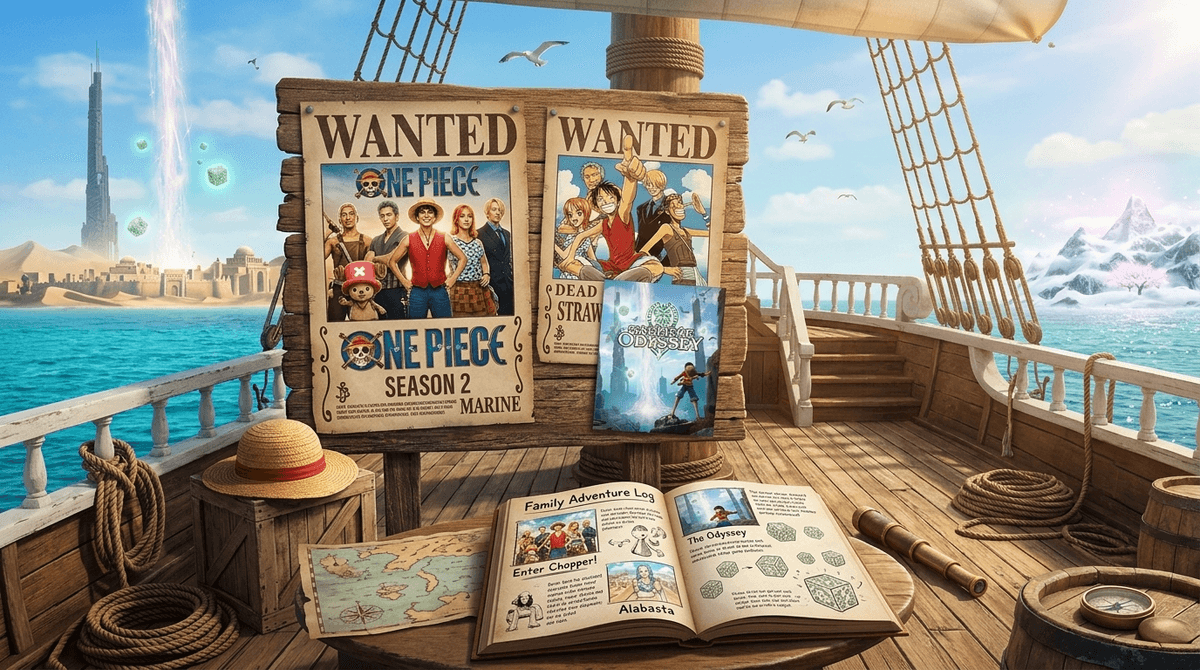
If you’re wondering if One Piece Season 2 is okay for your middle schooler, the short answer is yes—provided they can handle some heavy emotional themes and stylized fantasy violence that’s a significant step up in intensity from the first season.
This season covers the Alabasta Saga, which means we’re moving past the "fun pirate adventure" vibes of the East Blue and into some pretty serious territory involving political rebellion, drought, and a villain who is significantly more menacing than a clown who can chop himself into pieces. If your kid handled the first season of the One Piece live action or the Avatar: The Last Airbender remake on Netflix, they’re likely ready for this, but you might want to be nearby for the "Drum Island" episodes—Tony Tony Chopper’s backstory is a legendary tear-jerker.
TL;DR
- Age Recommendation: 11+ (TV-14 rating).
- Content: Fantasy violence, themes of rebellion/war, and some very emotional backstories involving loss.
- Key Media Links: One Piece (Live Action), One Piece (Anime), Netflix.
- Quick Alt: If this feels too heavy, try The Dragon Prince or Hilda.
Season 2 of the One Piece live action series picks up exactly where the first season left off. The Straw Hat crew—Luffy, Zoro, Nami, Usopp, and Sanji—are headed into the Grand Line. For those who aren't deep in the lore, the Grand Line is basically the "boss level" of the ocean.
The story this season follows the crew as they try to help Princess Vivi (a new addition to the cast) save her desert kingdom, Alabasta, from a massive civil war orchestrated by a shadowy organization called Baroque Works. Along the way, they stop at legendary locations like Reverse Mountain, the prehistoric island of Little Garden, and the snowy Drum Island.
This isn't just a "monster of the week" show. It’s a serialized epic that deals with how power can be abused and how a small group of friends can stand up against a literal empire. It’s high-stakes, it’s colorful, and yes, it’s still very weird (in the best way possible).
If your kid is talking about "Gomu Gomu no Mi" or asking for a straw hat, it’s because One Piece offers a level of world-building that most modern shows can’t touch. It’s the ultimate "found family" story. For a generation of kids navigating the social complexities of middle school, the idea of a crew where everyone is accepted for their weirdness is incredibly appealing.
Luffy isn't your typical "chosen one" hero. He’s impulsive, he loves meat, and he’s fiercely loyal. He doesn't want to rule the world; he just wants to be the free-est person on the sea. That message of personal freedom and loyalty resonates deeply. Plus, the powers are creative—way more interesting than just "shooting lasers." We’re talking about people who can turn into sand, manipulate wax, or transform into a human-reindeer hybrid.

Season 2 introduces some of the most iconic characters in the entire franchise. Here’s the breakdown for parents who want to keep up at the dinner table:
Chopper is the crew’s doctor. He’s a blue-nosed reindeer who ate a fruit that gave him human intelligence and the ability to shapeshift. He’s essentially the "Baby Yoda" of One Piece in terms of marketability, but his backstory is heavy. It involves themes of isolation, being an outcast, and the death of a mentor figure. It’s beautiful, but it’s a lot for more sensitive kids.
Introduced as "Miss All Sunday," she starts as a villain. She’s mysterious and has the power to sprout extra limbs anywhere (which can look a bit "uncanny valley" in live action). Her character arc is one of the best in fiction, but in Season 2, she represents the "morally gray" side of the world.
The big bad of the season. Unlike Arlong from Season 1, who was a bully, Crocodile is a mob boss. He’s calculating, cruel, and has a hook for a hand. He’s a much more "adult" type of villain, and his battles with Luffy are some of the most brutal in the series.
While One Piece is generally positive, Season 2 pushes into some darker corners.
1. Stylized Violence: The fights in Alabasta involve more than just punching. There are swords, explosions, and characters getting dehydrated (Crocodile’s power). It’s not "slasher movie" gore, but it’s more intense than your average Marvel movie.
2. Political Themes: The plot involves a staged rebellion and a kingdom suffering from a man-made drought. It’s a great jumping-off point for talking about how misinformation can be used to start conflicts—a very relevant topic in 2026.
3. Smoking and Drinking: Sanji (the cook) is often seen with a lollipop in the live action (replacing his cigarette from the anime), but the "bar" culture of the pirate world is still present. There’s plenty of "cheers-ing" with mugs of ale, though it’s portrayed in a celebratory, communal way rather than as substance abuse.
Check out our guide on the differences between the One Piece anime and live action
Instead of worrying about the screen time, try using the show to spark some actual conversation. One Piece is surprisingly deep if you look past the rubber arms.
- On Leadership: "Princess Vivi has to make some really hard choices for her people. What do you think makes a good leader—being strong, or being able to listen?"
- On Friendship: "Luffy trusts his crew even when they make mistakes. How do you decide who is 'in your crew' at school?"
- On Resilience: "Chopper went through some really hard times before he met Luffy. How did he stay kind despite people being mean to him?"
If your kid finishes Season 2 and is craving more, there are plenty of ways to keep them engaged without just looping the show again.
- Gaming: Avoid the predatory "gacha" mobile games. Instead, look at One Piece Odyssey—it’s a turn-based RPG that feels like playing through an episode of the show. It’s much safer for the digital wallet.
- Reading: The original One Piece manga by Eiichiro Oda is a masterpiece of illustration. It’s a great way to get a "screen-obsessed" kid to actually pick up a book (or a graphic novel).
- Creative Play: Because the world is so vast, it’s great for imaginative play. If they like building, suggest they try to recreate the "Going Merry" or "Thousand Sunny" ships in Minecraft or with LEGO.
Q: Is One Piece Season 2 okay for a 9-year-old?
It depends on the 9-year-old, but it might be a bit much. The Alabasta Saga involves themes of war, starvation, and some fairly intense fight scenes where the hero actually loses (repeatedly). If they are sensitive to "sad animal" stories, the Chopper arc will be very intense.
Q: How much "fan service" or inappropriate clothing is in Season 2?
The live-action version has been much more conservative than the original One Piece anime in this regard. While characters like Nami and Robin have iconic outfits, the show focuses on their agency and skills rather than sexualizing them. It’s much more in line with modern PG-13 standards.
Q: Does my kid need to watch the anime before the live action?
Not at all. The Netflix series is designed to be a standalone entry point. In fact, many parents find the live action easier to follow because it trims a lot of the "filler" episodes found in the 1,000+ episode anime.
Q: Are there any jump scares or horror elements?
Not really. It’s more "fantasy adventure" than horror. However, some of the Baroque Works agents have powers that can be a bit creepy (like the guy who can turn his body into blades or the woman who can change her weight).
One Piece Season 2 is a rare win for family viewing. It’s high-quality storytelling that doesn't talk down to kids, and it’s genuinely entertaining for adults, too. It handles heavy topics like grief and political corruption with a surprising amount of grace, all while keeping the "rubber-man-punching-bad-guys" fun intact.
If you’ve been looking for a "bridge" show to watch with your tween that isn't brain rot and actually has something to say, this is it. Just keep the tissues handy for the Drum Island episodes. You’ve been warned.
- Watch together: Try to make the first few episodes of the Alabasta arc a family movie night to gauge your kid's reaction to the new villains.
- Check the "WISE" score: Head over to the One Piece media page to see how other intentional parents are rating the new season's impact on their kids.
- Explore the Manga: If they love the story, grab One Piece Vol. 12 (where the Alabasta Saga really kicks off) from the library.