

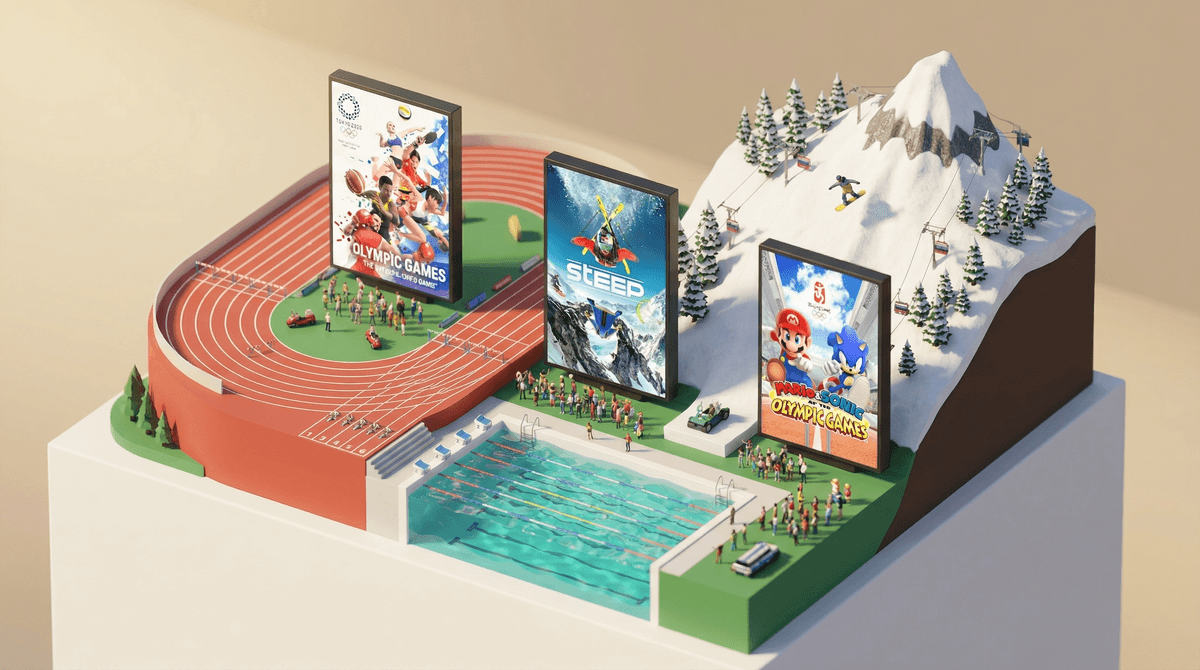
Olympics video games are exactly what they sound like: games that let kids (and let's be honest, adults) compete in Olympic sports from the comfort of their couch. We're talking everything from the cartoonish chaos of Mario & Sonic at the Olympic Games to hyper-realistic sports sims that actually make you appreciate just how hard a triple axel is.
These games have been around since the 8-bit era (shoutout to Track & Field button mashers), but they've evolved significantly. Today's Olympics games range from arcade-style party games perfect for family game night to serious simulations that require actual strategy and skill. Some are official Olympic tie-ins released around the Games, while others are standalone sports titles that happen to feature Olympic events.
The genre includes:
- Party/arcade games like the Mario & Sonic series (ages 6+)
- Realistic sims like Olympic Games Tokyo 2020 (ages 10+)
- Mobile games with Olympic themes (varies wildly)
- Individual sport games that happen to include Olympic events (FIFA, NBA 2K, etc.)
Olympics games hit a sweet spot: they're competitive without being violent, they're easy to pick up but can have depth, and they offer that magical combination of "I could totally do that" confidence combined with the reality check of "okay, maybe not."
The appeal breaks down like this:
For younger kids (6-10): The Mario & Sonic games are gateway drugs to both gaming and the Olympics. They're colorful, familiar characters are involved, and the mini-game format means short attention spans are actually an asset. Plus, there's something deeply satisfying about making Sonic do the 100m dash or watching Bowser attempt rhythmic gymnastics.
For tweens and teens (10+): More realistic games like Olympic Games Tokyo 2020 (now playable year-round despite the name) offer a chance to compete in sports they might actually do IRL—or sports they're curious about but will never try (looking at you, ski jumping). The character creation and customization scratches that identity-building itch that's so strong at this age.
The multiplayer factor: These games are genuinely fun for groups. Unlike battle royales where skill gaps can make things miserable, Olympics games often level the playing field. Your kid who's a Fortnite god might lose at virtual archery to their younger sibling, and that's actually refreshing.
Here's something worth knowing: during actual Olympic years, these games get a massive spike in interest. Kids watch Simone Biles stick a landing or Caeleb Dressel demolish a swim record, and suddenly they want to try it themselves. Video games become the accessible version of that impulse.
This isn't necessarily a bad thing! Studies show that sports video games can increase interest in real-world sports participation. The key word being "can"—not "will automatically." But if your kid is glued to the screen watching virtual skateboarding, there's at least a conversation starter about trying the real thing at the local skate park.
The good news: Olympics games are generally among the safest gaming options out there. No violence, minimal concerning content, and the worst language you'll encounter is usually a frustrated "Come on!" when someone false-starts a race.
The reality check: These games vary WILDLY in quality. Some are genuinely engaging with solid gameplay mechanics. Others are obvious cash grabs timed to Olympic years that play like they were developed in three weeks (because they probably were). Check parent reviews before purchasing, especially for lesser-known titles.
The online component: Many Olympics games include online multiplayer, which means the usual internet safety considerations apply. The good news is that these games tend to attract a less toxic player base than competitive shooters. The bad news is that "less toxic" doesn't mean "completely wholesome." Standard online gaming rules apply: voice chat off for younger kids, conversations about sportsmanship, etc.
The microtransaction situation: This varies by game. The Mario & Sonic series is generally free of this nonsense—you buy the game, you get the game. More realistic sims might have cosmetic purchases (uniforms, gear). Mobile Olympics games? Proceed with extreme caution and learn about in-app purchases before letting kids download.
Ages 6-8: Stick with Mario & Sonic at the Olympic Games or similar party-style games. The controls are simple, the content is squeaky clean, and the mini-game format works perfectly for short play sessions. These games also work great for family play—you can actually compete without your kid getting frustrated.
Ages 9-12: This is the sweet spot for most Olympics games. Kids have the motor skills for more complex controls and can appreciate both arcade and sim-style games. Olympic Games Tokyo 2020 works well here, as do sport-specific games like Tony Hawk's Pro Skater (which includes Olympic-style skateboarding).
Ages 13+: Teens can handle the full range, including more realistic sims with complex controls and strategy elements. They might also enjoy sport-specific games that go deeper into single Olympic sports—think Steep for winter sports or various swimming/track games.
Before you roll your eyes: Olympics games can actually be educational in ways that aren't totally cringe. Kids learn about:
- Geography and culture: Which countries excel at which sports, national flags, different Olympic venues
- Rules and scoring: How Olympic sports actually work (did you know there's a whole point system for diving?)
- Goal-setting and practice: The better sims require actual practice to improve, teaching persistence
- Sportsmanship: Winning and losing gracefully, respecting competitors
Is it the same as reading a book about Olympic history? No. But it's also not brain rot. It's somewhere in the middle, which describes most gaming honestly.
Olympics video games occupy a unique space: they're competitive without being violent, engaging without being addictive in the same way as some games, and they can actually spark interest in real-world physical activity.
Green flags:
- Clean content appropriate for most ages
- Can be genuinely fun for family play
- Might inspire real-world sports interest
- Generally positive gaming community
Yellow flags:
- Quality varies dramatically between titles
- Some games are obvious cash grabs
- Can still lead to excessive screen time like any game
- Online play requires standard safety precautions
The real question: Is your kid playing Olympics games instead of all physical activity, or alongside it? Are they learning about new sports and getting curious about trying them? Or is this just another screen to zone out in front of?
If Olympics games become a bridge to conversations about sports, goal-setting, and maybe even trying new activities, that's a win. If they're just another way to avoid going outside, that's worth addressing—but that's true of any game, not specific to Olympics titles.
If you're considering an Olympics game:
- Check reviews for the specific title—quality varies massively
- Consider your kid's age and gaming skill level
- Think about whether you want party-style or sim-style gameplay
- Look into whether it has online features and adjust settings accordingly
If your kid is already playing:
- Watch them play for 15 minutes—you'll learn a lot
- Ask which sports they find most interesting
- Look for real-world opportunities to try those sports
- Set the same screen time boundaries you would for any game
Want to go deeper? Check out alternatives to traditional sports games or learn more about setting up healthy gaming habits.
The Olympics happen every two years (alternating summer and winter), but these games can provide year-round fun. Just remember: the goal is balance. Virtual medals are cool, but they're even cooler when balanced with real-world play, whether that's shooting hoops in the driveway or just running around outside like a feral woodland creature. Both have their place.