

Octonauts: Above & Beyond—What Parents Need to Know About This Educational Adventure
TL;DR: Octonauts: Above & Beyond is a Netflix series that takes the beloved underwater exploration crew into terrestrial adventures, teaching preschoolers about animals, habitats, and environmental science. It's genuinely educational without being preachy, features diverse characters working as a team, and manages to be entertaining enough that you won't want to leave the room when your kid turns it on. Ages 3-7 will get the most out of it, though some intense rescue scenes might startle the youngest viewers.
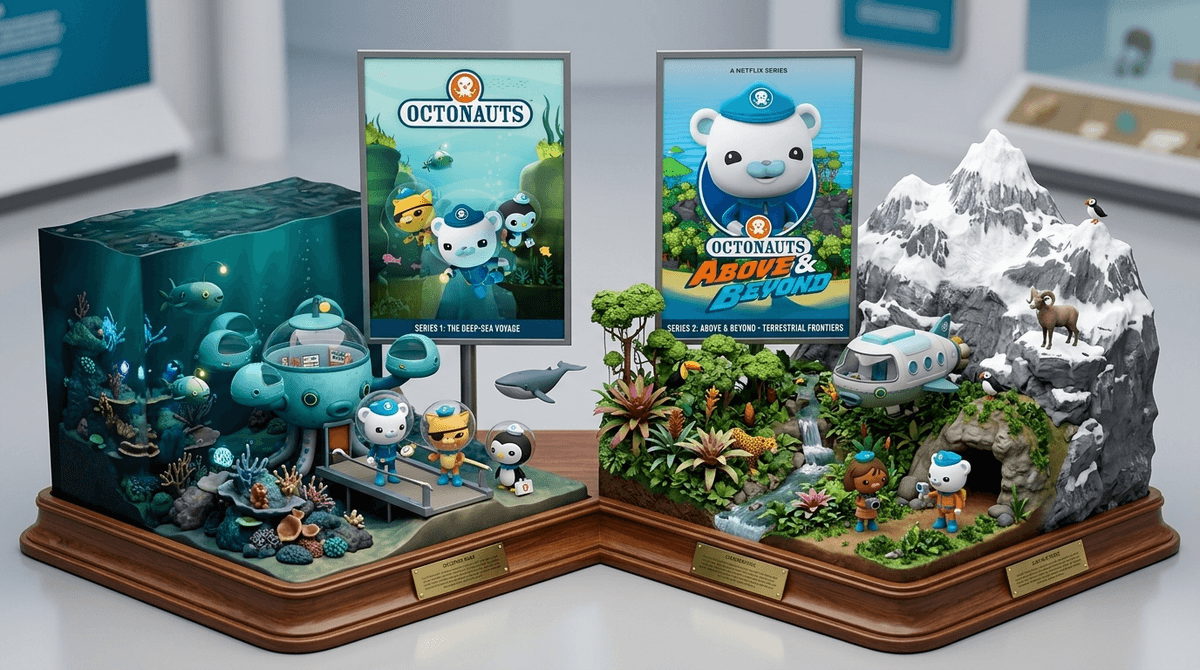
If you're already familiar with the original Octonauts, this is the natural evolution—literally. The crew ventures out of the ocean and onto land, exploring forests, deserts, mountains, and other terrestrial habitats. Captain Barnacles, Kwazii, Peso, and the rest of the gang are back, but now they're dealing with everything from desert foxes to mountain goats instead of just sea creatures.
Each episode follows the same structure: the Octonauts encounter an animal in distress or discover something fascinating about a habitat, learn about the creature's biology and behavior, work together to solve a problem, and wrap up with the "Creature Report" song that reinforces what kids just learned. It's formulaic in the best possible way—preschoolers thrive on predictability.
The show launched on Netflix in 2021 as a continuation of the original BBC/Disney Junior series, and it's maintained the same commitment to scientific accuracy that made the first iteration so popular with parents who actually care about what their kids absorb during screen time.
Here's the thing about Octonauts: Above & Beyond—it respects kids' intelligence. The show uses proper scientific terminology (biomes, nocturnal, herbivore) without dumbing anything down, but explains concepts clearly enough that a 4-year-old can follow along. Your kid will actually learn the difference between a fennec fox and an arctic fox, and they'll remember it because the information is embedded in an adventure story.
The characters model genuine problem-solving and teamwork. When something goes wrong, they don't panic or blame each other—they assess the situation, use their different skills, and figure it out together. Peso's medical knowledge, Tweak's engineering skills, and Shellington's research expertise all matter equally. It's a refreshingly collaborative dynamic in a media landscape full of lone hero narratives.
Parents appreciate that there's zero commercial tie-in pressure. No toy lines being shoved at you, no branded snacks at the grocery store, no begging for Octonaut merch at Target. The show exists to teach kids about animals and habitats, full stop.
Unlike shows that slap "educational" in the description and call it a day, Octonauts: Above & Beyond has serious scientific rigor. Marine biologists and wildlife experts consult on episodes, and it shows. The animal behaviors depicted are accurate, the habitat information is current, and the environmental themes are woven in naturally rather than feeling like after-school special lectures.
Each episode focuses on a specific animal and habitat, covering topics like:
- Animal adaptations (how fennec foxes' large ears help them stay cool)
- Food chains and ecosystems (predator-prey relationships, decomposers, pollinators)
- Conservation challenges (habitat loss, climate change impacts, human-wildlife conflict)
- Scientific observation (tracking, data collection, hypothesis testing)
The "Creature Report" song at the end of each episode reinforces key facts in a catchy, memorable way. Fair warning: these will get stuck in your head. You'll be humming about caracal hunting techniques while making dinner.
Best for ages 3-7, though the upper end of that range might start finding it a bit young. Here's the breakdown:
Ages 3-4: Perfect entry point. The 11-minute episode length is ideal for short attention spans, the characters are distinct and easy to follow, and the problems are straightforward enough that toddlers can understand what's happening. Some rescue scenes involve animals in mild peril (stuck, lost, injured) which might worry sensitive kids, but everything always works out fine.
Ages 5-7: Still highly engaging for this age group, especially kids interested in animals and science. They'll pick up on more of the scientific details and environmental themes. Some kindergarteners and first graders might start preferring shows with more complex plots, but many will happily watch this alongside younger siblings.
Ages 8+: Most kids this age will have aged out, though animal-obsessed kids might still enjoy it. Could work well as background viewing or for family watching with younger siblings.
According to Common Sense Media, parents appreciate that there's essentially zero concerning content—no violence beyond mild rescue scenarios, no inappropriate language, no commercial messages, nothing that requires you to hover nervously ready to grab the remote.
The show is remarkably clean, but here are a few things to be aware of:
Mild peril: Animals are sometimes in danger—trapped, injured, separated from parents, threatened by predators. The Octonauts always save the day, but sensitive kids might find these moments stressful. Movieguide notes that parents may want to guide younger viewers through scenes involving conflict.
Environmental themes: The show doesn't shy away from conservation topics like habitat destruction and climate change impacts. This is presented matter-of-factly rather than doom-and-gloom, but it might prompt questions about why humans are causing problems for animals.
Scary animals: Predators like crocodiles, big cats, and birds of prey appear regularly. They're portrayed accurately (not as villains), but their hunting behaviors are shown. Nothing graphic, but it's nature.
Looking at Screenwise community data, about 40% of families use Netflix for kids' content regularly, with another 40% having kids' profiles they monitor closely. The average family in our community logs about 4.2 hours of screen time daily across all devices, with that jumping to 5 hours on weekends.
If you're going to allocate some of that time to TV, Octonauts: Above & Beyond is genuinely one of the better choices. The educational value is legitimate, the messaging is positive, and the pacing is calm enough that it won't leave your kid wired and bouncing off walls afterward.
That said, it's still screen time. The show works best when you:
- Watch together sometimes and talk about what you're seeing ("Why do you think that animal has such big ears?")
- Follow up with related activities (drawing the animals, reading library books about habitats, visiting a zoo or nature center)
- Use it strategically rather than as default background noise
Check out our guide on balancing educational vs. entertainment screen time for more thoughts on making the most of shows like this.
If your kid loved the original underwater Octonauts, they'll almost certainly enjoy Above & Beyond. The format is nearly identical, just with terrestrial animals instead of marine life. The animation quality is comparable, the voice acting is consistent, and the educational approach is the same.
The main difference is variety—there are simply more types of land habitats and animals to explore than ocean zones, so the episodes feel a bit more diverse. Some parents report that their ocean-obsessed kids were initially resistant to the land-based adventures but came around quickly once they realized the formula they loved was intact.
If your kid is into Octonauts: Above & Beyond, they might also enjoy:
- Wild Kratts—similar animal education focus but for slightly older kids (ages 6-10)
- Bluey—not animal education, but similarly thoughtful and parent-approved
- Ask the StoryBots—science education across various topics
- Elinor Wonders Why—PBS show about scientific inquiry and nature
Explore more educational shows for preschoolers if you're building out a rotation.
Octonauts: Above & Beyond is exactly what it claims to be: an educational adventure show that teaches preschoolers about animals, habitats, and environmental science through engaging stories and likable characters. There's no hidden agenda, no concerning content, no commercial manipulation—just solid science education wrapped in entertaining adventures.
Is it going to change your kid's life? No. But it's a genuinely worthwhile use of screen time that might spark an interest in biology, foster empathy for animals, and model positive teamwork. In a media landscape full of low-effort content designed purely to capture eyeballs, that's worth celebrating.
If you've got a 3-7 year old who's curious about animals or needs a calm, educational show option, this is an easy yes. Queue it up on Netflix and feel good about the choice.
- Start with a few episodes together to gauge your kid's interest and see if any content concerns you
- Set up Netflix parental controls if you haven't already to manage what else they might encounter
- Find other animal-focused educational content
 if you want to build out a playlist
 - Consider pairing viewing with hands-on activities—the show's website has printable creature reports and activity sheets
The show isn't going anywhere, so there's no rush. But when you need 20 minutes of peace and want your kid to actually learn something, Octonauts: Above & Beyond delivers.