

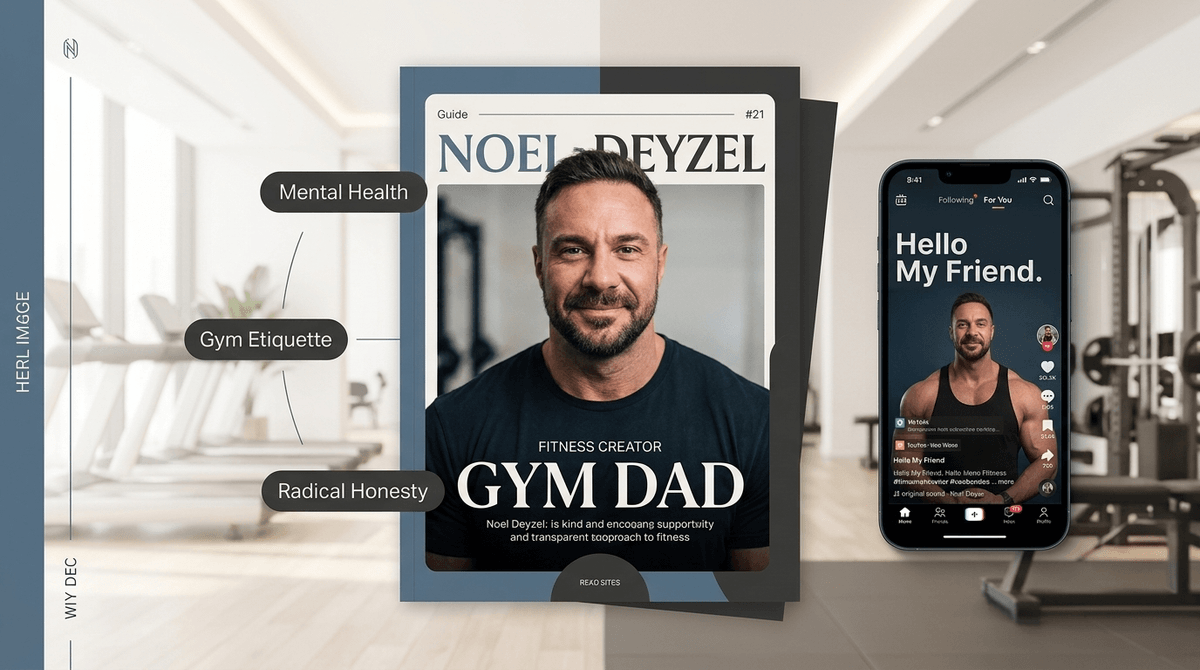
TL;DR: Noel Deyzel (often called "Daddy Noel") is a South African IFBB Pro bodybuilder and massive social media personality. Unlike the toxic "alpha" influencers who dominate teen boys' feeds, Deyzel focuses on mental health, gym etiquette, and radical honesty about performance-enhancing drugs (PEDs). If your teen is spending hours at the gym or watching fitness content on YouTube and TikTok, Noel is likely the most positive influence they’ll encounter in that space.
Quick Links:
If you have a son between the ages of 13 and 19, there is a 90% chance he has seen Noel Deyzel on his phone. Noel is a professional bodybuilder with a massive physical presence—we’re talking "superhero proportions"—but his personality is the exact opposite of the aggressive, "bro-y" stereotype you might expect.
He rose to fame on TikTok and Instagram by posting short, punchy videos that usually start with him standing in front of a mirror, addressing the viewer as "my friend." While his content is centered on fitness, it’s really about life. He tackles everything from how to deal with a breakup to why you shouldn't feel intimidated when walking into a gym for the first time.
In a digital landscape filled with "Sigma" edits and influencers pushing "hustle culture" to the point of exhaustion, Noel has become the internet’s collective "Gym Dad." He’s the guy who tells you that it’s okay to have a bad day, that your worth isn’t tied to the weight on the bar, and that being a "massive" human being means nothing if you aren't a kind one.
Teenage boys are currently experiencing a massive surge in "gym culture." Driven by the TikTok algorithm, many boys are becoming hyper-focused on their physique earlier than ever before. Noel appeals to them for three main reasons:
- The Aesthetic: Let’s be real—kids follow him because he looks like a real-life action figure. He has the "physique goals" that many young men are chasing.
- The "Daddy Noel" Persona: The internet nicknamed him "Daddy Noel" because of his protective, nurturing tone. He offers the kind of straightforward, non-judgmental advice that teens often feel they can’t get from their actual parents or teachers.
- Radical Honesty: In an industry where everyone pretends to be "natural" while clearly using steroids, Noel is famously open about his use of PEDs (performance-enhancing drugs). This honesty builds a level of trust with Gen Z that "fake natty" influencers simply can't match.
Learn more about the "Sigma" male trend and its impact on boys
Noel’s content can be broken down into a few key categories that are actually incredibly helpful for parents to understand.
A lot of Noel’s most popular videos are about how to behave in public spaces. He calls out "tripod culture" (people getting angry when someone walks in front of their camera at the gym) and reminds kids that everyone in the gym is on their own journey. He encourages teens to be the person who helps a beginner rather than the person who mocks them.
This is where Noel really shines. He is incredibly vocal about his own struggles with body image. He frequently posts videos reminding his followers that the "shredded" look they see on Instagram is often the result of lighting, dehydration, and professional photography—and that it isn't sustainable or healthy year-round.
Noel doesn't promote steroids; in fact, he often does the opposite. He speaks openly about the health risks, the hair loss, the hormonal imbalances, and the regret associated with starting too young. By being honest about his own use, he strips away the "magic pill" mystery that often leads curious teens down dangerous paths.
If your teen is into Noel Deyzel, they are likely being fed other fitness creators. Here is the Screenwise breakdown of the good, the bad, and the "be careful."
Ages 15+ Sam is the current "king" of fitness YouTube. He’s young, incredibly soft-spoken, and records long, unedited videos of his workouts and "car talks." While he is generally positive and avoids drama, his extreme diet and massive size (which implies PED use, though he doesn't talk about it much) can be a catalyst for body dysmorphia in younger teens.
Ages 13+ If you have a daughter (or son) interested in fitness, Patty is fantastic. She focuses on functional strength, mobility, and has a very goofy, self-deprecating sense of humor. She avoids the "fitness model" tropes and focuses on what the body can do rather than just how it looks.
Ages 13+ If your teen is serious about the gym, Strong is a great, no-nonsense tool. It’s just a workout tracker. No social feed, no influencers, no "fitspo"—just data and progress. It’s a much healthier way to engage with fitness than scrolling through Instagram.
Ages 16+ (With Caution) While MyFitnessPal is the gold standard for tracking nutrition, it can be a slippery slope for teens prone to obsessive behavior or eating disorders. Noel often talks about "bulking" and "cutting," which might lead kids to start tracking every calorie. This is a "monitor closely" app.
Middle School (Ages 11-13): At this age, the focus should be on "movement" rather than "bodybuilding." Kids this age are susceptible to the "superhero" trap. Noel is safe for them to watch, but you should counter the content with reminders that their bodies are still growing and shouldn't be pushed to these extremes yet.
High School (Ages 14-18): This is the prime demographic for Noel. This is also the age where the pressure to use "supplements" (or worse) starts. Noel’s videos can actually serve as a great conversation starter about the reality of the fitness industry.
Check out our guide on the best workout apps for teens
While Noel Deyzel himself is a "Green Flag" creator, the world he inhabits has some dark corners. The biggest concern for parents today isn't necessarily the content itself, but the "Muscle Dysmorphia" (often called "Big-orexia") that it can trigger.
Even though Noel says "don't compare yourself to me," the human brain—especially the teenage one—does it anyway. If you notice your teen:
- Refusing to eat family meals because they can't "track the macros."
- Spending more than 2 hours at the gym every single day.
- Becoming anxious or depressed when they miss a workout.
- Buying "pre-workout" supplements with massive amounts of caffeine.
...then it’s time to have a talk. Noel would actually support you in this. He frequently tells his followers that "life happens outside the gym."
Don't go in tech-shaming. If you walk in and say, "That guy is too big, it’s gross," your teen will shut down. Instead, try these Noel-inspired conversation starters:
- "I saw a video of that Noel guy talking about gym etiquette. Do you see people actually acting like jerks with their cameras at your gym?"
- "He’s pretty open about using steroids to get that big. What do you think about that? Does it make you less interested in the 'pro' look?"
- "I like that he talks about mental health. Do you feel like the fitness stuff you see on TikTok makes you feel better about yourself, or does it ever make you feel like you're not doing enough?"
Noel Deyzel is one of the "Good Ones." In a sea of toxic masculinity and fake fitness "gurus," he stands out as a genuine, kind, and responsible adult. He isn't teaching your kids to be "alpha males"; he's teaching them to be disciplined, respectful, and honest with themselves.
If your teen is going to be in the "Gym-Tok" world, you want Noel Deyzel to be the one leading their algorithm.
- Watch a few of his "Shorts" on YouTube so you recognize his voice and style.
- Check the supplement cabinet. If you see "Pre-workout" or "Creatine," See safety information about teen supplements.
- Encourage the "Etiquette." Praise your teen when they show the kind of character Noel talks about—helping others, being patient, and staying humble.