

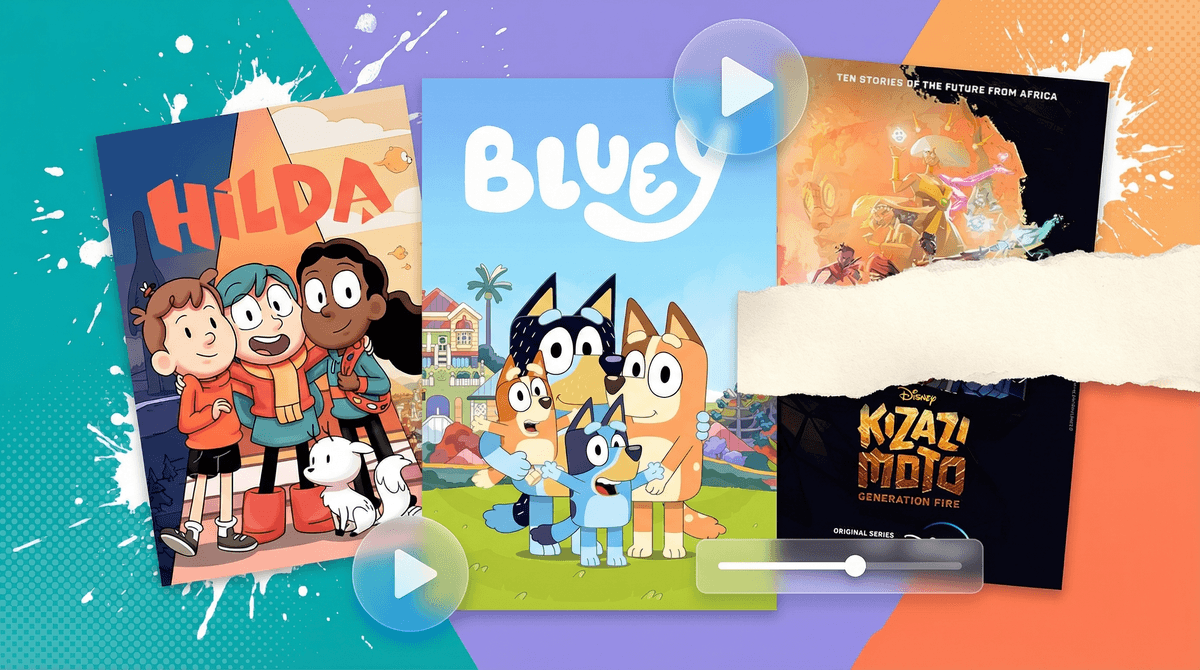
Look, I get it. You open Netflix, Disney+, or whatever streaming app your kid has commandeered, and suddenly there are seventeen new shows with suspiciously similar animation styles, all promising to be "the next big thing." Meanwhile, your kid is rewatching Bluey for the 47th time or asking about something they saw on YouTube that definitely wasn't meant for their age group.
So what's actually worth your attention in new kids programming? Let's cut through the noise.
The landscape right now: About 92% of families in our Screenwise community are using TV/streaming services, with 40% saying their kids have regular Netflix access and 50% watching Disney+ content together as a family. That "together" part? That's actually the sweet spot for new shows worth exploring.
The past few months have brought a genuine mixed bag. On one end, you've got shows like Kizazi Moto (Disney+) — a stunning anthology of African sci-fi stories that's visually gorgeous but skews older (think 10+). On the other end, there's the endless parade of low-budget CGI shows that look like they were animated by someone's cousin who just discovered Blender.
Here's what's actually making waves:
The "Finally, Something New" Category:
- Shows that blend education with actual entertainment (not the preachy kind)
- Reboots that don't completely butcher the original (rare, but they exist)
- International content that's getting proper English dubs/subs
The "Why Does This Exist" Category:
- Cash-grab spinoffs of popular movies that should've stayed movies
- Shows clearly designed to sell toys first, entertain never
- Content that's technically "for kids" but feels like it was written by an algorithm
Forget the marketing hype. Here's what matters when evaluating new kids shows:
Age-appropriateness isn't just about content ratings. A show can be rated TV-Y and still be mind-numbing garbage, or it can be TV-Y7 and genuinely entertaining for your 5-year-old. The rating tells you about scary content or language, not about whether it's actually good or developmentally appropriate.
Pacing matters more than you think. A lot of new shows are adopting the YouTube/TikTok rapid-fire editing style — quick cuts, constant stimulation, zero breathing room. This isn't inherently evil, but if your kid can't sit through a 22-minute episode without bouncing off the walls, the pacing might be the culprit. Compare that to something like Hilda, which lets moments breathe.
The "watch together" test is real. If you can't make it through an episode without wanting to throw the remote, that's data. The 50% of families watching Disney+ together aren't just being precious about screen time — they're recognizing that shared viewing creates opportunities for conversation and actually makes the experience less isolating.
Red flags in new shows:
- Characters solving problems through yelling or physical comedy that's just... mean
- Zero consequences for bad behavior (not talking about fantasy violence, talking about being a jerk to friends)
- Product placement that makes you feel like you're watching a 22-minute commercial
- Humor that relies entirely on gross-out jokes or making fun of people
Green flags:
- Characters who actually talk through conflicts (revolutionary, I know)
- Diverse representation that feels natural, not tokenized
- Story arcs that build over multiple episodes (teaches patience and delayed gratification)
- Content that sparks questions or conversations afterward
Ages 2-5: New shows for this age group are honestly hit-or-miss. Stick with established winners like Bluey or Daniel Tiger's Neighborhood unless a new show gets serious buzz from actual parents (not just marketing). At this age, repetition is actually good for learning, so rewatching isn't the enemy you think it is.
Ages 6-8: This is where new adventure shows and comedies can really land. Look for shows with 11-15 minute episode lengths — long enough for a story, short enough to maintain attention. Check if the humor works on multiple levels (you'll thank yourself during the inevitable binge sessions).
Ages 9-12: Tweens want shows that feel more "grown up" without actually being inappropriate. New animated series are getting really good at this sweet spot. Watch for shows that deal with real emotions — friendship drama, family dynamics, identity questions — without being after-school-special preachy about it.
Ages 13+: At this point, you're basically vetting the same content you'd watch yourself. The question isn't "is this a kids show" but "does this align with our family values" and how do we talk about the themes afterward .
.
The First Episode Test: Watch the first episode with your kid (or without them first, if you're feeling cautious). Ask yourself:
- Would I be okay with them watching this alone?
- Does this encourage behavior I'm cool with?
- Is there anything here we should talk about?
The Binge Behavior Test: Notice how your kid acts after watching. Are they wired and hyper? Thoughtful and asking questions? Immediately imitating annoying catchphrases? This tells you more than any content rating.
The Longevity Test: Some shows are fine in small doses but become genuinely irritating over time. Trust your gut on this. If you're dreading the moment they ask to watch it again, that's valuable information.
Not every new show needs to be educational television. Not every show needs to teach a lesson. Sometimes a show can just be... fun. The key is finding new content that's fun without being obnoxious, engaging without being overstimulating, and entertaining without making you want to cancel all your streaming subscriptions.
The 20% of families in our community who've opted out of Netflix entirely? They're not wrong. The 40% who watch regularly with their kids? Also not wrong. The goal isn't perfection — it's being intentional about what you're bringing into your home and having honest conversations about it.
Next Steps:
- Check out our guide to evaluating kids shows for a deeper framework
- If you're drowning in options, explore alternatives to endless streaming
- Want specific recommendations? See age-appropriate kids show recommendations for your specific situation
And remember: if your kid wants to rewatch the same "old" show for the hundredth time instead of trying something new? That's actually totally fine. Comfort viewing is real, and sometimes the best new show is the one they already love.