

Look, we're not talking about the token "girl power" character who shows up to kick one bad guy and then needs rescuing. We're talking about films where girls and women are complex, capable protagonists who drive the story forward—making mistakes, showing vulnerability, demonstrating courage, and solving their own problems.
These are movies where female characters aren't just strong in the "can throw a punch" way (though some definitely can), but strong in the "has agency, makes choices, faces consequences, and grows" way. They're scientists, warriors, leaders, artists, adventurers, and regular kids figuring things out. They're flawed and real and actually interesting to watch.
Screenwise Parents
See allThe good news? There are way more of these movies now than when most of us were kids. The less-good news? You still have to wade through a lot of "she's not like other girls" garbage and films where the "strong female lead" is really just... mean and has no personality beyond being tough.
Here's the thing: kids absorb narrative patterns like sponges. When girls only see themselves as sidekicks, love interests, or characters whose main job is to look pretty and be rescued, that shapes how they see their own potential. When boys only see girls in those roles, that shapes their expectations too.
Movies with genuinely strong female leads do a few important things:
- Expand the "possible" for girls: They see themselves as scientists (Hidden Figures), warriors (Mulan), leaders (Moana), inventors, explorers, problem-solvers
- Normalize equality for boys: When half the heroes are girls, it's just... normal
- Create better storytelling: Honestly, when you double your protagonist options, you get more interesting stories
- Spark real conversations: These films give you natural openings to talk about courage, leadership, standing up for what's right, and what strength actually means
And before anyone gets weird about it—no, watching Brave isn't going to make your son less masculine. It's going to make him a person who can appreciate a good story and recognize that girls are, you know, people.
Ages 3-7: Animated Heroines Who Get Stuff Done
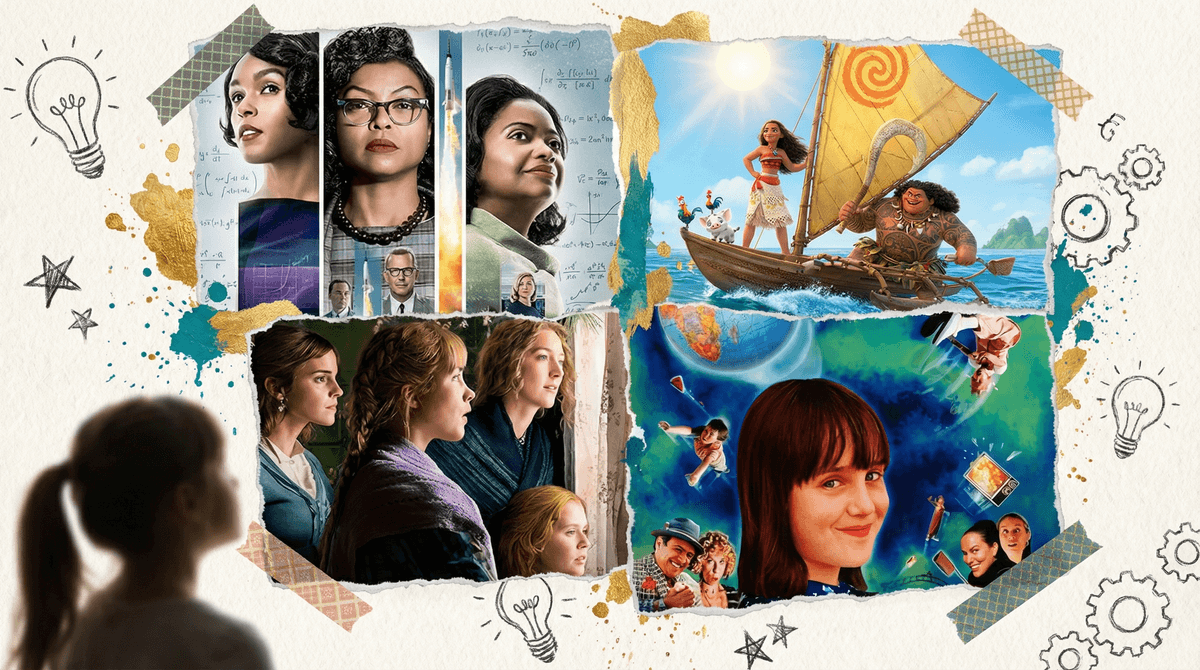
Moana is basically the gold standard here. She's brave, makes mistakes, learns from them, and saves her people—all without a love interest subplot. The music slaps, the animation is gorgeous, and the message about finding your path is genuinely moving.
Encanto gives you Mirabel, who's heroic specifically because she's the "ordinary" one in a family of superpowered people. Great for kids who feel like they don't measure up.
Brave has Merida, who's stubborn and makes some really bad choices (turning your mom into a bear, yikes), but the film is actually about repairing relationships and understanding consequences. Plus, archery.
Raya and the Last Dragon tackles trust and betrayal in surprisingly sophisticated ways for a kids' movie. Raya is a warrior, but the film's about learning when to fight and when to trust.
Ages 8-12: Getting More Complex
Hidden Figures is perfect for this age—real women, real history, real math. Katherine Johnson, Dorothy Vaughan, and Mary Jackson are brilliant, determined, and fighting against both sexism and racism to literally send people to space. PG-rated but doesn't shy away from showing discrimination.
The Hunger Games (PG-13, so upper end of this range) has Katniss, who's complicated and traumatized and not always likable—which makes her realistic. She's protecting her sister, surviving impossible odds, and becoming a symbol of revolution mostly against her will.
Matilda gives you a brilliant girl who uses her mind (and okay, telekinesis) to stand up to abusive adults. It's about finding your people and using your gifts.
Akeelah and the Bee follows a girl from South LA competing in the National Spelling Bee. It's about academic achievement, community support, and not dumbing yourself down.
Ages 13+: Real Talk Territory
Little Women (2019 version) is Greta Gerwig's masterpiece about Jo March and her sisters navigating ambition, art, love, and what women's choices looked like in the 1860s. Spoiler: a lot of the same pressures still exist.
Lady Bird is about a teenage girl who's kind of a mess, kind of selfish, and completely real. It's about the complicated relationship between mothers and daughters and figuring out who you are.
Everything Everywhere All at Once is R-rated and absolutely bonkers, but it's about a middle-aged Chinese immigrant woman who saves the multiverse while processing her relationship with her daughter. For older teens who can handle some violence and existential chaos.
Hidden Figures works even better for this age group when they can fully appreciate the historical context and systemic barriers these women overcame.
Not all "strong female lead" movies are created equal. Some red flags:
"She's not like other girls" syndrome: When a female character is only strong by putting down other women or rejecting anything feminine. Real strength doesn't require making other girls the enemy.
Strength = just being mean: Some movies confuse "strong" with "has no emotions and is rude to everyone." That's not strength, that's just bad character development.
The sexy lamp test failure: If you could replace the female lead with a sexy lamp and the plot wouldn't change, that's not actually a strong female lead. She needs to drive the story.
Trauma as personality: When a female character's entire personality is "had something bad happen to her once." Trauma can be part of a character's story, but it shouldn't be their only trait.
After watching together, try these conversation starters:
- "What problem did [character] solve in this movie? How did she figure it out?"
- "What mistakes did she make? What did she learn?"
- "Who helped her? Did she help anyone else?"
- "What was she scared of? How did she handle that fear?"
- "If you were in her situation, what would you have done differently?"
For older kids, you can go deeper:
- "How did other characters treat her differently because she was a girl? How did she respond?"
- "What did she have to give up or risk to achieve her goal? Was it worth it?"
- "How did her relationships change throughout the movie?"
Movies with strong female leads aren't just "for girls"—they're for anyone who wants to see good storytelling with interesting characters. They expand what's possible in kids' imaginations and normalize the idea that girls can be the heroes of their own stories.
The best ones show female characters who are brave and scared, strong and vulnerable, confident and uncertain—you know, like actual humans. They make mistakes, learn from them, and grow. They have relationships that matter. They solve problems in different ways.
Start with age-appropriate picks that match your kids' interests. Love adventure? Try Moana or Raya. Into science? Hidden Figures all the way. Want something funny? Matilda delivers.
And remember: the goal isn't to only watch movies with female leads, but to make sure they're part of the rotation. When kids grow up seeing diverse protagonists as normal, they don't have to unlearn limiting beliefs later.
Want more recommendations? Check out our guides on movies that spark meaningful conversations or shows with positive female role models.
Curious about what other families are watching? Screenwise can show you what movies are popular with kids in your child's age group and how they compare on representation and values.
Need help talking about gender stereotypes? Our guide on discussing gender roles with kids has conversation starters for every age.