

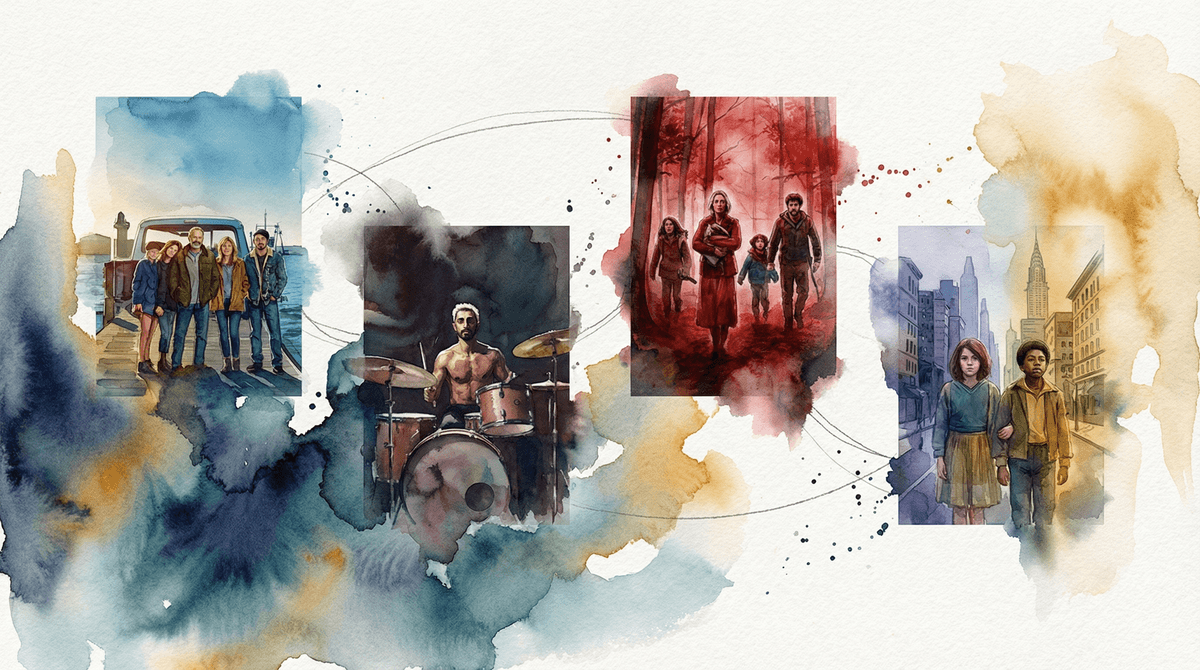
We're talking about films that feature deaf or hard-of-hearing characters in meaningful roles—not just background representation, but stories where deafness is part of the character's identity and experience. These range from documentaries about Deaf culture to mainstream films with deaf protagonists, and they're becoming more common (and better made) as Hollywood slowly catches up to what representation actually means.
The best of these films don't treat deafness as a plot device to overcome or a tragedy to fix. They show deaf characters as full human beings—funny, flawed, complex, living their lives. And crucially, many of these films are now made by deaf creators, starring deaf actors, which makes all the difference in authenticity.
Here's the thing: most kids will encounter someone who is deaf or hard-of-hearing at some point in their lives, if they haven't already. And if your family hasn't had many opportunities to learn about Deaf culture or different ways of communicating, movies can be an accessible entry point for conversations about inclusion, accessibility, and the fact that there are many valid ways to experience the world.
But beyond the "teaching moment" angle (which, let's be real, kids can smell from a mile away), these are often just really good movies. When done well, they're compelling stories that happen to expand your kid's understanding of human experience. That's kind of the sweet spot for family viewing—entertainment that also broadens perspective without feeling like homework.
Also worth noting: for deaf and hard-of-hearing kids, seeing themselves represented on screen matters enormously. If that's your family, you already know how rare it is to find authentic representation, and how powerful it can be when you do.
Ages 6-10
CODA (PG-13, but the rating is mostly for some language and teen themes—totally fine for mature 9-10 year olds)
This is the gold standard right now. It won Best Picture for a reason. Ruby is the only hearing person in her deaf family, and the film beautifully captures the push-pull of being needed as an interpreter while also wanting her own life. The deaf actors (including the incredible Marlee Matlin) are phenomenal, and the film treats ASL as a full, rich language. Fair warning: you will cry. The family dynamics are so well-done it hurts.
Wonderstruck (PG)
This one's a bit of a sleeper hit from director Todd Haynes. It weaves together two timelines—one in 1977, one in 1927—both featuring deaf children searching for connection. It's visually stunning and the 1927 storyline is told as a silent film, which is a cool way to experience storytelling without sound. Best for kids who can handle slower pacing and non-linear narratives (so, probably 9+).
Ages 11-14
A Quiet Place (PG-13)
Okay, this is a horror-thriller, so know your kid's tolerance level. But it's also a fascinating case study in how ASL becomes a survival advantage when you need to stay silent. The family uses sign language because their daughter is deaf, and that skill becomes essential when monsters hunt by sound. Millicent Simmonds, who is deaf, plays the daughter and was instrumental in making sure the ASL was accurate and meaningful to the plot. It's genuinely tense but not gratuitously scary, and it sparked tons of interest in ASL among teens.
Sound of Metal (R, but hear me out)
This is rated R primarily for language, and it's heavy thematically—it follows a drummer who loses his hearing. But for older middle schoolers (13-14) who are ready for more serious content, it's an incredible portrayal of someone navigating a new identity and learning about Deaf culture. The sound design is remarkable—you experience his hearing loss with him. This is one to potentially watch yourself first and decide if it's right for your teen.
Ages 15+
This 1986 film starring Marlee Matlin (who won an Oscar for it) is a classic for a reason. It's a romance between a deaf woman who refuses to speak and a hearing teacher at a school for the deaf. It's dated in some ways, but it's still a powerful exploration of communication, autonomy, and the politics of deafness. The R rating is for sexual content, so it's definitely for older teens.
The Hammer (Not Rated)
This is a biographical film about Matt Hamill, the first deaf wrestler to win a National Collegiate Wrestling Championship. It's inspiring without being schmaltzy, and it shows both the barriers he faced and his determination. Great for sports-loving teens.
Documentaries (Various Ages)
Audism Unveiled (Not Rated, Ages 12+)
This documentary explores "audism"—discrimination against deaf people—and is a really important education on Deaf culture and history. It's not a light watch, but it's eye-opening.
Deaf President Now! (Not Rated, Ages 10+)
This covers the 1988 student protests at Gallaudet University, when students demanded a deaf president for their historically deaf university. It's a great civics lesson wrapped in disability rights history.
The difference between "deaf" and "Deaf": You might notice some sources capitalize "Deaf" and others don't. This is intentional. Lowercase "deaf" typically refers to the audiological condition of not hearing. Uppercase "Deaf" refers to cultural identity—people who are part of Deaf culture, use sign language as their primary language, and see themselves as part of a linguistic minority rather than as having a disability. Not all deaf people identify as Deaf, and that's a personal choice. When watching these films, you might notice this distinction playing out.
ASL is a real language: American Sign Language isn't just English translated into hand gestures—it's a complete language with its own grammar, syntax, and regional dialects. Watching films with ASL can be a cool way to introduce kids to this concept of linguistic diversity.
Captions are your friend: Obviously these films will have captions/subtitles for the ASL portions, but this is also a good opportunity to normalize watching things with captions on in general. Lots of kids (and adults!) actually prefer captions—they help with comprehension and are essential for accessibility.
Not all representation is equal: Earlier films about deaf characters were often made by hearing people, starring hearing actors, and focused on the "tragedy" of deafness or the "miracle" of learning to speak. Newer films, especially those with deaf creators and actors, tend to be way more authentic and less patronizing. This evolution itself can be an interesting discussion point with older kids about whose stories get told and who gets to tell them.
After watching together, some conversation starters:
- "What did you notice about how they communicated?" (Resist the urge to lecture—just see what they picked up on)
- "How was [character's] experience similar to or different from yours?" (This helps them connect rather than see it as purely educational)
- For older kids: "Why do you think there haven't been more movies like this until recently?"
- "Want to learn some basic ASL together?" (There are tons of YouTube channels and apps—make it a fun family thing, not a chore)
If your kid expresses interest in learning ASL, that's awesome. Here's what you should know about kids learning sign language . Just approach it with respect—it's a real language and a real culture, not a party trick.
Movies with deaf characters offer something valuable: they expand the narrow definition of "normal" that mainstream media usually presents. They show different ways of communicating, different ways of experiencing the world, and different ways of building community.
But here's what I really appreciate about the best of these films: they're not after-school specials. They're not trying to make you feel good about yourself for watching. They're just good stories about interesting people who happen to be deaf. That's the representation that actually matters—when it's so well-integrated that you forget you're supposed to be learning something, and you're just... watching a great movie.
Start with CODA if you haven't seen it yet. It's genuinely one of the best family films of the past few years, period. And if your kids get into it, there's a whole world of content out there that's finally starting to reflect the actual diversity of human experience.
And hey, if you want more recommendations for inclusive media, check out our guide to movies and shows with diverse representation or Get movie recommendations with authentic representation.