

Look, we all know the drill: movie night rolls around and you're scrolling through Netflix for the hundredth time, past the same superhero sequels and animated franchises. But what if instead of just looking for something that'll keep the kids quiet for 90 minutes, you picked a film that could actually... matter?
Movies that inspire change aren't necessarily documentaries or educational films (though some are). They're stories that stick with your kids long after the credits roll—films that make them think differently about the world, question injustice, or see themselves as someone who can make a difference. We're talking about movies with empathy, courage, and social responsibility baked right into the story.
Screenwise Parents
See allAnd here's the thing: these movies work because they're actually good. Kids don't want to be lectured. They want to be moved, entertained, and maybe have their worldview gently expanded without realizing it's happening.
The research is pretty clear: media shapes how kids understand the world. When children see characters standing up against injustice, showing compassion across differences, or fighting for what's right, it literally rewires how they think about their own capacity for change.
But beyond the academic stuff, there's something simpler going on. In a world where kids are bombarded with content designed to keep them scrolling and clicking, intentionally choosing films that inspire change is one of the most powerful parenting moves you can make. You're saying: "In this house, we think about what we watch. We choose stories that matter."
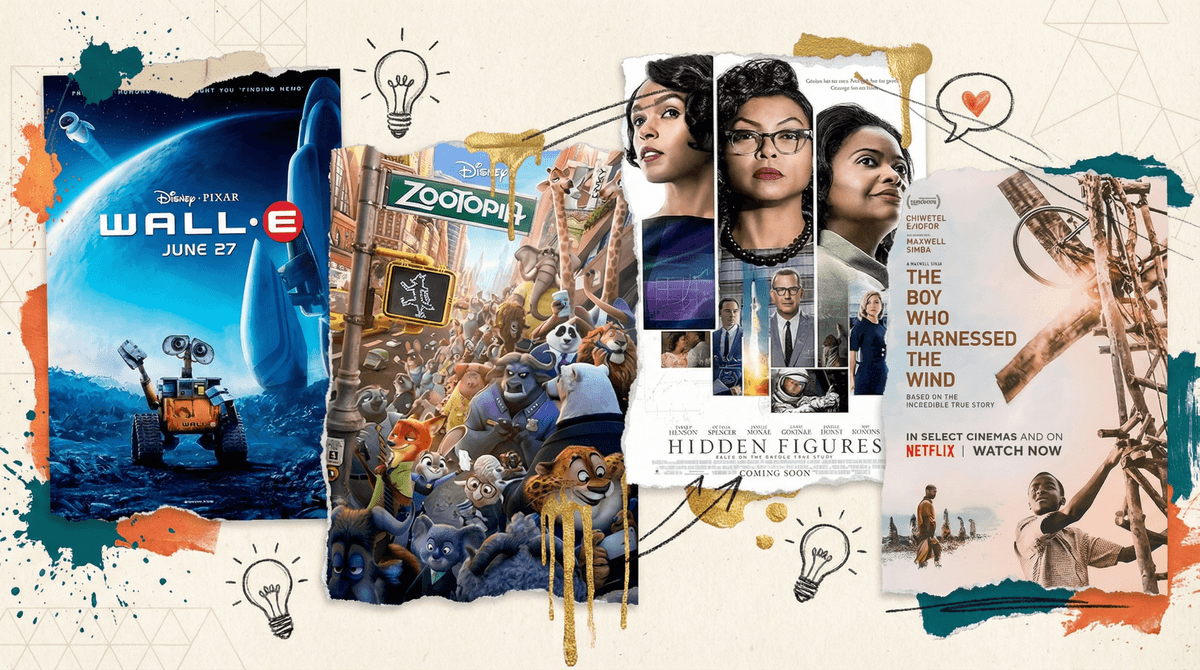
Plus, honestly? These conversations are often easier to have through someone else's story. Talking about racism through Remember the Titans or environmental responsibility through Wall-E feels less like a lecture and more like... just talking about a movie.
Ages 5-8: Start with empathy and kindness
At this age, you're building the foundation. Look for films that show:
- Characters being kind when it's hard
- Standing up for friends
- Understanding others' feelings
Try: Zootopia (prejudice and stereotypes), Inside Out (emotional intelligence), or Paddington (welcoming outsiders).
Ages 9-12: Introduce bigger concepts
Middle elementary kids can handle more complexity. They're ready for stories about:
- Social justice and fairness
- Environmental issues
- Historical injustices (age-appropriate versions)
- Standing up against peer pressure
Try: Hidden Figures (racism and sexism in STEM), Akeelah and the Bee (perseverance and community), Coco (cultural identity and family), or The Karate Kid (bullying and mentorship).
Ages 13+: Go deeper
Teens can handle nuance, moral ambiguity, and heavier topics. They're ready for:
- Complex social issues
- Historical atrocities
- Systemic problems
- Films that don't tie everything up neatly
Try: Selma (civil rights movement), The Hate U Give (police brutality and activism), Erin Brockovich (environmental justice), or 12 Angry Men (justice and prejudice).
Here's where parents often stumble: they pick a great movie, everyone watches it, and then... nothing. Or worse, they launch into a 20-minute lecture that makes the kids regret ever agreeing to movie night.
During the movie:
- Don't over-explain. Let the story do its work.
- It's okay to pause for quick context if needed (especially for historical films)
- Notice what catches their attention
After the movie: Start with open questions, not statements:
- "What did you think about when [character] decided to...?"
- "How do you think [character] felt when...?"
- "Have you ever seen anything like that happen?"
- "What would you have done?"
The next day: This is actually the sweet spot. Bring it up casually: "I was thinking about that movie we watched..." Kids often need time to process before they're ready to talk.
Connect it to real life:
- "Remember in [movie] when... I saw something similar today..."
- Point out real-world examples in age-appropriate ways
- Share your own experiences when relevant
Not every movie needs a deep discussion. Sometimes it's enough that they watched it. The seeds are planted.
Your kids might surprise you. That film you thought would go over their head? They might come back to it months later with questions.
Representation matters, but so does good storytelling. Don't just pick movies because they check diversity boxes. Pick them because they're actually compelling. Kids can smell tokenism a mile away.
Some movies hit different at different ages. The Iron Giant is about a boy and his robot when you're 7. It's about nuclear anxiety and choosing who you want to be when you're 13. Both viewings are valuable.
Content warnings are your friend. Check Common Sense Media or read our guides before showing something new. You want to inspire change, not traumatize your 9-year-old.
Here are some themes and corresponding films to get you started:
Environmental responsibility: Wall-E, FernGully, Lorax
Standing up to injustice: Hidden Figures, Harriet, Norma Rae
Empathy across differences: Wonder, Coco, The Boy Who Harnessed the Wind
Youth activism: Whale Rider, Wadjda, He Named Me Malala
Movies that inspire change aren't about turning your kids into activists (though that's cool if it happens). They're about expanding their capacity for empathy, showing them that individuals can make a difference, and giving them stories that stick.
The best part? You're not adding another thing to your parenting to-do list. You were already going to watch something. This is just being intentional about what that something is.
Start small. Pick one movie this month that matters. Watch it together. See what happens. You might be surprised by what your kids take away—and what conversations unfold.
