

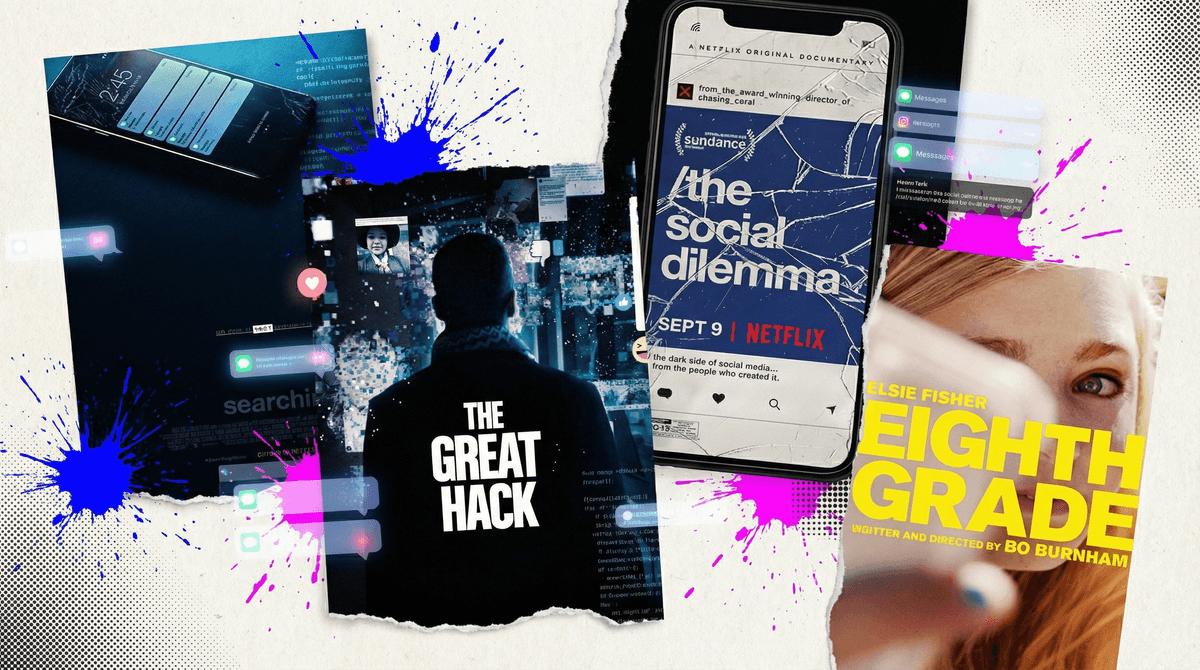
We're living through something unprecedented, and Hollywood knows it. The past decade has given us a fascinating genre of films that try to make sense of what social media is doing to us, our kids, and society at large. These aren't just documentaries about Facebook's latest scandal—they're movies that explore online identity, digital influence, cyberbullying, and the weird psychological territory we're all navigating together.
Some are documentaries like The Social Dilemma that pull back the curtain on how platforms are designed. Others are narrative films like Eighth Grade that capture what it actually feels like to grow up online. And then there are horror movies like Searching that turn our screen-dependent lives into genuine thrillers.
The best part? These movies can be incredible conversation starters with your kids—way better than another lecture about screen time.
Here's the thing: your kids are growing up in a world where their social lives, self-worth, and daily experiences are deeply intertwined with apps and algorithms. But most of them have never stopped to think about why these platforms work the way they do, or what's happening behind the scenes.
These films do something lectures can't—they make the invisible visible. They show the actual humans making decisions at tech companies. They dramatize the real emotional stakes of online life. They help kids (and adults) develop what researchers call "digital literacy"—the ability to think critically about the technology they're using every day.
The documentaries like The Social Dilemma and The Social Network explain the business models and design choices that shape platforms. Your middle schooler might not care about "engagement metrics," but they'll definitely care when they understand why TikTok feels impossible to put down.
The narrative films like Eighth Grade and Ingrid Goes West capture the emotional reality of online life—the comparison trap, the performative friendships, the anxiety of crafting the perfect post. These feel true because they are true.
The thrillers like Searching and Unfriended take our digital vulnerabilities and turn them into plot devices, which honestly isn't that far from reality when you think about data breaches and online predators.
Not all of these films are appropriate for all ages, and that's important to note upfront.
Ages 10-13: Start Here
Eighth Grade (R, but for language—the content is perfect for middle schoolers) is probably the single best film for this age group. Bo Burnham's portrait of 13-year-old Kayla navigating Instagram, YouTube, and crushing social anxiety is almost painfully accurate. Yes, it's rated R for language, but the F-bombs are exactly how kids this age actually talk, and the themes—online identity, social comparison, the gap between your online persona and real self—are essential viewing for middle schoolers.
Fair warning: it might be uncomfortable to watch with your tween, but that discomfort is kind of the point. Use it.
Ages 13-15: Ready for More
Searching (PG-13) is a thriller told entirely through computer screens as a father searches for his missing daughter by diving into her digital life. It's gripping, it's well-made, and it opens up conversations about what parents don't know about their kids' online lives .
.
The Social Dilemma (PG-13) works well for this age too, though be prepared—some teens find it preachy. It features former tech insiders explaining how platforms are designed to be addictive, interspersed with a dramatized story of a teen getting sucked into social media. It's not subtle, but it's effective.
Ages 16+: The Full Picture
The Social Network (PG-13) is still the definitive origin story of Facebook, and it's actually a really well-crafted film. Aaron Sorkin's script makes coding and legal disputes genuinely compelling.
Ingrid Goes West (R) is a dark comedy about Instagram obsession that gets uncomfortably real about influencer culture and the performance of perfect lives. It's rated R for good reason (language, some violence), but older teens who are deep into Instagram will recognize every beat.
Parent Viewing (Maybe Not With Kids)
The Great Hack (documentary about Cambridge Analytica) and Fake Famous (documentary about manufacturing influencer fame) are fascinating for parents trying to understand the bigger picture, but they're probably too dense or mature for most kids.
The movie itself isn't the point—the conversation is. Here are some questions that actually work:
After Eighth Grade:
- "Do you think Kayla's Instagram version of herself is different from who she really is?"
- "Have you ever felt like you had to perform a certain way online?"
- "What do you think about how she uses YouTube to talk to herself?"
After The Social Dilemma:
- "Did anything surprise you about how these apps are designed?"
- "Do you notice yourself getting pulled back to certain apps even when you didn't mean to?"
- "What do you think about the idea that 'if you're not paying for the product, you are the product'?"
After Searching:
- "How much of your online life do you think I know about?" (Brace yourself for this answer)
- "What would someone learn about you if they went through your accounts?"
The goal isn't to scare them or shame them—it's to help them think critically about tools they're using every day without much reflection.
These movies aren't going to solve your family's screen time battles or make your teen suddenly volunteer their phone password. But they can crack open conversations that feel impossible to start otherwise.
The best ones—Eighth Grade especially—work because they're not lectures. They're mirrors. They show kids what they're already experiencing and give them language to talk about it.
Pick one that matches your kid's age and maturity level, watch it together (or let them watch first if that feels less awkward), and then just... talk. Ask questions. Listen more than you talk. Let them explain their perspective.
And honestly? You might learn something too. Most of us adults are also navigating this stuff without a manual.
Want to dig deeper into specific platforms your kids are using? Check out our guides on Instagram, TikTok, and Snapchat for age-appropriate safety tips and conversation starters.
And if you're trying to figure out whether your family's screen time is normal compared to other families, Screenwise can help you understand where you stand and what might make sense for your specific situation.