

Look, we all want our kids to develop impulse control, emotional regulation, and the ability to pause before acting. But lecturing about "making good choices" while they're mid-meltdown? Not exactly effective.
This is where movies can actually help. Not as a replacement for real conversations, but as conversation starters that make abstract concepts concrete. When kids watch characters struggle with waiting, managing big feelings, or resisting temptation, they're seeing emotional regulation in action—with stakes, consequences, and (hopefully) some humor.
Movies about self-control aren't just "eat your vegetables" content. The best ones are genuinely engaging stories where characters face real challenges around patience, impulse control, and emotional management. They show kids that everyone struggles with these things, and more importantly, they show different strategies for handling them.
Self-control is basically the Swiss Army knife of life skills. Kids who develop it early do better academically, have stronger friendships, and are better equipped to handle the dopamine-hijacking design of apps and games they'll encounter constantly.
But here's the thing: self-control isn't about suppression. It's not about turning kids into robots who never feel big feelings. It's about giving them tools to recognize what they're feeling, understand why, and choose how to respond rather than just react.
Movies can show this in ways that feel less like a lecture and more like... well, a story. When Moana has to resist the immediate gratification of adventure to consider her responsibilities, or when Riley in Inside Out learns that all emotions have value (including the uncomfortable ones), kids are learning without realizing they're being taught.
Ages 4-7: The Foundation Years
Frozen (2013) Yes, you've heard "Let It Go" 47,000 times. But Elsa's entire arc is about learning to manage overwhelming emotions rather than suppressing them. The movie shows both extremes: bottling everything up (doesn't work) and letting emotions run wild without control (also problematic). For little kids just learning about big feelings, this is surprisingly nuanced.
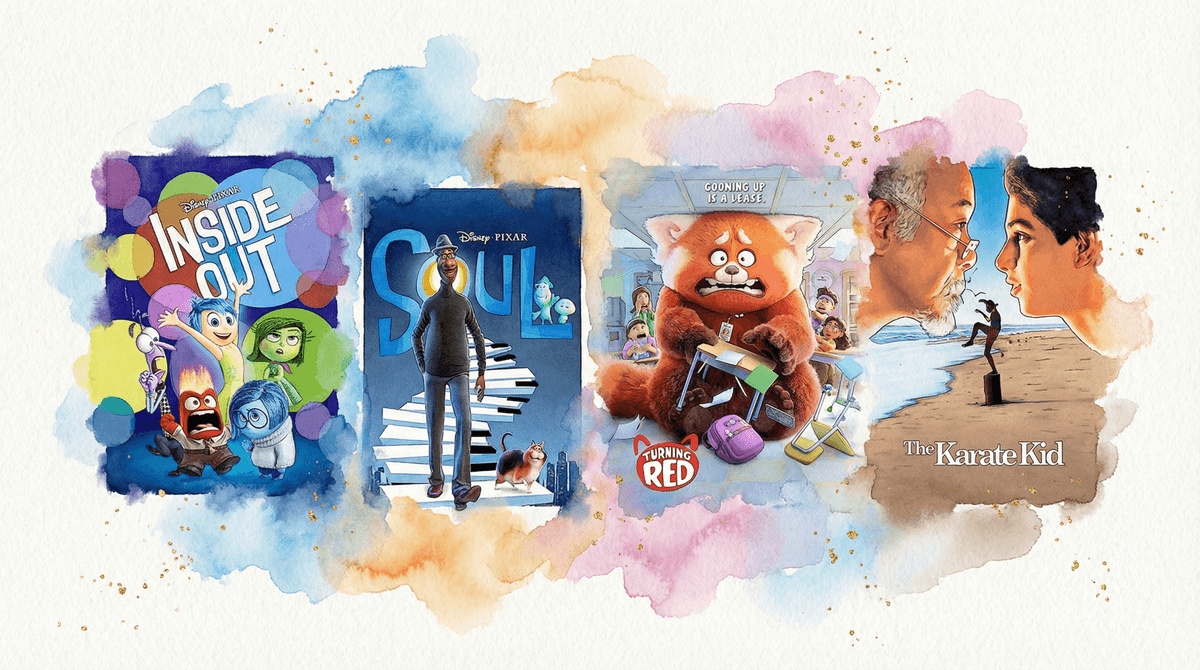
Inside Out (2015) This is the gold standard for emotional regulation content. Riley learns that sadness isn't something to suppress or control away—it's part of being human. But the movie also shows how emotions can work together, how impulses can be managed, and how sometimes you need to pause before acting on a feeling. Plus, it gives you a shared vocabulary: "Which emotion is driving right now?"
Zootopia (2016) Judy Hopps is impulsive and eager, which gets her into trouble repeatedly. The movie shows how she learns to slow down, consider consequences, and work with others instead of rushing ahead. Bonus: it's actually entertaining for adults too.
Ages 8-12: Building Complexity
Turning Red (2022) Mei's struggle with her panda transformation is a perfect metaphor for puberty and emotional regulation. The movie shows that controlling your emotions doesn't mean denying them—it means learning to live with them and choose when to let them out. Some parents found this too mature for younger kids, but for tweens? It's spot-on.
Encanto (2021) Every character in this movie is dealing with pressure and expectations in different ways. Luisa's "Surface Pressure" song is literally about the weight of always maintaining control. The movie shows how perfectionism and over-control can be just as problematic as impulsivity.
Raya and the Last Dragon (2021) Raya has to learn to trust again after betrayal, which requires serious emotional regulation and impulse control. She wants to act on anger and hurt, but has to learn patience and perspective. It's not preachy about it either—the stakes are real and the struggle is genuine.
Spider-Man: Into the Spider-Verse (2018) Miles has to learn the "leap of faith" concept—which is actually about trusting yourself and not rushing before you're ready. The movie shows both impulsive action (doesn't work) and overthinking (also doesn't work). Finding that middle ground is the whole point.
Ages 13+: Real-World Complexity
Soul (2020) Joe Gardner's entire journey is about learning that hyperfocus on one goal (even a worthy one) can mean missing everything else. It's about impulse control in the context of life choices, passion, and purpose. This one might actually hit harder for parents than kids, honestly.
The Karate Kid (1984) The original still holds up. "Wax on, wax off" is literally teaching patience and trusting the process when you want immediate results. Daniel has to learn to control his anger, resist the urge to fight back impulsively, and develop discipline. (The 2010 remake with Jaden Smith works too.)
A Quiet Place (2018) Intense, but powerful for teens. The entire family must maintain extreme self-control in every moment—one impulsive sound means death. It's a thriller, but the underlying theme about discipline, patience, and managing fear under pressure is remarkable. (Note: This is genuinely scary, not for younger kids.)
The best movies about self-control share a few things:
They show failure first. Characters don't just magically have self-control. They mess up, act impulsively, face consequences, and learn. Kids need to see that process.
They make the stakes real. Abstract lessons about "making good choices" don't land. But when Elsa's lack of control hurts Anna, or when Miles's impulsiveness puts others at risk, kids get it.
They offer strategies, not just morals. The best ones show how characters develop self-control: breathing, pausing, seeking help, reframing the situation. These are actual tools kids can use.
They respect emotions. None of these movies say "just don't feel that way." They show that feelings are valid, but you get to choose what you do with them.
Don't just press play and hope for osmosis. The real value comes from conversation.
Before watching: "This character is going to face some tough choices. Let's watch how they handle it."
During: Pause at key moments. "What do you think they should do here? What would you do?"
After: "When have you felt like that character? What helped you?" Or: "What could they have done differently?"
For younger kids, focus on identifying feelings: "How do you think they felt right before they made that choice?"
For older kids, dig into motivation: "Why do you think it's so hard for them to wait/control their temper/resist that temptation?"
Movies won't teach your kids self-control by themselves. But they can give you a shared experience to reference later. When your kid is struggling with waiting for something, you can say "Remember when Moana had to..." and suddenly you're having a real conversation instead of a lecture.
The goal isn't perfection. It's giving kids a mental library of examples showing that self-control is possible, that everyone struggles with it, and that there are actual strategies that work.
Plus, you get to watch some genuinely good movies together, which is honestly half the point of parenting anyway.
Want to explore more content that builds emotional intelligence? Check out shows about emotional regulation or books about impulse control.
And if you're dealing with a specific situation—like a kid who can't wait for anything or one who bottles up everything—Find movies for kids who struggle with patience based on your family's needs.