

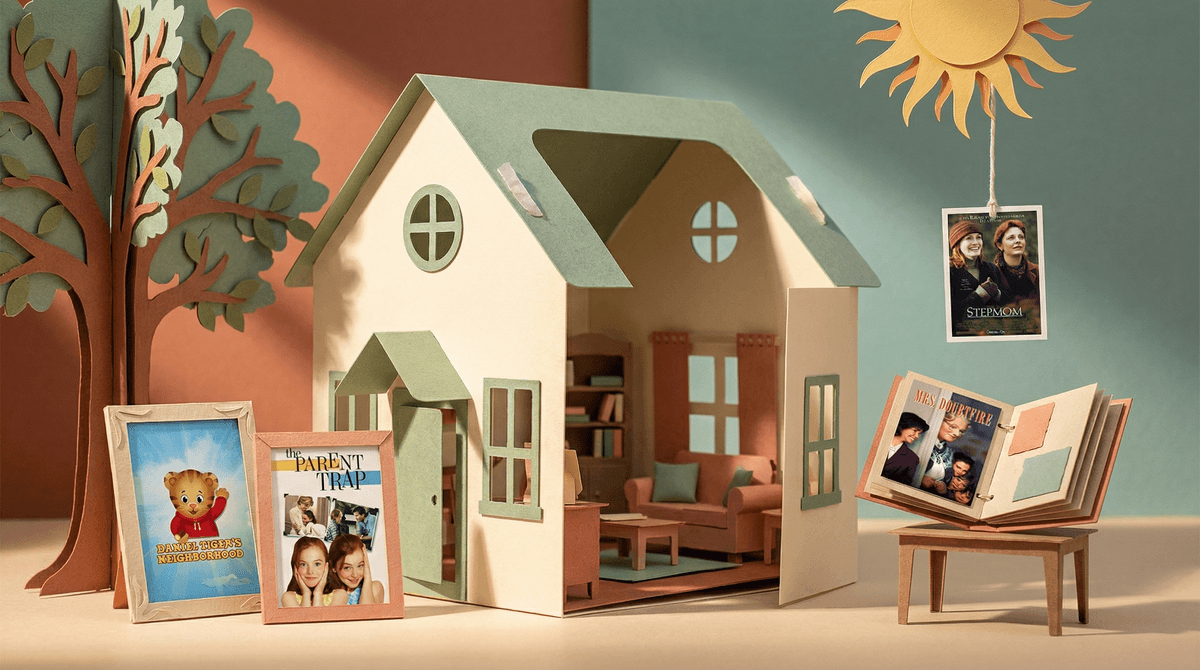
Look, divorce is hard enough without having to figure out how to explain it to your kids. And while movies aren't a replacement for actual conversation (sorry, no shortcuts here), the right film can crack open a dialogue that feels impossible to start.
Movies about divorce for kids aren't just about parents splitting up—they're about processing big feelings, understanding that families can look different and still be full of love, and realizing that sometimes adults make hard choices that have nothing to do with how much they love their children. Some are directly about divorce, others feature blended families or single parents navigating new relationships.
The key is finding films that match your child's age and emotional readiness. A five-year-old needs something gentler and more concrete. A twelve-year-old can handle nuance, complexity, and maybe even some of the messier emotions that come with family restructuring.
Kids are incredible observers but sometimes terrible interpreters. They see parents arguing, sense tension, notice changes—and their brains fill in the gaps, often with stories where they're somehow at fault. A well-chosen movie can:
- Normalize their experience - "Oh, other families go through this too"
- Give them vocabulary - Words for feelings they couldn't name
- Model healthy responses - Characters who survive and even thrive
- Create safe distance - It's easier to talk about what happened to a character than what's happening to them
- Show different outcomes - Not all divorces look the same, and families can be okay in different ways
The magic happens in the conversation after the credits roll. The movie is just the conversation starter.
Ages 4-7: Gentle Introductions
Sesame Street: When Families Change
This special exists specifically for this moment. Abby's parents are divorcing, and the Sesame Street crew helps her (and your kid) understand that it's not her fault, both parents still love her, and feelings are okay. It's direct, age-appropriate, and comforting.
Daniel Tiger's Neighborhood: "Daniel's Babysitter" (and related episodes)
While not explicitly about divorce, Daniel Tiger excels at processing change, separation anxiety, and family transitions. The "grown-ups come back" messaging is gold for young kids worried about permanence.
Mrs. Doubtfire
Okay, controversial take: this is probably too much for the younger end of this age range, but around 6-7, some kids can handle it. Yes, Robin Williams in a fat suit is dated. Yes, there's deception. But the core message—that a dad will do anything to stay close to his kids—can be powerful. Preview it first and know your kid.
Ages 8-12: Processing Complexity
The Parent Trap (1998 version)
The fantasy of getting parents back together is real for kids this age, and this movie lets them live it vicariously while also showing that sometimes parents split for real reasons. The twins' relationship and their scheme are the draw, but the underlying message about loving both parents separately lands well.
Stepmom
This one's heavy (terminal illness subplot), but it's one of the most honest portrayals of blended family tension and eventual acceptance. Best for kids 10+ who can handle emotional weight. The Jackie-Isabel dynamic perfectly captures the "you're not my mom" resistance that many kids feel toward new partners.
Instant Family
While technically about foster care and adoption, this movie brilliantly shows what it's like when family structures change dramatically and messily. It's funny, warm, and doesn't shy away from the hard parts of blending families.
Diary of a Wimpy Kid
The parents aren't divorced, but the family dynamics and sibling relationships offer great entry points for talking about family stress and change. Sometimes you need adjacent content rather than direct hits.
Ages 13+: Real Talk
The Squid and the Whale
This is the unflinching one. It's not pretty—the parents are flawed, the kids are confused and acting out, and there's no neat resolution. But for teens dealing with their own family upheaval, seeing characters struggle realistically can be validating. Watch together and be ready for real conversation.
Marriage Story
Probably 15+, honestly. This is the divorce movie for people who can handle adult complexity—no villains, just two people who loved each other and couldn't make it work. The custody scenes are brutal but real. Best watched with a teen who's past the "whose fault is this" phase.
Eighth Grade
The dad is a single parent, and while divorce isn't the focus, the father-daughter relationship is beautiful and shows that single-parent families can be deeply loving and functional. Great for kids who need to see that their family can still be whole even if it looks different.
Preview everything. Seriously. Even "kids' movies" about divorce can have moments that hit differently when you're living it. A joke about Dad's new apartment might land wrong. A scene where a kid blames themselves might be too close.
Your timing matters. Right before the divorce talk? Probably not ideal—it might feel manipulative. A few weeks in, when they're processing? Perfect. Months later when you're introducing a new partner? Also good timing.
Not every movie needs to be about divorce. Sometimes kids just need to watch Encanto and think about family pressure, or Turning Red and process big emotions about changing relationships. Metaphors work too.
Watch together. This isn't iPad time. Sit with them. Pause when they have questions. Notice when they get quiet or fidgety—that's when something's landing.
Follow their lead in the conversation after. Some kids want to talk immediately. Others need a day or two to process. Don't force it, but leave the door open: "That part where the daughter was sad about having two houses—what did you think about that?"
Movies aren't therapy, and they're definitely not a substitute for honest, age-appropriate conversations about what's happening in your family. But they can be incredibly useful tools for helping kids feel less alone, giving them language for their feelings, and creating openings for conversations that feel too big to start from scratch.
The best movie is the one that matches where your kid is emotionally right now—not where you wish they were, or where you think they should be. A five-year-old who just needs to know that both parents still love them needs something completely different than a thirteen-year-old who's angry about custody schedules.
And remember: you don't have to get this perfect. You're already doing the hard work by thinking about how to help your kid through this. The fact that you're here, looking for resources, means you're showing up. That matters more than picking the "right" movie.
If you're navigating this territory, you might also want to check out books about divorce for kids for quieter, more personal processing time, or shows about blended families for ongoing representation that normalizes their new reality.
And if you need more support figuring out how to talk about this stuff, Get guidance on how to talk to kids about divorce for your specific family situation.