

Look, divorce is one of those massive life changes that can feel impossible to explain to kids. How do you tell a 6-year-old that mommy and daddy won't live together anymore? How do you help a tween understand that this isn't their fault when they're already spiraling with self-blame?
This is where the right books can be absolute lifesavers. Books about divorce for kids are specifically written to help children process the confusion, grief, anger, and fear that come with family changes. They use age-appropriate language, relatable characters, and honest storytelling to normalize what kids are feeling and help them understand they're not alone.
These aren't just "sad books" — the best ones validate emotions while offering hope, showing kids that families can look different and still be full of love.
Kids process big emotions differently than adults. They might not have the vocabulary to express what they're feeling, or they might bottle everything up because they're trying to protect you. A good book creates a safe space for those feelings to surface.
Here's what the right book can do:
- Give kids language for complex emotions they're experiencing
- Normalize their experience by showing other kids going through similar changes
- Open up conversation without putting kids on the spot
- Answer questions they might be afraid to ask directly
- Provide reassurance that they're loved and it's not their fault
Reading together also creates a low-pressure opportunity to talk. You're both looking at the book, not at each other, which can make hard conversations feel less intense.
Ages 3-7: Simple Stories, Big Feelings
Young kids need concrete explanations and lots of reassurance. They're egocentric thinkers, which means they often believe they caused the divorce. Books for this age should be short, visual, and focus on the basics: two homes, both parents still love you, this isn't your fault.
Strong picks for this age:
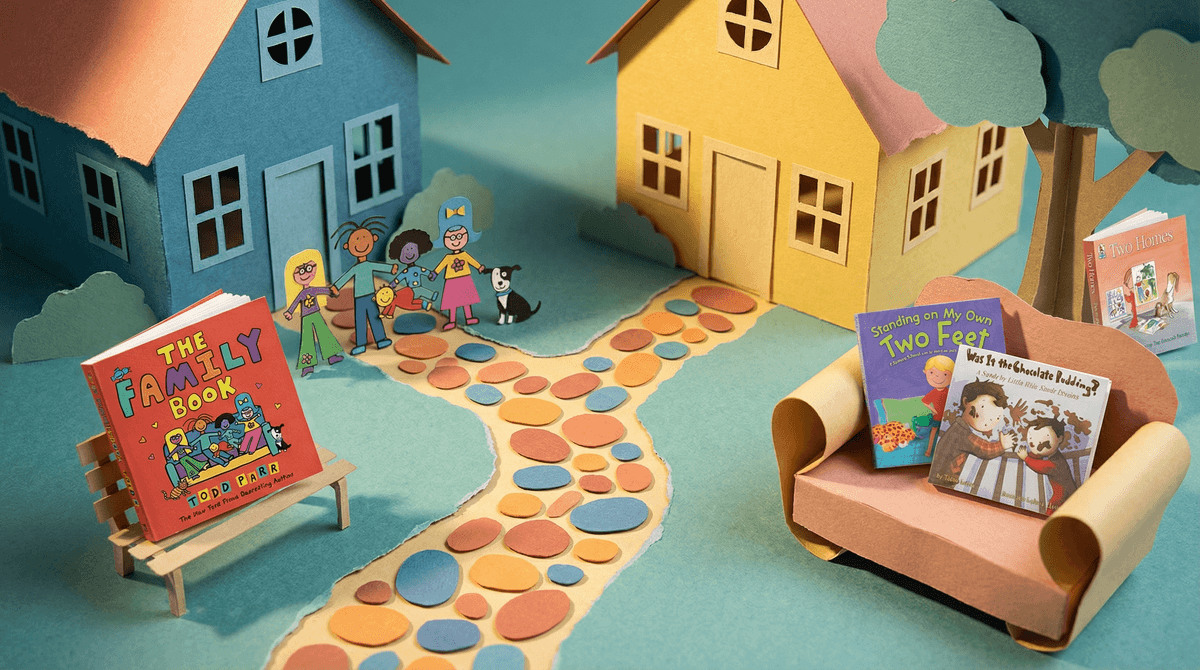
- Two Homes by Claire Masurel — Simple, reassuring, and shows the practical reality of having two homes without dwelling on sadness
- Dinosaurs Divorce by Laurene Krasny Brown — A classic that uses dinosaurs to cover everything from custody to new partners, without being overwhelming
- The Family Book by Todd Parr — Not divorce-specific, but celebrates all kinds of families in a colorful, affirming way
Ages 8-12: More Nuance, Real Questions
Older elementary kids can handle more complexity. They're asking bigger questions: Will we have to move? What about holidays? What if my parents date other people? They're also more likely to feel caught in the middle or worry about picking sides.
Books for this age can explore multiple perspectives and acknowledge that divorce is complicated and sometimes messy.
Strong picks for this age:
- It's Not Your Fault, Koko Bear by Vicki Lansky — Interactive format with discussion questions and activities
- Standing on My Own Two Feet by Tamara Schmitz — Honest about the hard parts while emphasizing resilience
- Was It the Chocolate Pudding? by Sandra Levins — Tackles the "did I cause this?" question head-on with humor and heart
Ages 13+: Real Talk, Complex Emotions
Teens don't want picture books, obviously. They want stories that respect their intelligence and don't sugarcoat reality. They're dealing with logistical stress (shuttling between houses, managing schedules), social embarrassment, and sometimes genuine anger at their parents.
Novels with divorce as a central or background theme can help teens see themselves reflected and feel less alone.
Strong picks for this age:
- The Penderwicks by Jeanne Birdsall — Not specifically about divorce, but features a loving single-parent family
- Drums, Girls & Dangerous Pie by Jordan Sonnenblick — Deals with family stress and change (though illness, not divorce) with humor and heart
- Eleanor & Park by Rainbow Rowell — Features complex family dynamics including divorce and blended families
Don't wait for the "perfect" book. The best book is the one you'll actually read together. Check your library, ask the children's librarian for recommendations, or Find books about divorce for your child based on your kid's age and reading level.
Read it yourself first. You don't want to be blindsided by a plot point that hits too close to home or doesn't match your situation. Preview the book so you can decide if it's right for your family.
It's okay if they cry. Actually, it's good if they cry. That's the point. These books are meant to bring feelings to the surface so they can be processed and talked about.
You might cry too. That's also okay. Showing your kids that you have big feelings about this too — and that you're handling them — is actually helpful modeling.
One book isn't enough. Kids process things over time, not all at once. They might want to read the same book multiple times, or they might need different books at different stages of the process.
Use it as a conversation starter, not a replacement for conversation. After reading, ask open-ended questions: "How do you think the character felt when...?" "Have you ever felt like that?" "What would you want to say to this character?"
Books won't fix everything, but they can make hard conversations easier and help kids feel less alone. The goal isn't to make divorce feel "okay" — it's a loss, and kids are allowed to grieve it. The goal is to help them understand what's happening, know they're loved, and see that their family will still be a family, even if it looks different now.
Next Steps:
- Visit your local library and ask the children's librarian for divorce books appropriate for your child's age
- Explore our full collection of books about family changes
- Get guidance on talking to kids about divorce
You're doing the hard work of helping your kid through this. That matters more than finding the perfect book.