

Movies About Consent and Assault: Turning Difficult Scenes Into Important Conversations
Look, this is probably one of the hardest guides to write because we're dealing with content that can be genuinely traumatic, but also potentially educational. The reality is that many movies and shows your teens are watching—or will encounter—contain scenes depicting sexual assault, coercion, or consent violations. And honestly? That's not always a bad thing, if handled thoughtfully.
The question isn't whether to shield kids from these topics forever (spoiler: you can't), but how to help them process what they're seeing and build a framework for understanding consent, boundaries, and respect.
Here's what we know: teens are watching mature content earlier than ever before. Whether it's through streaming services, friends' houses, or just scrolling through TikTok clips of shows they haven't technically watched, they're exposed to complex sexual dynamics—both healthy and deeply problematic.
And here's the thing: if we don't talk about what they're seeing, someone else will. Or worse, no one will, and they'll internalize whatever message the media is sending without any critical framework.
The goal isn't to pre-screen every piece of media (good luck with that). It's to build your kid's media literacy so they can recognize when something on screen is wrong, understand why it's wrong, and know what healthy boundaries actually look like.
Some movies actually use depictions of assault or consent violations as teaching moments, treating the subject with gravity and showing real consequences. These can be valuable conversation starters:
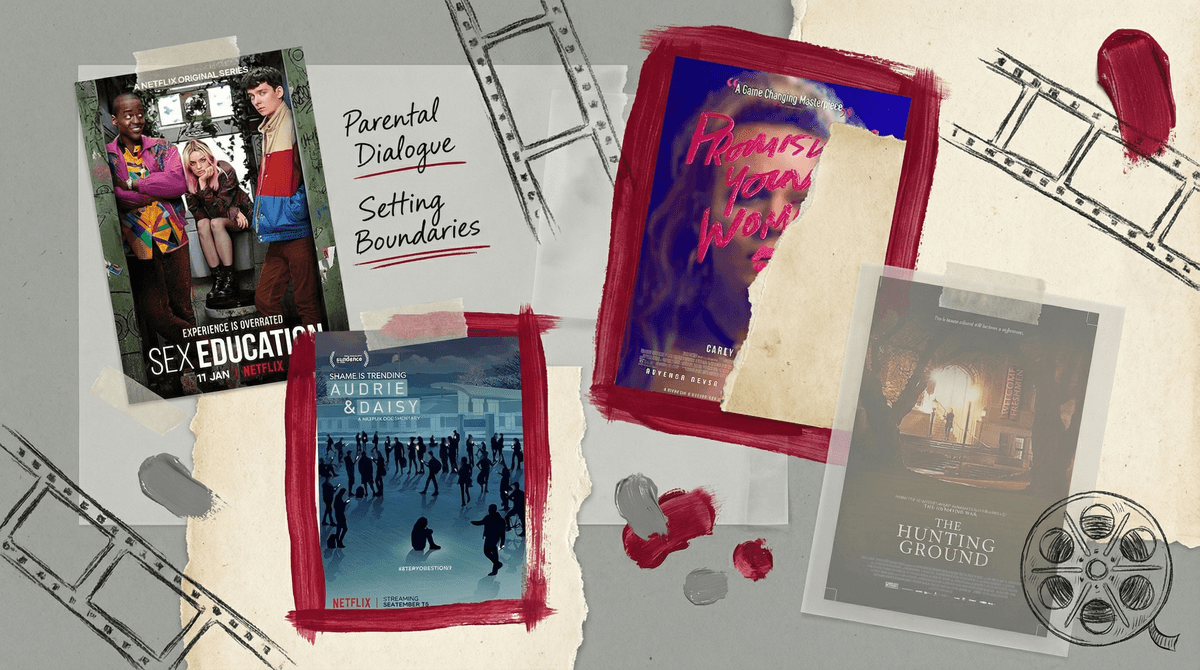
The Hunting Ground (Ages 16+) - A documentary about campus sexual assault that's unflinching but educational. Best watched with teens heading to college.
Promising Young Woman (Ages 17+) - This one's intense and definitely not for younger teens, but it's a powerful exploration of consent, revenge, and how society enables predatory behavior. The ending will spark serious discussion.
13 Reasons Why (Ages 16+, with major caveats) - The show has been controversial for its graphic depictions, but the assault scenes in particular have prompted important conversations. That said, watch alongside your teen and be prepared for heavy topics including suicide. Read our full guide on 13 Reasons Why before diving in.
Sex Education (Ages 15+) - While it's got plenty of sexual content (it's literally in the title), this show actually does a remarkable job depicting consent conversations, assault trauma, and healthy vs. unhealthy sexual dynamics.
Then there are movies that romanticize coercion, blur consent lines, or treat assault as a plot device without consequences. Your teens might still encounter these, so knowing what's in them helps you address the problems:
Twilight series - Edward's controlling behavior and boundary violations are framed as romantic. Bella literally says "you're like my own personal brand of heroin" which... yeah.
365 Days - This Netflix film essentially depicts Stockholm syndrome and calls it romance. It's been hugely popular with teens despite being deeply problematic. If your teen has watched it, here's how to talk about why it's not actually romantic .
.
Sixteen Candles - A classic that aged like milk. There's literally a scene where a drunk girl is passed around and it's played for laughs. Good opportunity to discuss how cultural attitudes have (thankfully) shifted.
Ages 10-12: At this age, focus on consent basics through age-appropriate films. Turning Red actually has great themes about bodily autonomy and respecting boundaries, even if it's not explicitly about sexual consent.
Ages 13-15: They can start handling more complex scenarios, but stick to films where assault isn't graphically depicted. Discussion is more important than exposure. Shows like Heartstopper model healthy communication and consent beautifully.
Ages 16+: They can handle more intense content, but co-viewing or immediate post-viewing conversations become crucial. They're likely already encountering this content; your job is to help them process it critically.
Before watching: "This movie has a scene where someone's boundaries are violated. It might be uncomfortable to watch, but let's talk about what we see afterward."
During watching (if co-viewing): You don't need to pause and lecture, but a simple "that's not okay" or "notice how she said no three times" can go a long way.
After watching:
- "What did you think about [specific scene]?"
- "Did that character have a choice? Why or why not?"
- "How do you think things should have gone differently?"
- "Have you seen situations like this in other shows or movies?"
The goal is to make them think critically, not to deliver a TED talk.
Trigger warnings are real: If your teen has experienced assault or has friends who have, graphic depictions can be genuinely harmful. It's okay to skip certain content or read detailed reviews first.
"Based on a true story" hits different: Films like The Hunting Ground or Audrie & Daisy are documentaries about real victims. These require extra sensitivity and processing time.
Boys need these conversations too: Don't just talk to daughters about being safe. Talk to sons about respecting boundaries, recognizing coercion, and being an upstander when they see problematic behavior.
You don't need to be perfect: You might fumble the conversation. You might not know all the answers. That's fine. The fact that you're trying matters more than getting every word right.
Movies depicting assault and consent violations aren't going away, and your teens will encounter them whether you plan for it or not. The question is whether they'll process that content alone or with your guidance.
The best approach? Build a foundation of media literacy early, keep communication open, and treat difficult content as an opportunity rather than a threat. Your teen doesn't need you to shield them from every uncomfortable topic—they need you to help them develop the critical thinking skills to navigate these topics themselves.
And look, if you're feeling overwhelmed by this, that's completely normal. Get guidance on talking about consent in media and we can help you figure out the right approach for your family.
- Check ratings and reviews before family movie night using Common Sense Media or Screenwise
- Start small with age-appropriate content that touches on boundaries and respect
- Create a judgment-free zone where your teen can ask questions or share concerns about what they're watching
- Model healthy behavior in your own relationships—kids learn more from what they see than what we tell them
Remember: you're not trying to control what they watch forever. You're trying to build the critical thinking skills they'll need when you're not in the room.