

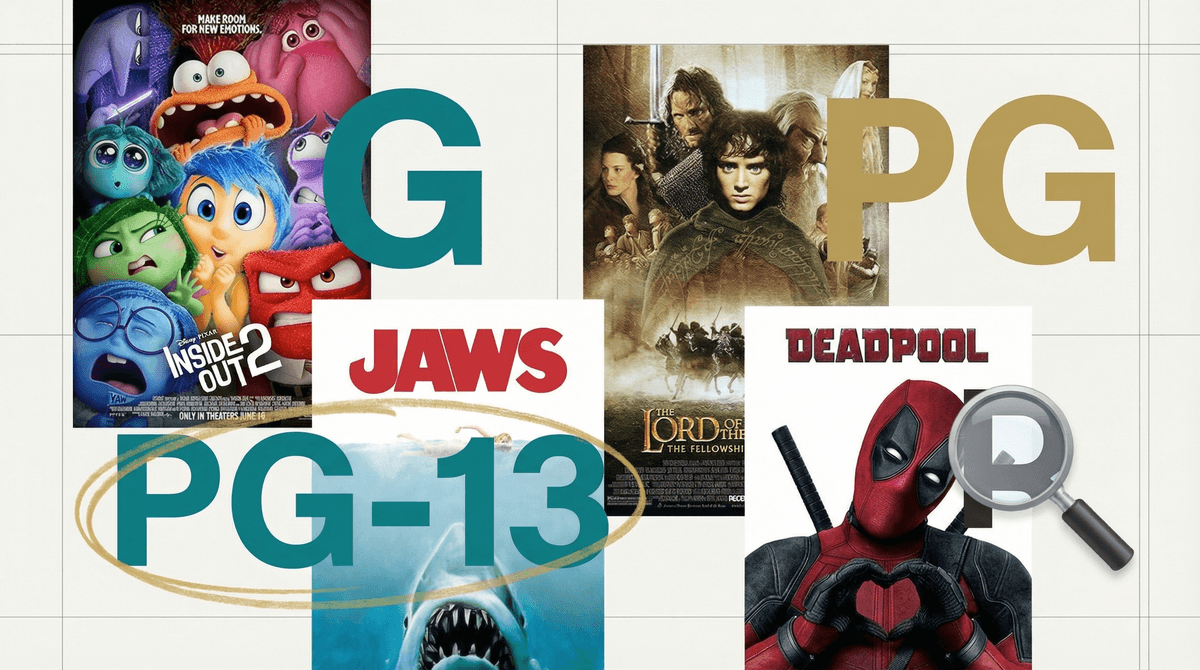
Let's be honest: the MPAA rating system was designed in 1968, and while it's been updated over the years, it's still a pretty blunt instrument. A movie gets slapped with a G, PG, PG-13, or R based on a fairly opaque process that weighs violence, language, sexuality, and "thematic elements" in ways that might not align with your family's values at all.
Here's the thing: movie ratings are guidelines, not laws. (Well, except for R-rated movies in theaters—theaters can refuse entry to unaccompanied minors, but that's their policy, not a legal requirement.) At home? You're the rating system.
And sometimes, honestly, the MPAA gets it wrong. Or at least, wrong for your family.
There are totally legitimate reasons to let your 11-year-old watch that PG-13 movie, or to say "absolutely not" to a PG film:
The rating doesn't match the content you care about. Maybe your family is fine with fantasy violence but draws a hard line at mean-spirited humor. The MPAA doesn't distinguish between The Lord of the Rings (PG-13 for battle sequences) and a teen comedy that's PG-13 for sexual content and drug references.
Your kid is unusually mature (or unusually sensitive). Some 9-year-olds can handle the emotional weight of Inside Out 2 better than some 13-year-olds. Some 12-year-olds will have nightmares from a PG movie with jump scares, while others breeze through PG-13 horror.
Cultural or religious values matter to you. The MPAA doesn't rate for blasphemy, occult themes, or portrayals of family structures. If those matter to your family, you need to look beyond the rating.
Everyone else has seen it. Yeah, this one's real. When your 10-year-old is the only kid who hasn't seen Spider-Man: No Way Home, there's a social cost. Sometimes that matters, sometimes it doesn't—but it's worth considering.
Before we get too cavalier about ignoring the MPAA, let's acknowledge: ratings exist for a reason, and they're often right.
Kids process content differently than adults. What seems "fine" to you might genuinely disturb your child. Research shows that exposure to intense violence, sexual content, or frightening imagery before kids are developmentally ready can cause real anxiety and sleep disruption.
You might not remember what's actually in the movie. That PG-13 movie you loved as a teen? Go back and watch it now. You might be surprised by how much you forgot (or didn't notice at the time).
Ratings creep is real. PG-13 movies today contain content that would've been R-rated 20 years ago. The standards have shifted, and not necessarily in a direction that benefits kids.
Your kid might not tell you they're scared. Especially if they begged to watch it, or if all their friends have seen it. They might sit through something that genuinely upsets them because they don't want to seem like a baby.
Okay, so you're standing in your living room, your kid is begging to watch something that's rated above their age, or you're considering blocking something that's technically "fine" for their age. Here's how to think it through:
1. Do your homework
Don't just look at the rating—read why it got that rating. Common Sense Media, IMDb's parent guide, and even the MPAA's own "rating reasons" can tell you specifically what's in the movie. Is it PG-13 for "intense sequences of sci-fi action" or for "crude sexual content and drug material"? Big difference.
2. Know your kid
Is your child anxious? Sensitive to jump scares? Mature about language but squeamish about blood? Do they process scary content by talking it through, or do they internalize it? You know your kid better than any rating system.
3. Consider the context
Watching Jaws (PG!) at a sleepover with older kids is different from watching it at home where you can pause and discuss. Watching The Hunger Games after reading the book is different from going in cold.
4. Preview when possible
If you're on the fence, watch it yourself first. Yes, this is a pain. Yes, it's worth it. You'll know immediately whether it's right for your kid.
5. Be willing to bail
Make a deal: "We can try this, but if it's too much, we stop—no judgment, no teasing." Then honor that. Some kids will push through something uncomfortable because they don't want to admit they can't handle it.
Oh, this is where it gets fun. Your 13-year-old wants to watch something PG-13, but your 9-year-old is in the room. Do you:
- Let the younger kid watch? (Maybe it's fine, maybe it's not.)
- Make the older kid wait? (Cue the "this is so unfair" speech.)
- Send the younger kid out? (Now they feel excluded and will definitely try to sneak-watch it later.)
There's no perfect answer, but here's what works for a lot of families: different content for different ages, and that's okay. Older kids get privileges. Younger kids get earlier bedtimes, which means older kids can watch their stuff after the little ones are asleep. Everyone survives.
Let's talk about peer pressure, because it's real and it matters. When your 10-year-old is the only one who hasn't seen Deadpool (R-rated, absolutely not for 10-year-olds, but let's be real—some parents let their kids watch it), they feel left out.
Here's the thing: you're allowed to be the parent who says no. Your kid might be annoyed. They might feel left out. That's okay. They'll survive, and they won't be traumatized by missing a movie.
But also: pick your battles. If the movie is borderline and the social cost is high, maybe you watch it together and talk through the parts that concern you. Maybe you read detailed reviews and decide it's actually fine. Maybe you say "not now, but in a year."
The goal isn't to be the strictest parent or the most permissive parent—it's to be the most intentional parent.
Sometimes the MPAA is overly cautious. The King's Speech got an R rating for language—specifically, a scene where the main character repeats the F-word as part of speech therapy. It's not sexual, not violent, not even mean-spirited. Many parents felt comfortable showing it to younger teens.
Eighth Grade is R-rated, but it's actually a pretty realistic (and ultimately hopeful) portrayal of middle school anxiety and social media pressure. Some parents of mature 13-year-olds found it valuable to watch together.
The point: ratings are data points, not commandments.
You're not a bad parent for letting your 12-year-old watch a PG-13 movie. You're not a helicopter parent for blocking a PG movie that doesn't align with your values. You're just a parent trying to make good calls with imperfect information.
Here's the framework:
- Use ratings as a starting point, not an ending point
- Do your research—know what's actually in the movie
- Know your kid—their maturity, their sensitivities, their ability to process intense content
- Be willing to override ratings when it makes sense—both directions
- Talk about what you watch—the conversation is often more valuable than the restriction
And if you get it wrong? If you let them watch something that turned out to be too much, or you blocked something that would've been fine? That's called parenting. You'll adjust, they'll be okay, and you'll make a better call next time.
- Preview questionable movies yourself using this guide to parent-friendly review sites
- Create a family media plan that includes your values around content, not just screen time
- Talk to your kids about why you make the calls you make—it helps them develop their own media literacy
- See if specific movies are appropriate for your kid
 you're considering—we can break down content concerns and help you decide