

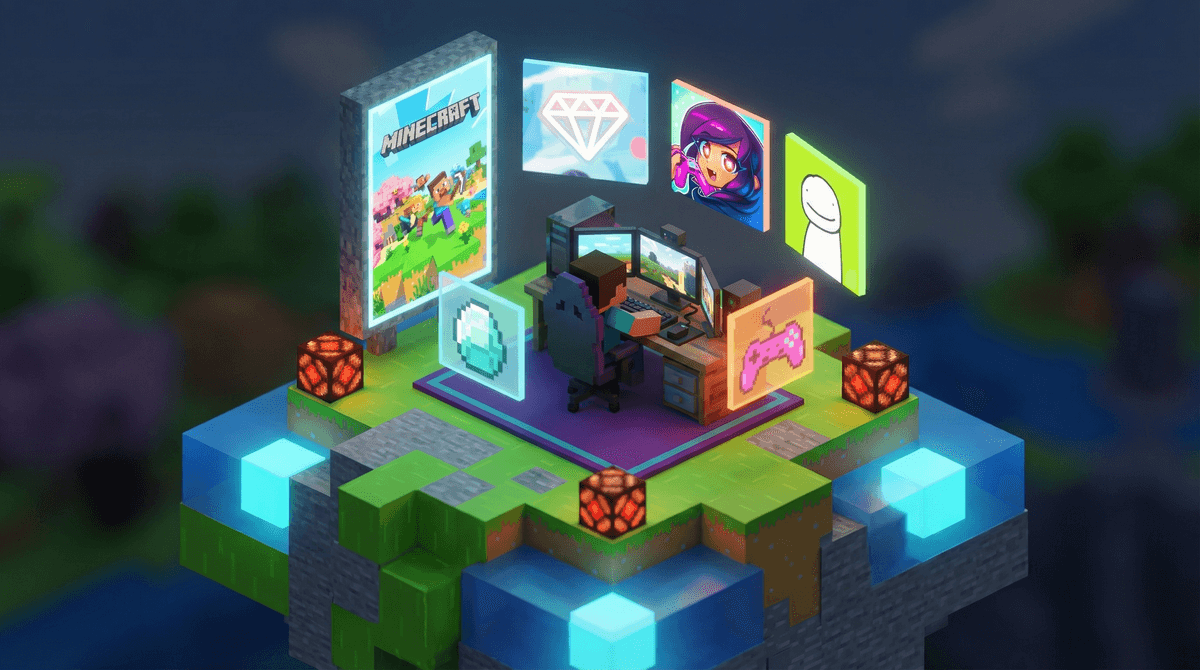
If your kid has ever watched YouTube, there's a 99% chance they've stumbled into the vast universe of Minecraft content. We're talking millions of videos—everything from elaborate survival series to redstone tutorials that look like electrical engineering courses to chaotic multiplayer challenges where people build giant toilets (yes, really).
The Minecraft YouTube ecosystem is massive. Creators like Dream, Aphmau, PrestonPlayz, and DanTDM have built empires on this blocky game, with some channels pulling in tens of millions of subscribers. Your 8-year-old isn't just watching someone play a game—they're following storylines, learning building techniques, picking up on inside jokes, and becoming part of fan communities.
Unlike passive TV watching, Minecraft videos often inspire kids to jump into the game themselves and try what they just saw. Which sounds great in theory, except when they spend three hours trying to recreate a redstone contraption that a 25-year-old engineer spent a week perfecting.
It's aspirational gameplay. Most kids can build a decent house in Minecraft, but watching someone create a fully functional calculator using redstone? That's wizardry. These videos show what's possible in the game, which is genuinely inspiring.
The personalities are huge. Minecraft YouTubers aren't just gamers—they're entertainers. They're funny, energetic, and many have developed characters or recurring bits that kids find hilarious. Dream's manhunt videos (where he tries to beat the game while friends hunt him down) have a genuine narrative tension that rivals actual TV shows.
It's social currency. Knowing about the latest Dream SMP lore or understanding a Technoblade reference (RIP) makes kids feel connected to their peers. Not watching means being left out of playground conversations.
It teaches actual skills. Look, I'm not saying Minecraft YouTube is educational TV, but kids are learning about resource management, spatial reasoning, basic engineering concepts, and creative problem-solving. Some redstone tutorials are legitimately teaching logic gates and circuit design.
Not all Minecraft content is created equal. Here's what you're likely to encounter:
Let's Plays and Survival Series - Generally harmless. A creator builds, explores, and narrates their gameplay. These can run for hundreds of episodes and kids get invested in the "storylines." Think of it like a very blocky soap opera.
Tutorials and How-Tos - Actually useful! Building guides, redstone circuits, farm designs. If your kid is watching these, they're probably learning something applicable to their own gameplay.
Challenges and Competitions - "Can I beat Minecraft using only a stick?" type content. Usually entertaining, though the manufactured excitement can get loud and overstimulated.
Roleplay and Storytelling - Creators like Aphmau use Minecraft as a stage for scripted stories with voice acting and characters. These are essentially animated shows made in Minecraft. Content varies wildly—some are genuinely creative, others are... let's say aggressively aimed at the 7-year-old demographic.
Multiplayer Chaos - The Dream SMP (a private Minecraft server with storylines) spawned an entire genre of collaborative storytelling. Can be genuinely engaging, but the lore gets deep and kids will spend hours catching up on "what happened."
The Sketchy Stuff - Here's where you need to pay attention. Some Minecraft content includes:
- Overly sexualized thumbnail art and titles (clickbait aimed at kids but inappropriate)
- Excessive screaming and fake reactions
- Constant promotion of merch, apps, or sketchy websites
- "Free Robux" or "Free Minecoins" scams disguised as Minecraft content
- Inappropriate mods that add violence, horror, or sexual content to the game
Ages 6-8: Stick with established, kid-focused creators. Channels like StampyLongHead and iBallisticSquid built their brands on being genuinely child-appropriate. Watch with them initially to gauge content. Be aware that even "kid" channels can have loud, overstimulating editing.
Ages 9-11: They're probably watching the bigger names—Dream, GeorgeNotFound, Technoblade's legacy content, Mumbo Jumbo for redstone stuff. Most mainstream Minecraft YouTubers keep it relatively clean (some mild language), but the comment sections can be toxic. Consider using YouTube Kids or creating a supervised account. Learn more about YouTube vs. YouTube Kids if you're not sure which makes sense.
Ages 12+: They're old enough to navigate most Minecraft content, but talk about clickbait, parasocial relationships, and the business side of YouTube. They should understand that these creators are running businesses, not just sharing gameplay for fun.
The autoplay rabbit hole is real. YouTube's algorithm will serve up increasingly stimulating content to keep kids watching. One innocent Minecraft tutorial can lead to clickbait garbage within three videos. Turn off autoplay in settings.
Screen time gets justified as "research." "I'm watching this so I can build it in my world!" is technically true, but also, they've been watching for two hours. Set boundaries around passive watching vs. active playing.
Some creators have had controversies. Dream faced cheating allegations in speedruns. Other creators have been involved in more serious scandals. Kids don't always process that their favorite YouTuber might not be a great role model. You can dig into specific creator controversies if something comes up.
The content pipeline is designed for addiction. Bright thumbnails, exaggerated facial expressions, ALL CAPS TITLES, and cliffhangers at the end of every video. It's engineered to keep kids clicking. Talk to your kids about how YouTube makes money and why videos are designed this way.
It's not all bad! Genuinely, some Minecraft content is creative, funny, and even educational. Hermitcraft (a private server of adult creators) showcases incredible builds and collaborative projects. Mumbo Jumbo's redstone videos are legitimately impressive. Grian's building tutorials have probably improved thousands of kids' spatial reasoning skills.
Minecraft YouTube isn't inherently good or bad—it's a massive ecosystem with everything from genuinely creative content to absolute garbage designed to farm views from children. Your job isn't to ban it entirely (unless that's your family's choice), but to help your kids navigate it critically.
Watch some videos with them. You'll quickly figure out which creators align with your family's values and which ones make you want to throw the iPad out the window.
Talk about the business model. Help them understand that YouTubers make money from views, which is why everything is so... much.
Set boundaries around passive consumption. Watching a 10-minute tutorial? Fine. Watching a 3-hour compilation of Minecraft memes? Maybe not.
Use it as a bridge to creativity. If they're watching building tutorials, encourage them to actually build those things. If they're into storytelling content, maybe they want to create their own Minecraft stories with friends.
The reality is that Minecraft YouTube is a huge part of kid culture right now, and trying to completely avoid it is probably unrealistic for most families. But informed, intentional engagement? That's totally doable.
- Check your YouTube settings—turn off autoplay and set up restricted mode or YouTube Kids depending on age
- Ask your kid to show you their favorite Minecraft YouTuber and actually watch a video together
- Learn more about Minecraft itself if you're not familiar with why this game has such staying power
- Explore alternatives to YouTube if you're looking for more curated video content