

How Social Media and Entertainment Shape Kids' Body Image
Look, we need to talk about something that's probably been nagging at you: the way your kid suddenly started commenting on their appearance, or asking if they look "fat" in something, or spending 20 minutes trying to get the perfect angle for a photo. And you're thinking, "They're nine."
Here's the thing: our kids are growing up in a world where every image they see has been filtered, edited, and optimized. The "casual" selfie took 47 tries. The influencer's morning routine is professionally lit. Even the kids' shows have characters with impossibly perfect proportions. And it's doing a number on how they see themselves.
Body image issues used to develop primarily in the teen years. Now? We're seeing kids as young as 6 or 7 expressing dissatisfaction with their appearance. And it's not hard to see why.
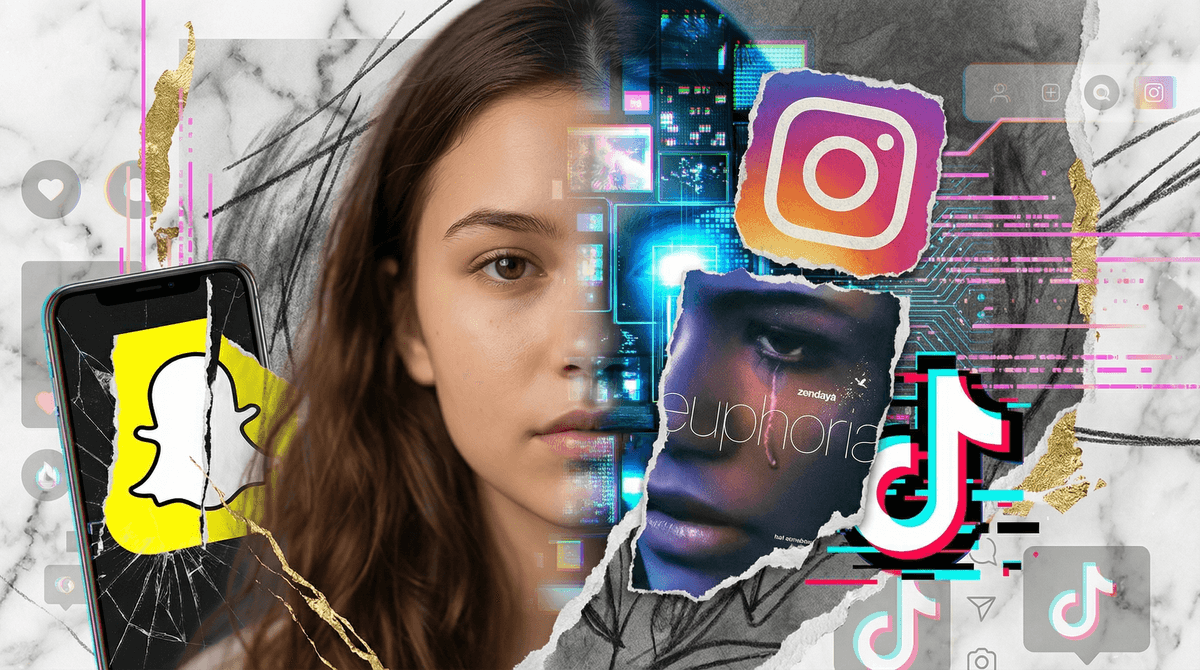
The filter effect is real. Apps like Instagram, Snapchat, and TikTok come with built-in beauty filters that smooth skin, enlarge eyes, slim faces, and change facial structure. Kids are using these filters so constantly that they're starting to think that's what they should look like. There's literally a term for this: "Snapchat dysmorphia" — when people seek cosmetic procedures to look more like their filtered selves.
The algorithm knows what it's doing. Social media feeds aren't neutral. They learn what keeps your kid scrolling, and if your daughter lingers on fitness content or your son watches a bunch of gym videos, suddenly their entire feed becomes about achieving the "perfect" body. The algorithm doesn't care that they're 12.
The comparison trap is constant. It's not just celebrities anymore. It's their classmates, the kids at the rival middle school, random influencers who are only 2 years older. And everyone looks amazing online because nobody posts the bad angles, the bloated days, or the actual reality of being a human body.
Let's get specific about where this stuff is coming from:
On TikTok and YouTube Shorts: "What I eat in a day" videos (often promoting restrictive eating), fitness challenges that are way too intense for growing bodies, "glow up" transformations, and an endless stream of content about being "hot" or "mid" (their word for average, and yes, they use it about themselves).
On Instagram and Snapchat: Influencers with professionally edited photos, friends using filters on every single post, "body checking" content (people posting to show off weight loss or muscle gain), and ads for sketchy supplements and diet products that somehow bypass age restrictions.
In entertainment: Even kids' shows and movies tend to feature conventionally attractive characters with specific body types. Disney+ shows, while generally wholesome, rarely feature diverse body representation. Netflix teen content? Often worse — think Outer Banks where everyone looks like a model, or Euphoria (which, please, your middle schooler should NOT be watching) with its unrealistic beauty standards wrapped in a "gritty realism" package.
In games: Even Roblox, which seems innocent enough, has a whole economy built around avatar appearance, with kids spending real money (yes, Robux is real money ) to make their characters look "cooler" or more attractive.
This affects both boys and girls, just differently:
Girls are getting messages about being thin, having clear skin, looking "pretty," and achieving a very specific body type that changes every few years (remember when thigh gaps were a thing? Now it's all about a specific waist-to-hip ratio).
Boys are drowning in content about getting jacked, having abs, being tall, and achieving that V-shaped torso. The rise of "gym bro" culture on social media has boys as young as 10 asking about protein powder and feeling inadequate about their bodies.
Non-binary and LGBTQ+ kids often face even more pressure as they navigate both mainstream beauty standards and community-specific expectations, sometimes feeling like they need to look a certain way to "prove" their identity.
Ages 5-8: They're probably not on social media yet (hopefully), but they're watching YouTube Kids, playing games, and absorbing messages from entertainment. This is when you start building media literacy.
- Point out when characters all look similar: "Hey, I notice all the main characters in this show are thin. Do all people look like that?"
- Talk about animation and special effects: "That's a drawing/that's not what real people look like."
- Be mindful of your own body talk around them. They're listening when you complain about your appearance.
Ages 9-12: Middle school is when things intensify. Many kids are on social media now (even if they're not supposed to be), and they're hyper-aware of how they look compared to peers.
- Teach them about filters and editing. Show them before/after examples. This guide about filters and reality can help.
- Talk about the business model: influencers make money by making you feel like you need what they're selling.
- Help them curate their feeds. If fitness content is making them feel bad, unfollow it.
- Watch some of their shows with them and talk about what you're seeing.
Ages 13+: They're fully immersed in digital culture. Your goal isn't to shield them (too late) but to build critical thinking.
- Have real conversations about the pressure they're feeling. Don't dismiss it.
- Talk about how bodies change during puberty and that's normal.
- Discuss the difference between health and appearance (they're not the same thing).
- Be alert for warning signs: obsessive exercise, restrictive eating, constant negative self-talk, spending hours on appearance.
The research is clear: Higher social media use correlates with higher rates of body dissatisfaction, especially for girls. A 2023 study found that girls who spend more than 3 hours a day on social media are at significantly higher risk for body image issues and disordered eating.
But it's not just about time limits. It's about what they're consuming. A kid who follows body-positive creators, diverse influencers, and content focused on what bodies can do rather than how they look will have a different experience than a kid whose feed is all thinspo and gym content.
Your own relationship with your body matters. Kids are watching how you talk about your appearance, how you react to photos of yourself, whether you diet, how you discuss other people's bodies. If you're constantly criticizing your own appearance, they're learning that's normal.
Some practical things you can do:
-
Do regular feed audits together. Sit with your kid and scroll through their social media. Talk about what they're seeing and how it makes them feel.
-
Follow diverse creators as a family. Show them influencers of different body types, ages, and abilities. Here's a list of body-positive content creators
that might help. -
Teach them to question what they see. "Why might this person have posted this photo? What are they trying to sell? How might this photo be edited?"
-
Talk about what bodies are FOR. Shift conversations from appearance to function: "Your legs are strong and let you play soccer" vs. "Your legs look great in those shorts."
-
Watch for warning signs: Skipping meals, excessive exercise, constant appearance checking, avoiding social situations because of appearance concerns, spending excessive time on appearance-focused content.
You can't completely protect your kids from unrealistic beauty standards — they're everywhere, and they're not going away. But you can teach them to recognize manipulation, question what they're seeing, and understand that the online world is a heavily curated highlight reel.
The goal isn't to ban all social media or turn off the TV. It's to raise kids who can engage with media critically, who understand that filters aren't reality, and who know their worth isn't determined by how they look in a photo.
Start these conversations early, keep them going, and remember: the most powerful thing you can do is model a healthy relationship with your own body and appearance. They're watching you more than they're watching any influencer.
- Have a conversation this week about filters and editing. Show them examples of how dramatically photos can be altered.
- Do a feed audit together. What are they seeing? How does it make them feel?
- Check out media literacy resources for kids to build critical thinking skills.
- If you're concerned about your child's relationship with food or exercise, talk to their pediatrician. Early intervention matters.
And hey, if you're realizing your own social media use might be affecting how you see yourself, that's worth examining too. We're all in this together.