

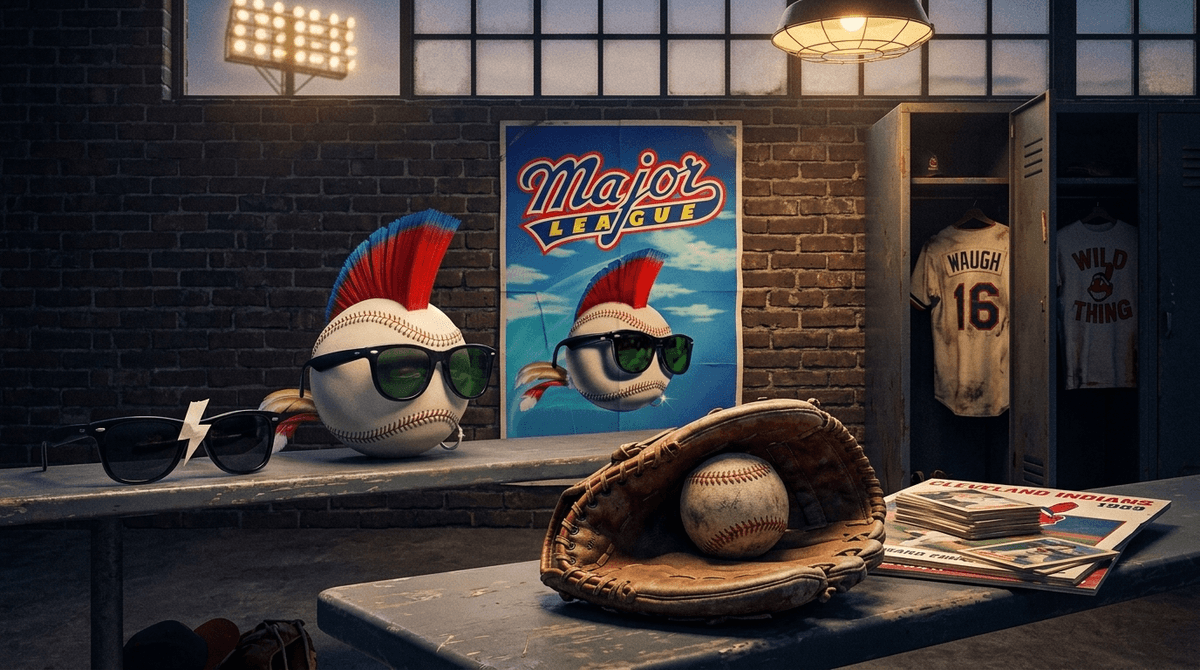
Major League is the movie you want to show your kid the second they start complaining about their coach or the "cheap" grass in the outfield, but that R-rating is a giant yellow "caution" light that most parents ignore until the first five F-bombs hit in the opening locker room scene. It is the definitive baseball comedy, but it’s definitely not for the T-ball crowd.
TL;DR: Major League is a classic sports comedy that earns its R-rating through heavy profanity and adult situations, making it a better fit for the middle-school-and-up crowd than the elementary set. While it lacks the innocent nostalgia of The Sandlot, it’s a masterclass in the "lovable losers" trope. If your kid is ready for PG-13 humor but you’re wondering if they can handle an R, this is the ultimate litmus test.
If The Sandlot is about the feeling of baseball—the smell of the grass, the fear of the beast, the endless summer—then Major League is about the grind of baseball. It’s cynical, it’s sweaty, and it’s populated by guys who are one bad season away from selling insurance.
The plot is simple: a former showgirl inherits the Cleveland Indians and wants to move them to Miami. To do that, she needs the team to finish in last place so she can break the stadium lease. She hires a bunch of "has-beens and never-will-bes," including a catcher with bad knees (Tom Berenger), a felon with a 100mph fastball (Charlie Sheen), and a flashy outfielder who can’t hit a curveball (Wesley Snipes).
It’s a "lovable losers" story, but these losers have adult problems. They’re dealing with contract disputes, messy divorces, and the very real possibility that their careers are over. That groundedness is why it still works in 2026, even when the 80s hairstyles look like props from a sci-fi flick.
We usually group baseball movies into two camps: the "Magical Realism" camp (Field of Dreams, The Natural) and the "Nostalgia" camp (The Sandlot). Major League kicks the door down and starts a third camp: The Barroom Brawl.
There are no speeches about the soul of America here. Instead, you get Bob Uecker as Harry Doyle, the drunkest, most honest broadcaster in cinematic history, delivering lines like, "Just a bit outside!" when a pitch nearly kills a spectator.
The humor isn't "family-friendly." It’s locker room talk. It’s the kind of banter kids hear when they’re standing near the dugout at a minor league game when the coaches think no one is listening. If you’re looking for a movie that teaches sportsmanship, keep moving. This is a movie about winning out of spite.
The heart of the movie—and the reason your kid probably heard about it in the first place—is Rick "Wild Thing" Vaughn. Before Charlie Sheen was a tabloid fixture, he was the ultimate cinematic ace. The glasses, the haircut, the skull-and-crossbones on the mound—it’s pure 80s iconography.
That entrance in the final game is one of the top five sports moments in movie history. It’s pure hype. For a kid who’s into the "vibe" of sports—the walk-up music, the custom gear, the attitude—Wild Thing is the blueprint. But keep in mind, the movie treats his "rebellion" as a side effect of him being a literal ex-con. It’s played for laughs, but it’s part of that R-rated edge.
Why is this movie R? In 1989, the MPAA was a lot more sensitive about the "F-word" than they are now, and Major League uses it like a comma.
- Profanity: It’s constant. If your household has a strict "no swearing" policy, this movie will feel like a personal attack.
- Sexual Themes: There’s a subplot involving Corbin Bernsen’s character (the vain veteran) and his wife that involves some "shorthand" for their private life. There’s also the team owner, who is basically a cartoon villain in a cocktail dress, and some brief partial nudity in a locker room setting.
- Alcohol: Harry Doyle is drinking in the booth. The players are drinking in the bars. It’s a very "adults-behaving-like-adults" 80s movie.
The sweet spot for this movie is 12 or 13. By that age, most kids have heard everything in this movie on the school bus or in a Discord call. The "danger" here isn't that they'll see something traumatic; it’s just that it’s a very "mature" comedy. If your kid is already watching PG-13 Marvel movies, the jump to Major League isn't as big as the rating suggests—it’s just more "honest" about how ballplayers actually talk.
If your kid finishes Major League and wants more of that "sports with an edge" vibe, here’s where to go next:
- The Bad News Bears (1976): The original "losers win" movie. It’s PG, but it’s 70s PG, which means it’s arguably saltier than some modern R-rated movies. Walter Matthau is the definitive grumpy coach.
- Bull Durham: This is the high-brow version of Major League. It’s more about the philosophy of the game and the romance of the minors. Definitely for the older teens (15+).
- A League of Their Own: If you want the humor and the heart without the R-rated profanity, this is the gold standard. It hits the "team building" notes perfectly.
For a full breakdown of the best sports flicks, check out our best movies for kids list.
Major League is a great entry point for talking about professionalism vs. passion.
Ask your kid: Why did the team start winning? It wasn't because they suddenly became better athletes. It’s because they found a common enemy (the owner) and a reason to care about each other. It’s a cynical movie that accidentally becomes a very sweet movie about brotherhood.
You can also talk about the business of sports. Most kids think of the MLB as a collection of superstars, but this movie shows the "fringe" players—the guys fighting for a spot. It’s a great way to talk about the reality of the "dream" and what happens when the cheering stops.
Q: Is Major League okay for a 10-year-old? It’s a stretch. While the "sports" part is fine, the sheer volume of F-bombs and the adult subplots might go over their head or feel a bit too "grown-up." If they’re a die-hard baseball fan who has already seen The Sandlot and The Bad News Bears, you might be okay with a "skip" button ready, but 12 is the safer bet.
Q: Why is Major League rated R? It’s almost entirely due to profanity. There are over 30 uses of the F-word, plus a heavy dose of locker room humor and some brief partial nudity. In the late 80s, that was an automatic R. By 2026 standards, it feels like a very "hard" PG-13.
Q: Are the sequels any good? Major League II is PG-13 and tries to be more family-friendly, but it loses some of the original's bite. It’s "fine," but it feels like a cover band. Major League: Back to the Minors is pretty much skippable unless you’re a completionist.
Major League is the "cool uncle" of baseball movies. It’s loud, it swears too much, and it’s probably a bad influence, but it’s also the most fun you’ll have at the ballpark from your couch. If your kid is aging out of the "magic of childhood" phase and into the "snarky teenager" phase, this is the perfect movie to bridge the gap.
