

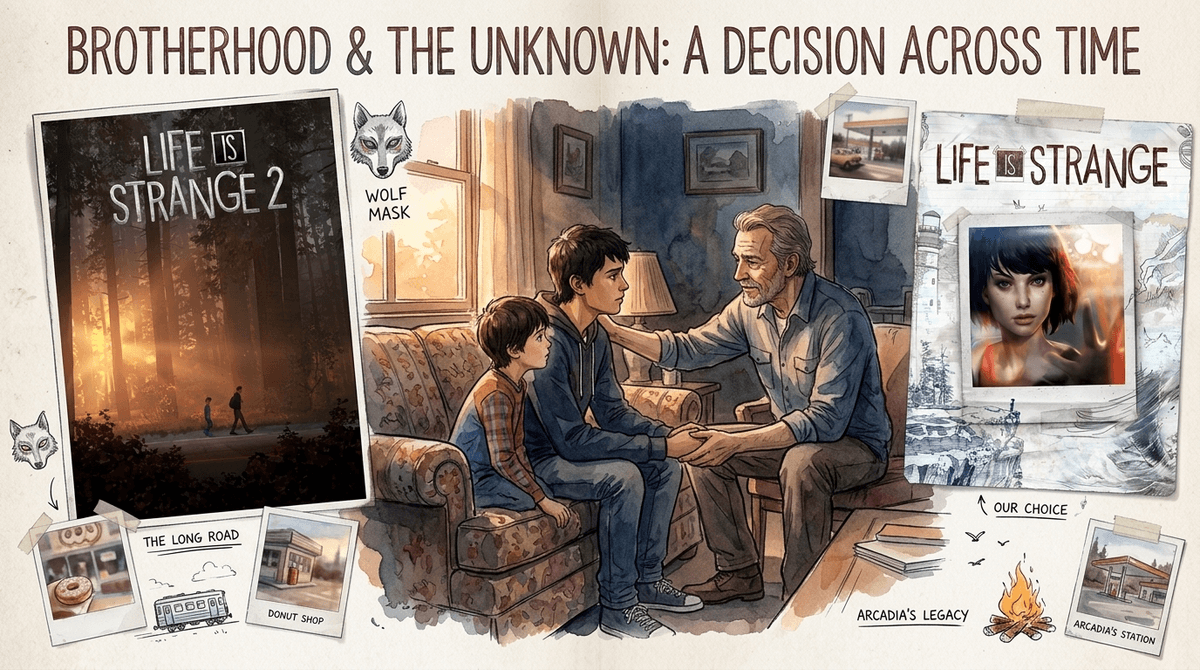
TL;DR: Life is Strange 2 is an emotionally heavy, narrative-driven "interactive movie" about two brothers on the run. It’s a masterpiece of storytelling but carries a Mature (17+) rating for a reason. Expect heavy themes of racism, police violence, drug use, and some very tough "lesser of two evils" choices. It’s best for older teens (15+) who can handle intense social commentary and emotional gut-punches.
If you're looking for something lighter or for younger kids, check out these alternatives:
- Life is Strange (the original) – Still mature, but more of a "supernatural high school mystery" vibe.
- Tell Me Why – A similar choice-based mystery focusing on twins and family secrets.
- The Wild Robot by Peter Brown – If you want the "found family/survival" theme for a much younger audience.
Unlike the first game in the series, which took place in a single town, Life is Strange 2 is a road trip story. You play as Sean Diaz, a 16-year-old in Seattle whose life is upended after a tragic encounter with a police officer leaves his father dead and his 9-year-old brother, Daniel, discovering he has powerful telekinetic abilities.
Fearing the police and the system, Sean takes Daniel and heads south, aiming for their father’s hometown in Mexico. The game is divided into five episodes, and the core mechanic isn't "winning" or "losing"—it’s decision-making.
The most unique part? You aren't just making choices for yourself; you are raising Daniel. He watches everything Sean does. If you steal food because you're starving, Daniel learns that stealing is okay. If you use violence to protect him, he learns that his powers should be used for harm. It’s a 15-to-20-hour lesson in the weight of being a role model.
While the "superpowers" element is cool, most kids are drawn to this game because it feels real. In an era where many games are about mindless shooting or building digital theme parks, Life is Strange 2 treats teenagers like adults.
It taps into that adolescent feeling of "us against the world." It also features a fantastic indie-folk soundtrack and a visual style that feels like a moving watercolor painting. For kids who feel marginalized or are starting to become politically aware, the game’s direct engagement with issues like the US-Mexico border, racial profiling, and the foster care system feels incredibly relevant.

Let's not pull punches: this game is rated Mature, and it earns it. If you are a parent who prefers to keep media "neutral" or "apolitical," you should know that this game has a very clear point of view.
Violence and Trauma
The game begins with a police shooting and the death of a parent. Throughout the journey, the brothers face physical threats, including being kidnapped, held at gunpoint, and caught in explosions. It’s emotionally taxing. There is blood, but it’s not "slasher movie" gore—it’s more about the realistic trauma of injury.
Language
The F-word is used frequently. It’s used the way actual 16-year-olds on the run from the law would use it. If "strong language" is a dealbreaker in your house, this isn't the game for you.
Drugs and Alcohol
There is a significant portion of the game (Episode 3) set in an illegal cannabis farm in California. Sean can choose to smoke or drink, and he’s surrounded by a group of drifters who use substances. It’s depicted as part of a specific subculture, not necessarily "glamorized," but it is very much present.
Mature Themes and Politics
The game deals head-on with racism. The brothers encounter people who treat them with hostility purely because of their heritage. There are depictions of "border vigilantes" and systemic injustice. It also touches on religion (a cult features prominently in one episode) and sexuality (Sean can have a romantic interest in either a male or female character depending on player choices).
Learn more about how to talk to your kids about racism in media
Ages 10-12: Not recommended. The themes are too heavy, the language is too coarse, and the nuance of the "morality" system might be lost. It’s a lot of pressure for a middle-schooler to feel responsible for the "corruption" of a younger sibling.
Ages 13-14: Parental discretion. If your child is mature and you’re willing to play with them or discuss the episodes as they finish them, it can be a profound teaching tool. But be prepared for some awkward questions and heavy conversations.
Ages 15+: Green light (with context). This is the target audience. High schoolers are already navigating these themes in the news and in their social circles. Life is Strange 2 provides a safe, virtual space to explore the consequences of moral choices.
The most important thing to understand as a parent is that Daniel (the younger brother) is an AI-driven character who "learns" from the player.
There are two hidden stats the game tracks: Daniel’s Morality and Daniel’s Brotherhood.
- Morality is his sense of right and wrong (will he hurt people? will he steal?).
- Brotherhood is how much he trusts and loves Sean.
If you are too strict with him, he might have high morality but hate you. If you are too "cool" and let him do whatever, he might love you but become a dangerous person with his powers. This is a fascinating parallel to real-world parenting, and it’s why I actually think this is a great game for parents to play themselves.
If your kid likes this style of "choose your own adventure" gameplay, here’s how it stacks up against others:
- The Last of Us Part I: Much more violent and focused on combat. Life is Strange 2 is more about talking and exploring.
- Detroit: Become Human: Similar "societal allegory" vibes but with robots. It’s a bit more "action-movie" than the Diaz brothers' story.
- Minecraft Story Mode: If your kid is under 12 and wants "choices," go here instead. It’s the "G-rated" version of this genre.
If your teen is playing Life is Strange 2, use these questions to spark a conversation at dinner:
- "What kind of brother is Sean being right now?" (Focuses on the responsibility of the older sibling).
- "Did you decide to tell Daniel the truth about what happened in Seattle?" (Explores the ethics of protecting someone vs. being honest).
- "How do you feel about the way the people they meet on the road treat them?" (Opens the door to discussing prejudice and empathy).
- "If you had Daniel's powers, would you feel obligated to use them to help people, even if it meant getting caught?" (Classic superhero ethics).
Life is Strange 2 is not "brain rot." It is the opposite. It is a slow, methodical, and often painful look at the bond between siblings and the complexities of modern America.
It isn't a "fun" game in the way Roblox or Fortnite is fun. It’s an experience. If your teen is ready for it, it might be one of the most memorable stories they ever encounter in a digital format. Just be ready to offer a hug when the credits roll—the endings are notoriously emotional.