

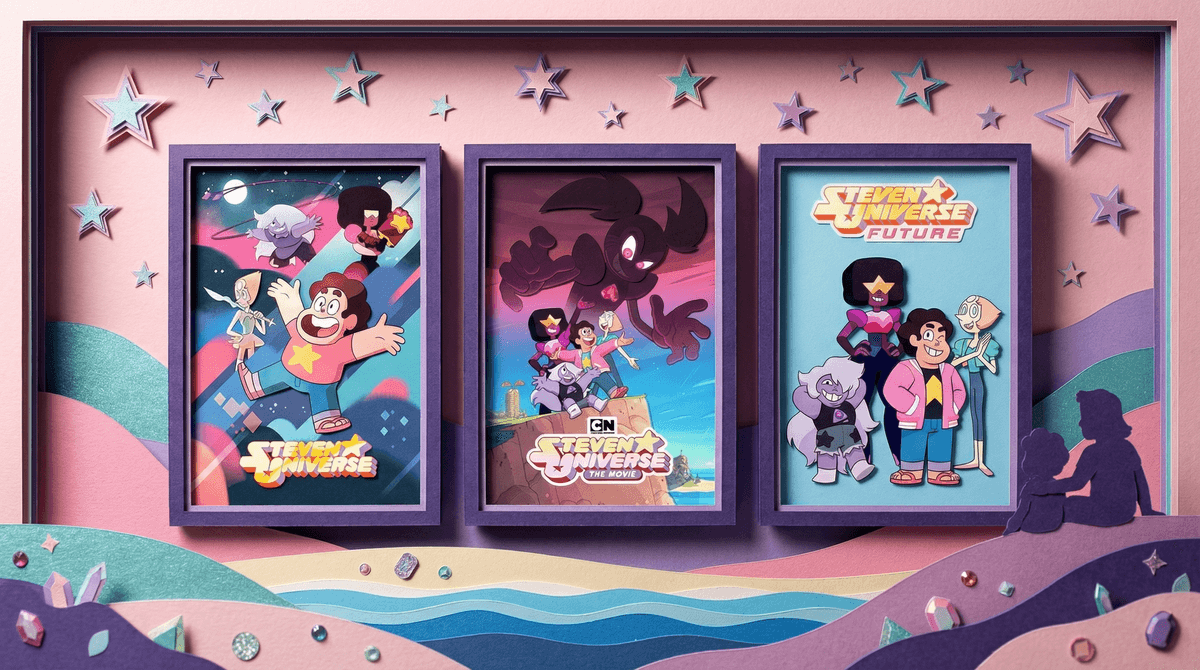
Steven Universe is an animated series that aired on Cartoon Network from 2013-2019 (with a 2019 movie and epilogue series through 2020). It follows Steven, a half-human, half-alien kid living in Beach City with the Crystal Gems—Garnet, Amethyst, and Pearl—magical beings protecting Earth from threats.
But here's what makes it different from typical kids' cartoons: Steven Universe tackles consent, gender identity, grief, trauma, PTSD, toxic relationships, and emotional regulation with more nuance than most adult shows. The creator, Rebecca Sugar, made the first animated show led by a non-binary creator, and it shows in every frame.
The show starts fairly light—silly adventures, magical powers, donut shop visits—but gradually reveals a complex mythology about colonialism, war, and identity. By the end, you're watching a kid literally negotiate peace treaties and process intergenerational trauma. It's a lot.
The music is genuinely catchy—Sugar is a talented songwriter, and the show features everything from Broadway-style ballads to indie rock. Kids will absolutely be singing these songs.
The characters feel real. They mess up, apologize, grow, and mess up again. Steven isn't a perfect hero—he's anxious, people-pleasing, and eventually deals with serious mental health struggles. The Gems aren't perfect guardians—they're dealing with their own trauma while trying to raise a kid.
And the representation matters. The show features same-gender relationships (not subtext—actual relationships with proposals and weddings), non-binary characters, and characters across the size and ability spectrum. For kids who don't see themselves in most media, this show is often the first time they do.
Here's where it gets tricky. Cartoon Network marketed this as a kids' show for ages 7-12, and the early episodes support that. But the emotional complexity and themes escalate significantly.
Ages 7-9: The early seasons work well here. There's action, magic, and humor. Some scary moments (corrupted gems can be genuinely creepy), but nothing worse than your average Avatar: The Last Airbender episode.
Ages 10-13: This is the sweet spot. Kids this age can grasp the more complex relationship dynamics and emotional themes. They're also old enough to process the show's approach to consent—which is explicit and refreshing. Characters ask before fusing (a physical merging of gems), respect "no," and discuss boundaries.
Ages 14+: Honestly, the later seasons (especially Steven Universe Future) deal with mental health in ways that resonate more with teens and adults. Steven's struggle with PTSD and his role as the family "fixer" hits different when you're older.
The show also gets darker. Characters experience what's essentially shattering (death), there's war trauma, and the final season deals with themes of authoritarianism and systemic oppression. Not graphic, but heavy.
The LGBTQ+ representation is central, not incidental. If you're uncomfortable with same-gender relationships or non-binary characters, this isn't the show for you—and that's something to know upfront. Ruby and Sapphire (who form Garnet) are in a committed relationship. There's a proposal and wedding. It's beautiful and age-appropriate, but it's there.
The show requires emotional literacy. Characters talk about their feelings... a lot. They process, apologize, and work through conflict. If your family values direct communication about emotions, this reinforces that. If not, it might feel like a lot of talking.
It's not always "kid-paced." Some episodes are slow. There's character development instead of action. Kids used to rapid-fire content might find it boring initially.
The fusion concept can be confusing. Gems fuse into new beings—it's part combat strategy, part relationship metaphor. The show treats it as intimate and consensual, which is great for teaching boundaries, but you might want to talk about what fusion represents .
.
Steven's mental health arc is intense. In Steven Universe Future, he deals with PTSD, anxiety, and a literal transformation triggered by emotional distress. It's handled well, but it's real. If your kid struggles with anxiety, this could be validating or triggering—you know your child best.
With 92% of families in our community using TV and 40% using Netflix regularly for kids' content, Steven Universe fits into most families' existing viewing habits. At an average of 4.2 hours of screen time daily, a 22-minute episode is a reasonable chunk of that time—especially since the show tends to spark conversations rather than just zone-out viewing.
Unlike shows designed for passive consumption, Steven Universe often leads to kids wanting to talk about what they watched, draw fan art, or learn more about the themes. It's the kind of content that extends beyond screen time.
Steven Universe is exceptional television that happens to be animated. It's genuinely groundbreaking in its representation and emotional depth. But it's not for every family, and that's okay.
Watch it first. Seriously. The first few episodes will give you a sense of the tone, and you can decide if it fits your family's values and your kid's emotional readiness.
Co-watch when possible. This show creates natural conversation opportunities about consent, relationships, identity, and mental health. Those talks are valuable.
Trust your instincts. If your 8-year-old is emotionally mature and you're comfortable with the themes, great. If your 12-year-old isn't ready for discussions about trauma and identity, that's also fine. Age ranges are guidelines, not rules.
The show is available on HBO Max and various streaming platforms. All 160 episodes plus the movie and epilogue series are there waiting—which is either exciting or overwhelming, depending on your perspective.
- Watch the first 5-10 episodes yourself to gauge fit
- Check out the Cartoon Network guide for similar content
- Explore other shows with strong emotional literacy themes
- Have a conversation with your kid about what kinds of stories they're ready for
And remember: there's no perfect show, just the right fit for your family right now.