

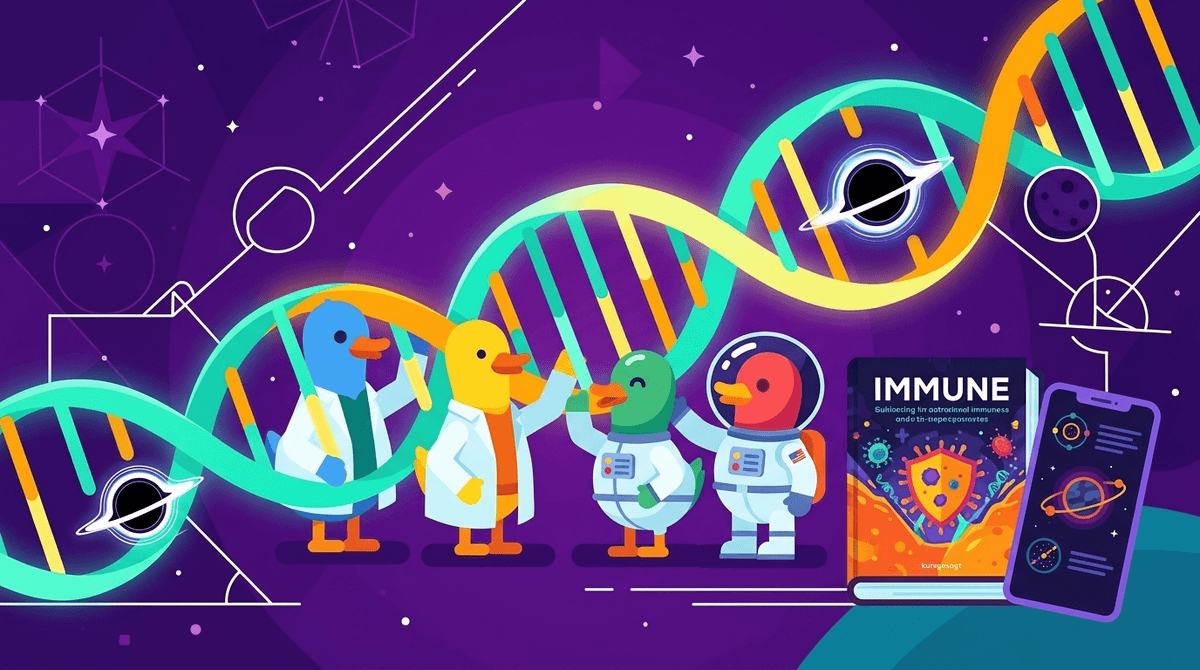
TL;DR: Kurzgesagt – In a Nutshell is arguably the highest-quality educational channel on YouTube. It uses stunning "flat design" animation and adorable ducks to explain incredibly complex topics like quantum physics, the immune system, and climate change. It’s brilliant, but be prepared for the "existential dread" factor—some videos deal with the end of the universe or the nature of consciousness in a way that might leave your 9-year-old staring at the ceiling at 2 AM.
Quick Links:
If you haven't stumbled across a video featuring a brightly colored bird being vaporized by a nuclear bomb or sucked into a black hole, let me introduce you to Kurzgesagt (German for "In a nutshell").
Based in Munich, this animation studio has turned science communication into an art form. They don't just "explain" things; they create 10-to-15-minute visual masterpieces that make the most boring parts of a biology textbook look like a Pixar movie. They cover everything from "What happens if we detonate all nuclear weapons at once?" to "The Fermi Paradox" and "How the Immune System actually works."
It’s the ultimate "stealth learning" tool. Your kid thinks they’re watching a cool cartoon about space; in reality, they’re learning about the Schwarzschild radius and the heat death of the universe.
The "Kurzgesagt Style" is iconic. It’s vibrant, high-frame-rate animation with a very specific color palette. But the secret sauce is the narration. Steve Taylor’s voice is the ultimate "calm academic"—he can explain the total extinction of the human race and somehow make it sound soothing.
For kids who are aging out of "little kid" science shows like Wild Kratts but aren't quite ready to sit through a dry university lecture, Kurzgesagt is the bridge. It respects their intelligence. It doesn't use "baby talk." It treats big questions with the weight they deserve.
In our Screenwise community data, we see a massive spike in Kurzgesagt viewership starting around 4th or 5th grade. By middle school, it’s often a primary source for "fun" research. If your kid is into Minecraft or Roblox, they likely appreciate the systematic, "how-stuff-works" logic that Kurzgesagt brings to the real world.
We need to talk about the dread. Kurzgesagt is famous for its "Optimistic Nihilism" philosophy. They don't shy away from the fact that the universe is massive, we are tiny, and one day the sun will swallow the earth.
For some kids—the ones who are already prone to "big picture" anxiety—this can be a lot. One minute they’re learning about how cute ants are, and the next, they’re contemplating the loneliness of the human condition in a cold, indifferent cosmos.
That said, for many kids, this is actually comforting. It gives them a vocabulary for the big, scary thoughts they’re already having. It’s not "brain rot" like some Skibidi Toilet memes; it’s high-level philosophy disguised as a cartoon.
Learn more about helping kids process existential anxiety from media
If you want to introduce your family to the channel, don't just hit "play all." Some videos are much "heavier" than others. Here’s how to navigate their library:
The "Safe" Science (Ages 8+)
These are high-energy, fascinating, and generally lack the "we are all going to die" vibes.
- The Immune System Explained: This is their masterpiece. It turns cells into soldiers and viruses into monsters. It’s so good the founder wrote a whole book about it called Immune.
- The Rise of the Ants: Basically a real-life version of [SimAnt] or a high-stakes strategy game. Kids who like Pikmin will love this.
- How to Build a Mars Base: Pure engineering and "what-if" fun.
The "Big Brain" Philosophy (Ages 12+)
Save these for when you’re ready to have a long car ride conversation.
- The Egg: A beautiful short story (originally by Andy Weir) about reincarnation and the human connection. It’s profound, but it will spark questions.
- Optimistic Nihilism: The channel’s manifesto. It’s about finding meaning in a meaningless universe.
- Loneliness: A surprisingly touching look at the biological roots of feeling alone and how to fix it. Great for the middle school years.
The "Mega-Destruction" (Ages 10+)
Kids love these because things go "boom," but they’re actually physics lessons.
Ages 5-7: They might like the colors and the ducks, but the content will go way over their heads. Some of the imagery (monsters representing bacteria or skeletons representing death) might be a bit much for sensitive souls.
Ages 8-12: This is the "Goldilocks Zone." They’re old enough to grasp the concepts and young enough to find the "what if the moon fell to earth" scenarios thrilling rather than terrifying.
Ages 13+: This is basically supplemental education. If they’re struggling in biology or physics, there is likely a Kurzgesagt video that explains the concept better than their teacher can.
Check out our guide on educational YouTube channels for middle schoolers
Kurzgesagt is hosted on YouTube, which means the biggest "danger" isn't the channel itself—it’s the algorithm.
- The Rabbit Hole: Once you watch Kurzgesagt, YouTube might suggest "doom-scrolling" science content that is less fact-based and more "the world is ending tomorrow" clickbait.
- The Comments: Like any major channel, the comment section can be a mixed bag, though Kurzgesagt’s community tends to be nerdier and more respectful than your average gaming channel.
- Accuracy: They are incredibly diligent. They consult scientists and often post "sources" documents for their videos. However, they are human. They have occasionally deleted and re-uploaded videos because they felt they got a nuance wrong—which is actually a great lesson in digital literacy for kids.
Kurzgesagt isn't just a channel; it's a massive brand. They have a shop full of posters, plushie ducks, and high-end science tools. Unlike the low-quality "merch" you see from many YouTubers, their stuff is actually beautiful and educational.
If your kid asks for a "Kurzgesagt Calendar," it’s usually a "human history" calendar that starts 12,000 years ago. It’s the kind of consumerism that actually adds value to their room.
If you see your kid watching a video about the "Great Filter" or "Climate Doom," don't just walk past. Sit down for five minutes.
Ask them:
- "That animation is cool—what are the ducks representing in this one?"
- "Does the idea of a black hole make you feel curious or a little bit freaked out?"
- "If we could actually build a base on the moon like they’re describing, would you want to go?"
These videos are "conversation starters" in a box. They move the needle from passive consumption to active thinking.
Kurzgesagt is the gold standard for what YouTube can be. It’s smart, beautiful, and deeply intentional. While it can occasionally lean into the "existential dread" of the universe, it does so with a sense of wonder and curiosity that is infectious.
If your family is trying to move away from "brain rot" content and toward "high-signal" digital habits, Kurzgesagt is your best friend.
- Watch together: Start with the Immune System video. It’s the best entry point.
- Check the sources: If your kid is doing a school project, show them the "Sources" link in the video description. It’s a great way to teach them about citations.
- Monitor the vibe: If you notice your kid getting anxious about "space stuff," maybe pivot them toward their "Earth-based" biology or history videos for a while.