

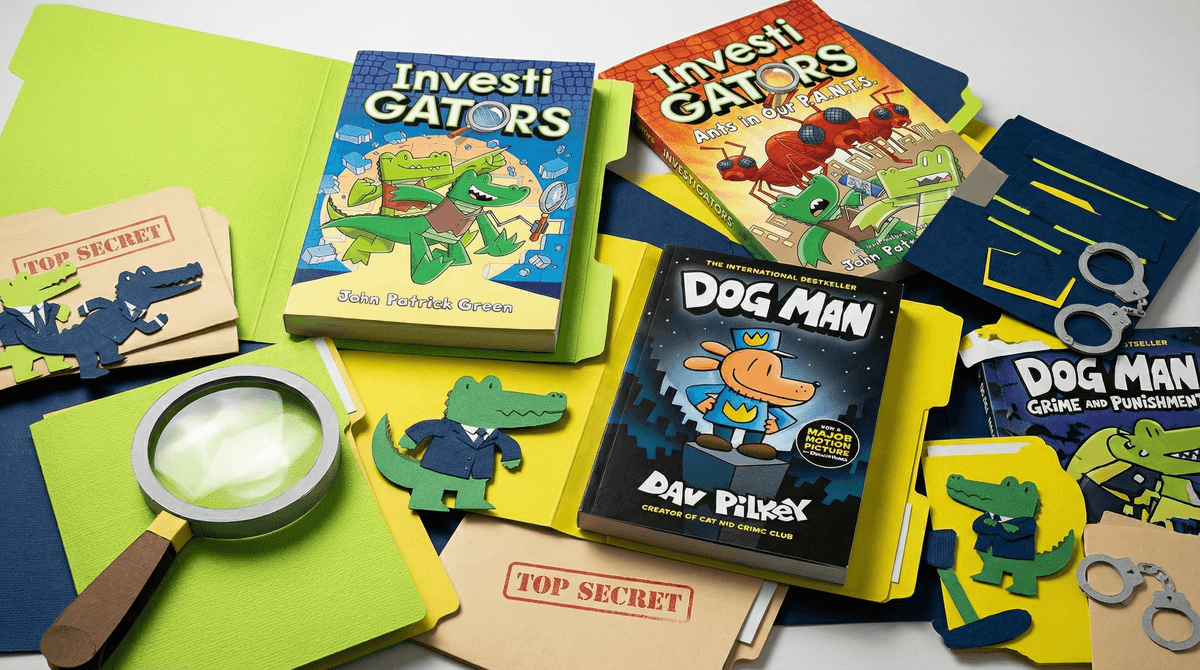
The Investigators is a graphic novel series by John Patrick Green that follows Mango and Brash—two alligator detectives who work for the S.U.I.T. (Special Undercover Investigation Teams) agency. Think buddy-cop movies meets Dog Man meets actual mystery-solving, with plenty of puns and visual gags thrown in. The series currently has multiple books including "Take the Plunge," "Off the Hook," "All Tied Up," and "Ants in Our P.A.N.T.S."
If you've got a kid who devours Captain Underpants or The Bad Guys, The Investigators hits that same sweet spot—silly enough to feel fun, substantive enough to actually be reading.
It's a graphic novel that doesn't feel like "baby reading." By third and fourth grade, kids become hyper-aware of what their peers think is "cool." The Investigators threads the needle perfectly—it's got cartoon animals (approachable for younger readers) but actual mystery plots and character development (sophisticated enough that 10-year-olds don't feel like they're reading below their level).
The humor is genuinely funny. John Patrick Green doesn't talk down to kids. The jokes work on multiple levels—visual gags in the panels, wordplay, running jokes that reward careful readers. There's a character named Cilantro who's literally a bunch of cilantro, and the series commits to bits like this in a way that kids find hilarious.
It's got that "just one more chapter" quality. Each book has an actual plot with twists and cliffhangers. Unlike some early graphic novels that are more sketch comedy than story, The Investigators has mysteries to solve, which means kids who say "I'm not a reader" suddenly find themselves reading 200 pages in a sitting.
Here's the thing about reluctant readers: the bridge from "won't read" to "will read" is often paved with graphic novels. And not just any graphic novels—ones that respect kids' intelligence while meeting them where they are.
The Investigators is particularly valuable because it's doing something subtle: it's teaching narrative comprehension through both words and images. Kids are tracking multiple characters, following plot threads across books, making predictions. That's real reading work, even if it "looks like a comic book."
For kids around ages 6-10, this series often becomes a gateway. They finish The Investigators and suddenly they're willing to try other graphic novels, then hybrid books like Diary of a Wimpy Kid, then maybe even chapter books.
The screen time connection: In an age where kids are spending hours on YouTube or Roblox, finding something that can compete for their attention is huge. The Investigators has the visual appeal of a screen but the deeper engagement of a book. Many parents report their kids choosing to read these instead of asking for device time—which is basically the holy grail.
Ages 6-8: Perfect for strong readers in this range or as read-alouds. The humor is accessible, nothing scary, and the visual storytelling helps emerging readers follow along. Some younger kids might need help with wordplay or more subtle jokes.
Ages 8-10: The sweet spot. Most third and fourth graders can read these independently and will actually want to. Great for kids who claim to hate reading or who struggle with traditional chapter books.
Ages 10-12: Still engaging for this age group, especially reluctant readers or kids who just enjoy graphic novels. Some very advanced readers might find them a bit young, but many still enjoy them as "comfort reads."
Content-wise: These are squeaky clean. No violence beyond cartoon slapstick, no language issues, no scary content. The villains are silly (a giant robot, a platypus with evil plans). If you're comfortable with The Lego Movie, you're fine with The Investigators.
These are real books. Sometimes parents worry that graphic novels "don't count" as reading. They absolutely do. The comprehension skills, vocabulary, and narrative understanding kids develop are legitimate and transferable.
The series keeps getting better. Unlike some series that peak early, The Investigators maintains quality across books. This means once your kid is hooked, you've got multiple books that will hold their interest.
Library gold. These are perpetually checked out at most libraries, which tells you something. If your library has a hold list, get on it. They're also reasonably priced if you're buying.
Great for different learning styles. Kids who struggle with traditional text-heavy books often thrive with graphic novels. The visual component provides context clues and keeps the brain engaged in a different way.
The Investigators is one of those rare finds that makes both kids and parents happy. Kids get entertainment that feels like pure fun. Parents get actual reading happening, vocabulary building, and a break from screen requests.
Is it going to turn every kid into a bookworm overnight? No. But it might turn your "I hate reading" kid into someone who asks for the next book in the series. And honestly, that's worth celebrating.
Start with book one: "Take the Plunge" is the natural entry point, though the books work as standalones too.
Make it social: If your kid has a friend who loves these, suggest they read the same book and talk about it. Reading becomes way more appealing when there's someone to discuss theories with.
Follow the thread: Once they finish The Investigators, have some similar books ready. InvestiGators: The Agents of S.U.I.T., Hilo, or Nathan Hale's Hazardous Tales could be good next steps depending on interests.
Don't overthink it: If your kid wants to reread the same Investigators book five times, that's fine. Rereading builds fluency and confidence. Let them enjoy it.
Want to explore more books that might work for your specific kid? The Screenwise chat can help you find the right fit based on age, interests, and reading level.