

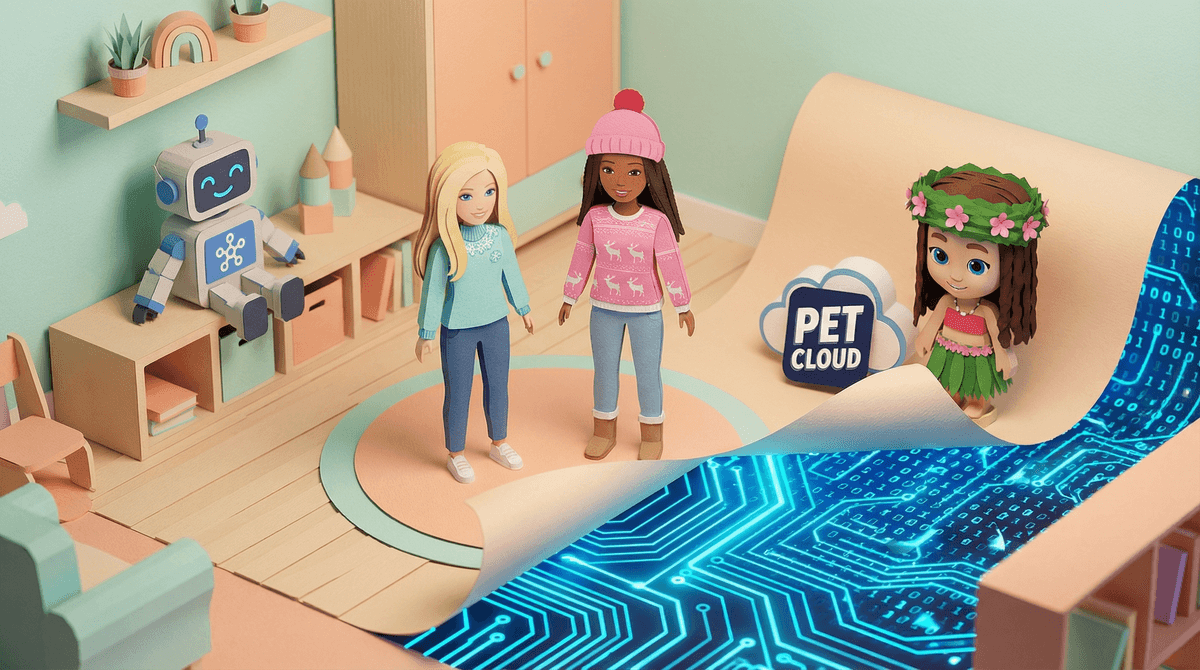
Remember when toys were just...toys? A stuffed animal was fabric and fluff, a doll said three pre-recorded phrases if you pulled a string, and the most high-tech thing in the playroom was a Game Boy that needed four AA batteries.
Now? Your kid's teddy bear has WiFi.
Smart toys (also called "connected toys" or the slightly creepy "Internet of Things toys") are playthings that connect to the internet, use Bluetooth, have cameras or microphones, collect data, or interact with apps. We're talking about everything from Furby Connect to smart watches designed for kids, interactive robots that respond to voice commands, tablets built into stuffed animals, and dolls that have actual conversations with your child using AI.
Some of these are genuinely cool. Some are privacy nightmares wrapped in plush fabric. And most parents have no idea which is which until it's too late.
Here's the thing: connected toys aren't inherently evil. Many are designed with good intentions—to make play more interactive, educational, or personalized. A robot that teaches coding? Amazing. A smart globe that answers geography questions? Fantastic.
But here's what's happening behind the scenes:
Data collection on steroids. These toys are often collecting voice recordings, video footage, location data, behavioral patterns, and personal information about your child. Where does that data go? Who has access to it? How long is it stored? Most parents have no clue, because the privacy policies are 47 pages of legal jargon.
Security vulnerabilities. In 2017, CloudPets (internet-connected stuffed animals) had a massive data breach that exposed 2+ million voice recordings of kids and parents. The smart doll "My Friend Cayla" was banned in Germany because hackers could use it to spy on children. These aren't theoretical risks—they've actually happened.
Always listening. Many smart toys have "always-on" microphones. Sure, it needs to hear your kid to respond, but that means it's always listening. Even when you think it's off. Even in your kid's bedroom. Even during bath time or bedtime conversations you'd never imagine being recorded.
Third-party access. Some toys share data with advertisers, analytics companies, or other partners. Your 6-year-old tells their smart toy they love dinosaurs, and suddenly you're seeing targeted ads for Jurassic World merchandise. Coincidence? Nope.
Not all smart toys are created equal. Some companies take privacy seriously. Others...don't.
Red flags to watch for:
- Requires creating an account with your child's name, age, or birthdate
- Has a camera or microphone with no physical off switch
- Privacy policy mentions "sharing data with third parties" or "targeted advertising"
- Connects to WiFi but doesn't explain why it needs internet access
- Made by a company you've never heard of (smaller companies often have weaker security)
Toys that have raised serious concerns:
- Hello Barbie (recorded conversations and sent them to cloud servers)
- My Friend Cayla (banned in multiple countries for security issues)
- CloudPets (massive data breach)
- VTech tablets and smartwatches (hacked, exposing photos and chat logs of millions of kids)
Better options that prioritize privacy:
- Osmo (interactive learning system that uses your existing tablet but doesn't collect personal data)
- Traditional LEGO robotics kits (you build and program them, but they don't phone home)
- Nintendo Switch (yes, it's connected, but Nintendo's privacy practices are relatively solid)
- Honestly? Regular toys. Blocks, art supplies, board games, books, bikes. Zero data collection, 100% imagination.
Read the privacy policy. I know, I know—it's boring and long. But at minimum, search for these keywords: "third party," "advertising," "voice recording," "camera," "location." If any of those appear, dig deeper.
Check for recalls or security alerts. Google "[toy name] security concerns" before you buy. Consumer Reports and Common Sense Media often cover smart toy safety issues.
Disable features you don't need. If the toy works fine without WiFi, don't connect it. If it has a camera but your kid only uses the voice features, cover the camera with tape.
Create fake accounts. If a toy requires registration, use a nickname instead of your child's real name, a burner email address, and a fake birthdate. Will this break some features? Maybe. But it protects your kid's identity.
Have the conversation. Even young kids can understand "this toy has a microphone, so it can hear what you say." Talk about what's okay to share with a toy (favorite color, silly jokes) versus what's private (full name, address, school name, when parents aren't home).
Check your home network. If a smart toy connects to your WiFi, it's on the same network as your laptop, phone, and smart home devices. Make sure your router has a strong password and consider setting up a separate guest network just for IoT devices.
Ages 3-7: At this age, kids don't understand that a toy can "remember" or "share" what they say. If you're going to use connected toys, supervise closely and keep them offline when possible. Honestly, this age group doesn't need smart toys—they're just as happy with a cardboard box.
Ages 8-12: Good age to start teaching digital literacy through toys. Explain how the toy works, what data it collects, and why that matters. Let them help you read the privacy settings. This is practice for the smartphone conversations coming in a few years.
Ages 13+: Teens are old enough to understand privacy implications but young enough to not always care. If they want a smart device, make privacy education part of the deal. Show them how to check permissions, opt out of data sharing, and recognize when a "toy" is really a data collection tool.
Smart toys aren't going away. The market is growing, the technology is getting more sophisticated, and companies are getting better at marketing these things as "essential" for modern childhood.
But here's the truth: your kid doesn't need a WiFi-enabled stuffed animal to have a happy childhood. They don't need a doll that uses AI to have meaningful play experiences. And they definitely don't need a toy that's secretly recording their voice and selling that data to advertisers.
If you do choose connected toys, go in with eyes wide open. Treat them like you'd treat any other internet-connected device—with caution, skepticism, and strong privacy settings.
And remember: the most valuable thing about childhood play isn't the technology. It's the imagination, the creativity, the boredom that leads to invention, the analog messiness of building a fort out of couch cushions or putting on a play with stuffed animals that don't need batteries.
Sometimes the smartest choice is the dumb toy.
Before you buy any connected toy:
- Google "[toy name] privacy concerns" and "[toy name] security breach"
- Read reviews from Common Sense Media or consumer protection sites
- Check if it requires an account, app, or internet connection to function
- Look for a physical off switch for cameras and microphones
If you already own smart toys:
- Review what data they're collecting (check the app settings and privacy policy)
- Disconnect from WiFi if the toy still works offline
- Delete any accounts you created if you're no longer using the toy
- Learn more about general privacy settings for kids' devices

Want alternatives? Check out our guides to screen-free activities for kids and best educational toys that don't require WiFi.