

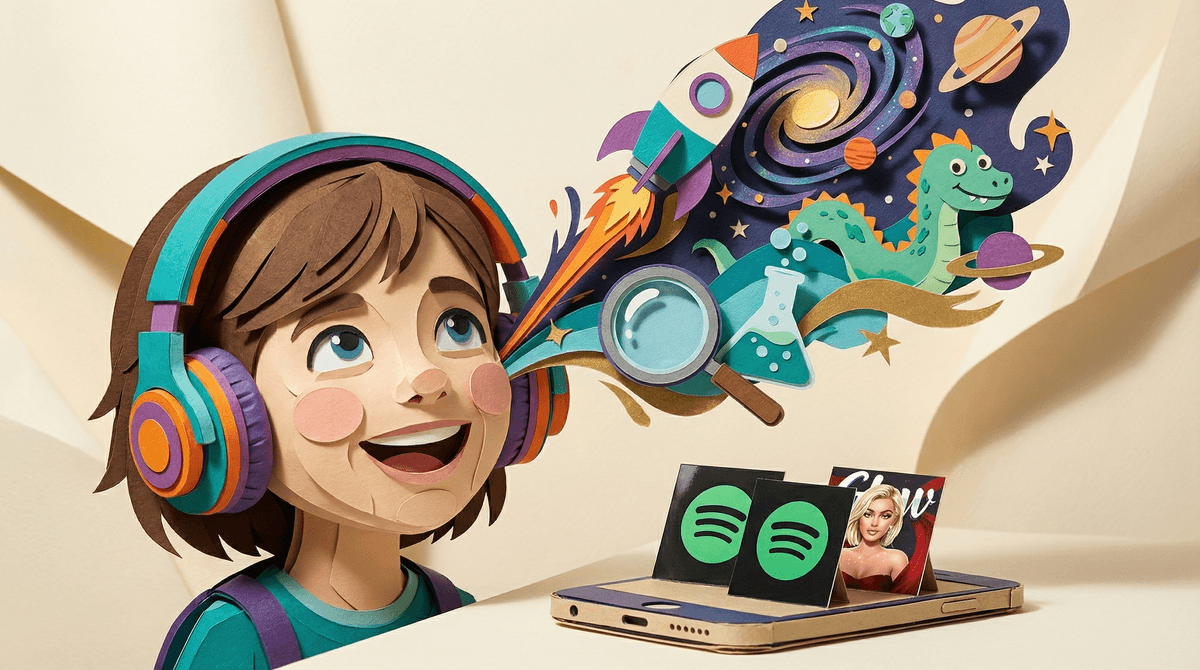
The Best Podcasts for 3rd and 4th Graders (That Won't Drive You Crazy)
Screen-free audio entertainment that educates, entertains, and sparks curiosity in elementary schoolers.
Here's something that might surprise you: while our community data shows kids averaging 4.2 hours of screen time daily, audio content doesn't have to count toward that total. Kid podcasts are essentially radio shows designed specifically for elementary-age listeners—think storytelling, science experiments, history lessons, and comedy sketches, but without the zombie-scrolling that comes with YouTube or Roblox.
For 3rd and 4th graders (roughly ages 8-10), podcasts hit a sweet spot. They're old enough to follow longer narratives and more complex topics, but still young enough to get genuinely excited about a well-told story or cool science fact. Plus, they can listen while doing other things—drawing, building with LEGOs, or even helping with chores (a parent can dream, right?).
The honest answer? Podcasts make kids feel grown up. They're consuming content "like adults do" but it's actually age-appropriate. There's something about putting on headphones and listening to "their show" that feels independent and mature.
Also, unlike videos, podcasts engage their imagination. When they're listening to Story Pirates or The Unexplainable Disappearance of Mars Patel, their brains are creating the visuals. It's like reading, but they can do it while their hands are busy.
For Story Lovers
Story Pirates takes stories written by real kids and turns them into sketch comedy with professional actors and original songs. It's genuinely funny (even for adults), celebrates creativity, and might inspire your kid to write their own stories.
The Unexplainable Disappearance of Mars Patel is a serialized mystery adventure that's been described as "Stranger Things meets Goonies." Fair warning: once they start, they'll want to binge the entire season.
Circle Round adapts folktales from around the world with high-quality production and celebrity voice actors. Each episode is 10-20 minutes—perfect for car rides.
For Curious Minds
Brains On! answers kid questions about science with actual experts, sound effects, and humor. Recent episodes include "Why do we itch?" and "How do submarines work?" It's like Magic School Bus in audio form.
Wow in the World covers the latest science news with high energy and lots of sound effects. It can be a bit chaotic (think: very enthusiastic camp counselor energy), but kids eat it up.
But Why: A Podcast for Curious Kids from Vermont Public Radio tackles questions submitted by kids. It's calmer and more straightforward than Wow in the World, which some families prefer.
For History Buffs
The Past and The Curious tells true history stories with humor and kid-friendly language. Episodes about everything from the invention of ice cream to the history of toilets (yes, really).
Greeking Out from National Geographic Kids dives into Greek mythology with comedy and modern references. If your kid is into Percy Jackson, this is perfect.
The good news: About 50% of families in our community allow unsupervised tablet use, but podcasts are generally much safer for independent listening than apps or games. Most kid podcasts are carefully vetted, ad-free or have minimal sponsor messages, and you don't have to worry about them clicking through to something inappropriate.
The reality check: Not every podcast will land with your kid. Some find Wow in the World annoying. Others think Circle Round is too babyish. Let them sample a few episodes of different shows to find their favorites.
The technical stuff: Most podcasts are free through apps like Apple Podcasts, Spotify, or kid-specific apps like Glow (which curates kid content). If you're worried about them wandering into adult content, Glow is worth the small subscription fee.
The hidden benefit: Podcasts are fantastic for long car rides, waiting rooms, and that weird 20 minutes before dinner when everyone's a bit cranky. They're also great for kids who struggle with reading but need to build their vocabulary and comprehension skills—you can learn more about how audio content supports literacy development .
.
Start with one or two shows and listen together first. This gives you a chance to gauge appropriateness and gives you something to talk about. ("What did you think about that story?" is a much better conversation starter than "How was screen time?")
Consider making podcasts part of specific routines: morning getting-ready time, car rides, or "quiet time" after school. With our community data showing 68% of kids this age don't have smartphones yet, podcasts on a shared tablet or old phone in airplane mode can be a great middle ground.
Pro tip: Download episodes before trips or situations without WiFi. Nothing's worse than a kid who's invested in a cliffhanger when the connection drops.
Podcasts are one of those rare wins in modern parenting—educational content that kids actually want to consume, that doesn't involve screens, and that won't make you want to tear your hair out if you overhear it. They're not going to replace books or outdoor play (nor should they), but they're a solid tool in your parenting toolkit.
The best part? Unlike Fortnite or TikTok, you can actually have a conversation about what they're listening to. "Tell me about that Mars Patel episode" beats "What did you do on your tablet?" every single time.
This week: Pick two podcasts from different categories above and listen to one episode of each with your kid. See what resonates.
This month: If they find a favorite, set up a simple podcast routine that works for your family's schedule.
Going forward: Check in occasionally about what they're listening to, just like you would with books they're reading. It's content consumption, and it deserves the same thoughtful attention—just with a lot less worry about screen addiction.