

Hooky and the Rise of Webtoon-Inspired Graphic Novels
TL;DR: Webtoons—digital comics designed for scrolling on phones—have exploded into a major reading format for kids and teens, with many now published as hefty graphic novels. Hooky is one of the most popular, a magical adventure about twin witches that's appropriate for ages 10+. The format is legit reading (not "brain rot"), often more engaging than traditional books for reluctant readers, and yes, there are parental controls on the Webtoon app if you go that route.
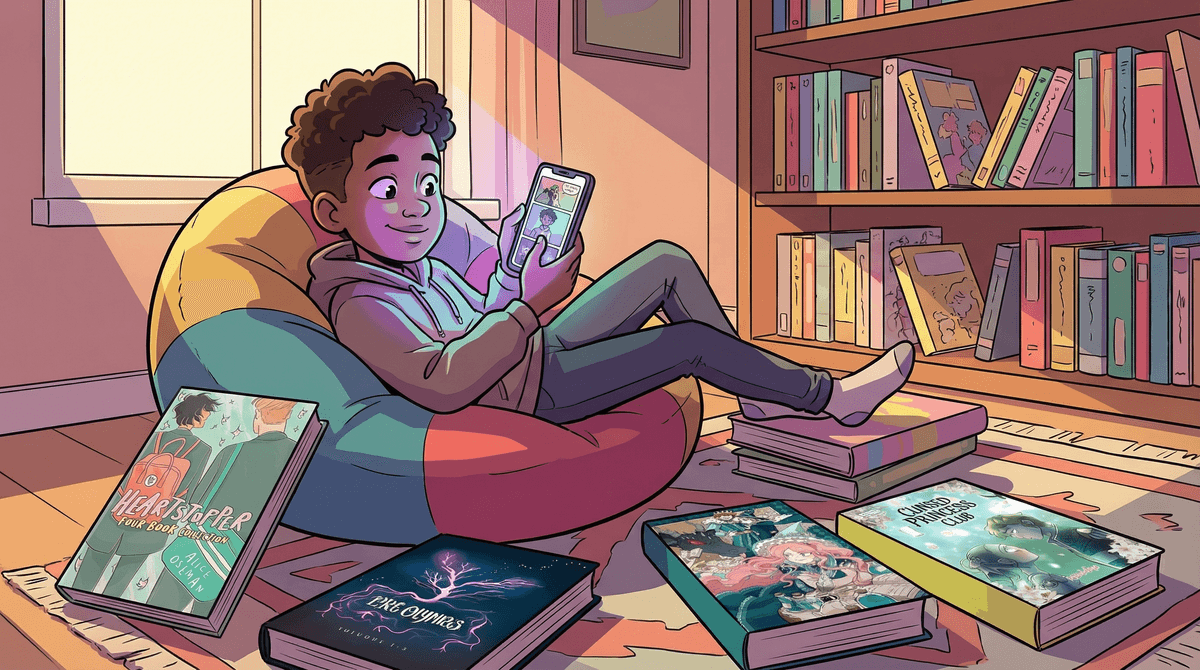
Webtoons are digital comics created specifically for smartphone reading—they scroll vertically instead of flipping pages, use full-color art, and are released in episodic chunks (usually weekly). The format originated in South Korea and has absolutely taken off globally, particularly with the 10-17 age group.
Here's what makes them different from traditional comics:
- Designed for phones first: The vertical scroll format means kids can read with one hand while eating cereal
- Serialized storytelling: New episodes drop weekly, creating appointment reading (like TV shows)
- Diverse genres: Everything from fantasy and romance to horror and slice-of-life
- Often free: Many are available on platforms like Webtoon with ad support
The twist? Many successful webtoons are now being published as physical graphic novels—big, chunky books that collect entire story arcs. Hooky is a perfect example of this trend.
Ages: 10-14 | Length: 544 pages | Vibe: Harry Potter meets Sabrina
Hooky follows twin witches Dani and Dorian who miss the bus to magic school and end up on a wild adventure involving witch hunters, magical politics, and family secrets. The original webtoon has over 1 billion reads, and the graphic novel adaptation is now a bestseller.
What parents need to know: According to Common Sense Media, there are battle scenes with magical spells, swords, and dragon attacks. One character is killed (sword to the chest), and witches are threatened with being burned at the stake. However, the art style significantly softens the violence—it's more "adventure peril" than graphic. Think Percy Jackson levels of intensity.
The Reddit parent consensus seems to be "fit for all ages" with nothing explicitly graphic, though I'd personally put it at 10+ because of the themes around prejudice, war, and some romantic tension between characters.
Why kids love it: The twin dynamic is genuinely funny, the magic system is creative without being overwhelming, and there's enough mystery to keep pages turning. It's also just beautiful—the full-color art is a major draw compared to black-and-white manga.
Parent bonus: It's 544 pages. If your kid tears through this in two days, that's still several hours of reading time. The book is substantial enough to feel like a real accomplishment.
The webtoon-to-graphic-novel pipeline is producing some genuinely engaging content for middle-grade readers, and here's why it's worth paying attention to:
For reluctant readers: The vertical scroll format and episodic nature make reading feel less daunting. Kids who balk at 300-page novels will happily consume the same amount of story in webtoon format because it feels different.
Visual literacy matters: These aren't "lesser" than traditional books. Reading graphic novels requires interpreting visual storytelling, pacing, and symbolic imagery—all legitimate literacy skills.
Community aspect: Many kids follow webtoons as they're released, discuss theories online, and create fan art. It's participatory reading culture, which is pretty cool.
Gateway effect: Multiple parents report kids moving from webtoons to traditional novels after getting hooked on a story. Percy Jackson fans often discover webtoons, and webtoon fans often discover traditional fantasy series.
Ages: 14+ | Greek mythology retelling
Gorgeous art, Hades and Persephone romance, but definitely older teens—there's sexual content and mature themes around consent and trauma. Not for middle schoolers despite the pretty colors.
Ages: 12+ | LGBTQ+ romance
The gentlest, sweetest queer love story between two British schoolboys. Originally a webcomic, now published graphic novels AND a Netflix series. Incredibly wholesome—think first crushes, hand-holding, and supportive friend groups.
Ages: 10+ | Comedy/fantasy
A princess who doesn't fit conventional beauty standards joins a support group for "cursed" princesses. Funny, body-positive, and genuinely sweet without being preachy.
If your kid wants to read webtoons digitally instead of buying the books, here's the reality check on the Webtoon app:
The good:
- Massive free library (ad-supported)
- Parental controls available (you can restrict mature content)
- Many age-appropriate series
- Encourages regular reading habits
The concerns:
- Not all content is kid-friendly: The app hosts everything from sweet middle-grade stories to explicit adult content
- Easy to stumble into mature content: Even with restrictions, the recommendation algorithm can be... questionable
- In-app purchases: Kids can spend real money on "coins" to unlock episodes early
- Comment sections: User comments can be inappropriate
According to parent reviews on Common Sense Media, most recommend the app for ages 10-11+ with parental oversight. The key is actually setting up the mature content filter (it's not automatic) and having conversations about what to do if they encounter something uncomfortable.
One parent's approach I really like: Start with the physical graphic novels, and if your kid gets really into the format, then consider the app with clear boundaries and periodic check-ins about what they're reading.
Ages 8-10: Stick with published graphic novels rather than the app. Hooky might be slightly intense for younger 8-year-olds, but many 9-10 year olds will be fine. Better bets for this age: Dog Man, Hilo, or Investigators.
Ages 10-13: The sweet spot for webtoon-inspired graphic novels. Hooky, Heartstopper, and Cursed Princess Club all work well. If using the app, set up content restrictions and check in regularly.
Ages 14+: More freedom with the app makes sense, but still worth having conversations about content choices. Some webtoons marketed to teens contain pretty explicit sexual content or intense violence—it's not all Heartstopper sweetness.
Here's the tension: webtoons on the app are screen time, but they're also reading. How you count this depends on your family's approach to screens.
Some frameworks that make sense:
- Count it as reading time, not entertainment screen time: If you have a "30 minutes of reading before screens" rule, webtoons on a tablet can count toward that
- Physical books preferred, app as bonus: Buy the graphic novels, allow app reading as extra
- Weekend only for the app: Weekday reading is physical books, weekends allow digital reading
For context, our community data shows kids are averaging 4.2 hours of total screen time daily, with 50% of families allowing unsupervised tablet use. If webtoons are replacing doomscrolling on YouTube or TikTok, that's a massive win.
Webtoon-inspired graphic novels are legitimate, engaging reading material that's capturing a generation of middle-grade readers. Hooky specifically is a solid choice for ages 10+—beautiful art, compelling story, and substantial enough to feel like a real book.
The format itself isn't the problem. Like everything digital, it's about intentional choices: curating what your kid reads, setting appropriate boundaries on apps, and having ongoing conversations about content.
Start with the physical books. They're gorgeous, they're substantial, and they don't come with the algorithmic chaos of an app. If your kid falls in love with the format and wants more, then you can navigate the app together with appropriate guardrails.
- Try before you buy: Most libraries now carry popular webtoon graphic novels—check out Hooky or Heartstopper to see if your kid connects with the format
- If going digital: Set up the Webtoon app parental controls before handing over the device, and bookmark 2-3 age-appropriate series to start with
- Make it social: Ask your kid to tell you about what they're reading—webtoon fans love talking about their favorite series
- Explore alternatives: If you want more graphic novels for middle-grade readers, there's a whole world beyond webtoons worth exploring