

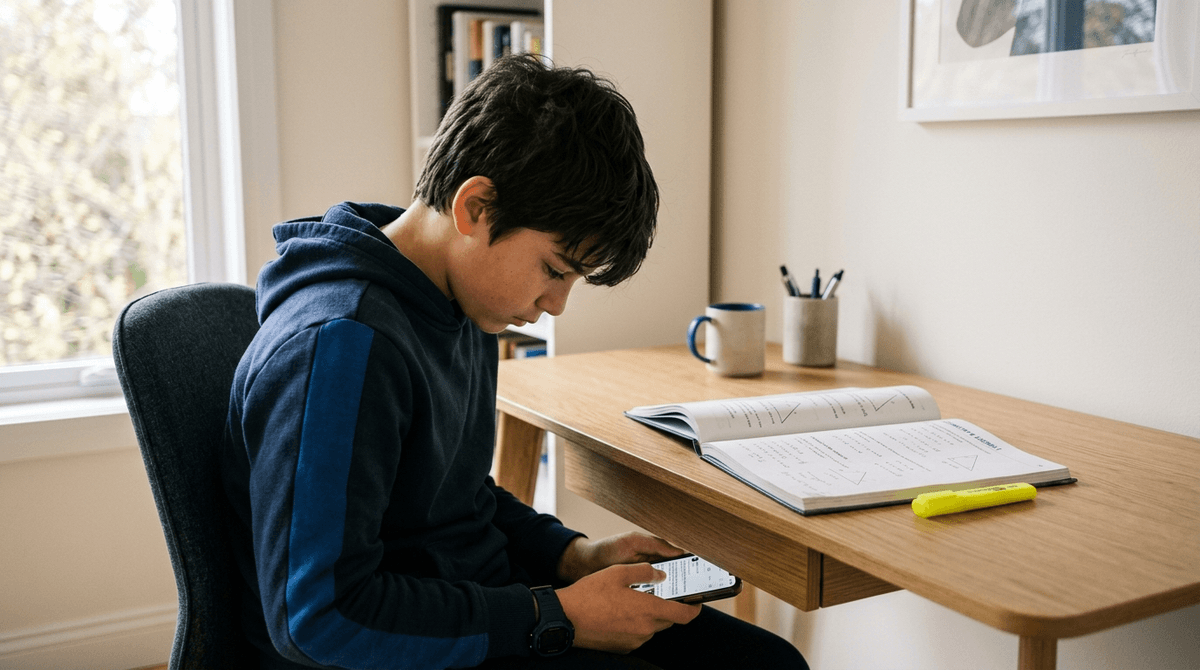
Handing a middle schooler a personal computer and high-speed internet is more likely to lower their test scores than raise them.
Giving students in grades 5 through 8 home computers and broadband access decreases math and reading performance because the device's role as an entertainment hub typically overrides its value as a study tool. The negative impact is persistent, meaning kids do not "grow out" of the distraction phase as they become more tech-literate.
Many parents treat a home computer as a necessary academic investment, but for young adolescents, it often functions as a "distraction machine." If you are buying hardware with the hope of boosting a child's grades or closing an achievement gap, the data suggests the opposite may happen.
For students in the critical middle school years, the presence of a computer often introduces a permanent competition between difficult schoolwork and high-stimulation leisure. Without heavy parental intervention, the leisure side usually wins, leading to a measurable decline in core academic skills.
Researchers investigated the "digital divide" during a period of massive government and philanthropic investment aimed at getting computers into every home. The prevailing theory was that lack of home technology was a primary driver of the achievement gap between wealthy and poor families.
By tracking more than 500,000 students over five years, the authors were able to see exactly what happened to a student’s test scores the moment a computer arrived in their house. They were looking for evidence that tech access would level the playing field; instead, they found that the technology itself created a new set of problems for student focus.
Providing home technology is associated with a modest but statistically significant drop in student achievement that remains consistent for years.
- Broadband is a net negative. The arrival of high-speed internet in a ZIP code correlated with lower student performance across the board, specifically in math and reading.
- The "homework" illusion. While kids with broadband access claimed to spend more total time on "homework," they spent significantly less time using the computer for actual schoolwork. The internet didn't make them more efficient; it made them spend more time sitting at a desk while accomplishing less.
- Lower-income students suffer most. The negative effects on test scores were most pronounced for students from disadvantaged backgrounds, suggesting that tech access actually widened the socioeconomic achievement gap.
- Persistence is key. This wasn't a short-term "novelty effect." The decline in scores did not bounce back after the first year of ownership; the negative impact was still visible three years later.
The issue isn't that computers are "bad" for learning, but that they make the "exit cost" of studying too low. When a student hits a difficult concept in math or a dense paragraph in a book, the mental effort required to push through is high.
High-speed internet makes switching from that difficult task to a game, a video, or a chat room essentially frictionless. For an adolescent with a developing prefrontal cortex, the choice between "hard math" and "easy entertainment" is rarely a fair fight. The computer doesn't just provide a tool for school; it provides a portal that makes the mental "flow" required for deep learning much harder to maintain.
The data comes from the early 2000s, an era defined by AIM and early web games rather than TikTok and Fortnite. However, the fundamental conflict—the competition between work and play—is likely even more intense today given how much more addictive and portable modern software has become.
It is also important to note that the study focused strictly on standardized test scores. It did not measure improvements in technical literacy, coding ability, or digital creativity. While a child might be getting lower math scores, they could be gaining vocational skills that standardized tests aren't designed to catch.
- If your middle schooler is struggling with math or reading, move the computer to a high-traffic area of the house where you can easily see the screen at all times.
- If you provide a laptop for schoolwork, use a website-blocking tool to limit access to everything except specific educational whitelists during designated study hours.
- If your child claims to be working for hours but their grades are declining, check their browser history or screen time logs to see if "study time" is being interrupted by social media or gaming.
- If you are considering a computer purchase to "help" a child who is already behind, prioritize in-person tutoring or physical workbooks over new hardware, as the tech is more likely to exacerbate their focus issues.
For a middle schooler, a computer is a toy first and a textbook second. Unless parents actively monitor and restrict how the device is used, home technology is more likely to serve as a persistent distraction than an academic booster.
JACOB L. VIGDOR, HELEN F. LADD, ERIKA MARTINEZ (2014). SCALING THE DIGITAL DIVIDE: HOME COMPUTER TECHNOLOGY AND STUDENT ACHIEVEMENT. Economic Inquiry. doi:10.1111/ecin.12089 — onlinelibrary.wiley.com