

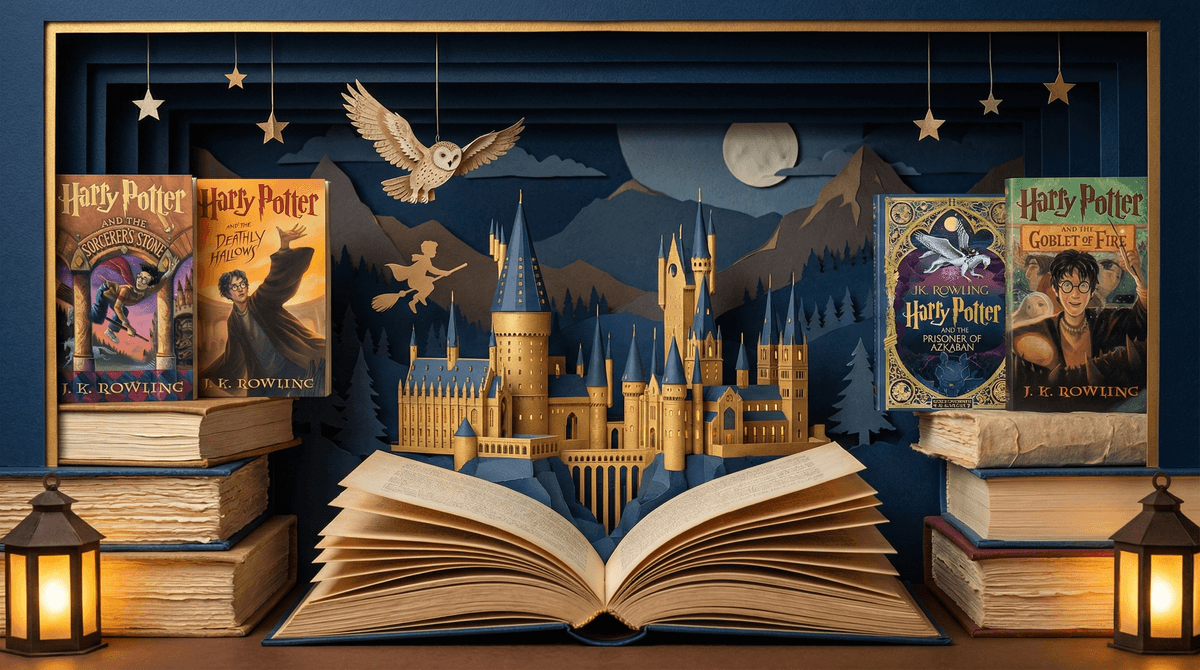
Look, if you're reading this, you probably already know what Harry Potter is. But let's get specific: we're talking about seven books published between 1997 and 2007 that follow a boy wizard from age 11 to 17 as he attends Hogwarts School of Witchcraft and Wizardry, makes friends, battles dark forces, and basically grows up in the most dramatic way possible.
The series by J.K. Rowling includes:
- Harry Potter and the Sorcerer's Stone (or Philosopher's Stone if you're fancy)
- Harry Potter and the Chamber of Secrets
- Harry Potter and the Prisoner of Azkaban
- Harry Potter and the Goblet of Fire
- Harry Potter and the Order of the Phoenix
- Harry Potter and the Half-Blood Prince
- Harry Potter and the Deathly Hallows
These books are a cultural phenomenon for good reason—they're genuinely well-crafted stories about friendship, bravery, and choosing to do the right thing even when it's hard. They also get progressively darker, longer, and more complex, which is where the parenting questions come in.
Even though the first book came out almost 30 years ago, Harry Potter remains wildly popular with elementary and middle schoolers. Here's why:
The magic is just cool. Wands, spells, magical creatures, flying broomsticks—it's imaginative world-building at its best. Kids love the idea of discovering they have hidden powers and belong to a secret magical world.
The friendship is real. Harry, Ron, and Hermione have conflicts, make up, support each other, and grow together. These aren't perfect friendships—they're messy and real, which resonates.
It grows with them. A kid who starts the series at 8 or 9 can keep reading as they get older, and the books mature along with them. The early books are middle-grade adventures; the later ones tackle death, war, sacrifice, and moral complexity.
The world keeps expanding. Between the movies, Hogwarts Legacy game, Universal theme parks, and constant TikTok sorting hat debates, Harry Potter has serious staying power in kid culture.
This is the big one, and honestly? It depends on your kid. But here's a realistic breakdown:
Books 1-3: Ages 7-9+
Harry Potter and the Sorcerer's Stone, Chamber of Secrets, and Prisoner of Azkaban are classic middle-grade fantasy. There's danger and some scary moments (giant spiders, dementors that suck out your soul), but the tone is still relatively light and adventure-focused.
Sensitive readers: The scene where Harry's parents are murdered might be intense, and the dementors in Book 3 are genuinely creepy. But most 8-year-olds handle these fine.
Book 4: Ages 9-11+
Goblet of Fire is where things shift. It's longer (like, 700+ pages), more complex, and a major character dies on-page in a fairly traumatic way. This is the turning point of the series. If your kid isn't ready for real death and grief, wait on this one.
Books 5-7: Ages 11-13+
Order of the Phoenix, Half-Blood Prince, and Deathly Hallows are legitimately dark. Multiple beloved characters die (sometimes brutally), there's torture, psychological trauma, war, and heavy themes about mortality and sacrifice. These are young adult books, not middle-grade.
Order of the Phoenix is also emotionally heavy—Harry spends much of it angry and isolated, dealing with PTSD. It's realistic but can be a tough read.
Deathly Hallows has some of the most intense violence in the series, including the deaths of major characters and a pretty brutal battle sequence.
Bottom line: Most kids are ready for the full series by age 11 or 12, but don't rush it. A 7-year-old who devours Book 1 doesn't need to binge all seven immediately.
The Books Get LONG
We're talking 300 pages for Book 1, then 870 pages for Book 5. If your kid is a reluctant reader, this can be intimidating. The audiobooks (narrated by Jim Dale in the US or Stephen Fry in the UK) are fantastic alternatives—no shame in listening instead of reading.
The Themes Get Heavy
Death, grief, corruption, prejudice, war, loss of innocence—these books don't shy away from dark themes. But they also emphasize love, loyalty, courage, and standing up to injustice. The core message is ultimately hopeful: even in darkness, choices matter and good people can make a difference.
There's Some Mild Romance
Starting in Book 4, there are crushes, first kisses, jealousy, and teenage relationship drama. Nothing explicit, but it's there. By Book 6, there's some snogging happening.
The "Scary" Moments Are Real
- Giant spiders and snakes
- Soul-sucking dementors
- Torture scenes (especially in Books 5-7)
- On-page deaths of beloved characters
- A pretty terrifying villain who murders people regularly
If your kid is sensitive to scary content, read ahead or read together so you can talk through the intense parts.
The J.K. Rowling Thing
Yeah, we need to address it. Rowling's public statements about transgender people have been controversial and hurtful to many. This is a real consideration for families, especially those with LGBTQ+ kids or values centered on inclusion.
Some families have decided not to engage with Harry Potter at all. Others separate the art from the artist. Some use it as an opportunity to talk about how people we admire can still be wrong about important things. There's no single right answer here—it's a family values call.
Representation Is Limited
The books were written in the late 90s/early 2000s, and it shows. The cast is overwhelmingly white and straight, with limited disability representation. There are some diverse characters (Cho Chang, Dean Thomas, the Patil twins), but they're not deeply developed. If you're looking for more inclusive fantasy, check out Rick Riordan's Percy Jackson series or Amari and the Night Brothers.
The Harry Potter books are genuinely good. They're well-plotted, emotionally resonant, and have inspired millions of kids to fall in love with reading. But they're not perfect, and they're not for every kid at every age.
Start with Book 1 around age 7-9 if your kid is a confident reader and not overly sensitive to scary content. Pause before Book 4 to make sure they're ready for real death and darker themes. Save Books 5-7 for ages 11+ when they can handle war, loss, and moral complexity.
And if your kid isn't into it? That's totally fine. There are approximately one million other great book series out there. Not every kid needs to be a Potterhead.
If you're starting the series: Consider reading Book 1 together or listening to the audiobook on a family road trip. It's a great way to gauge your kid's reaction and talk through any questions.
If you're mid-series: Check in regularly about how they're feeling. If a book feels too intense, it's okay to take a break or wait a few months before continuing.
If you want alternatives: Percy Jackson, The Chronicles of Narnia, Keeper of the Lost Cities, and Nevermoor all offer magical worlds with great characters.
If you want to talk about the Rowling controversy: Here's how to approach that conversation in an age-appropriate way.
You know your kid best. Trust your gut, and remember: there's no deadline for finishing a book series. Let them read at their own pace, and enjoy the magic together.