

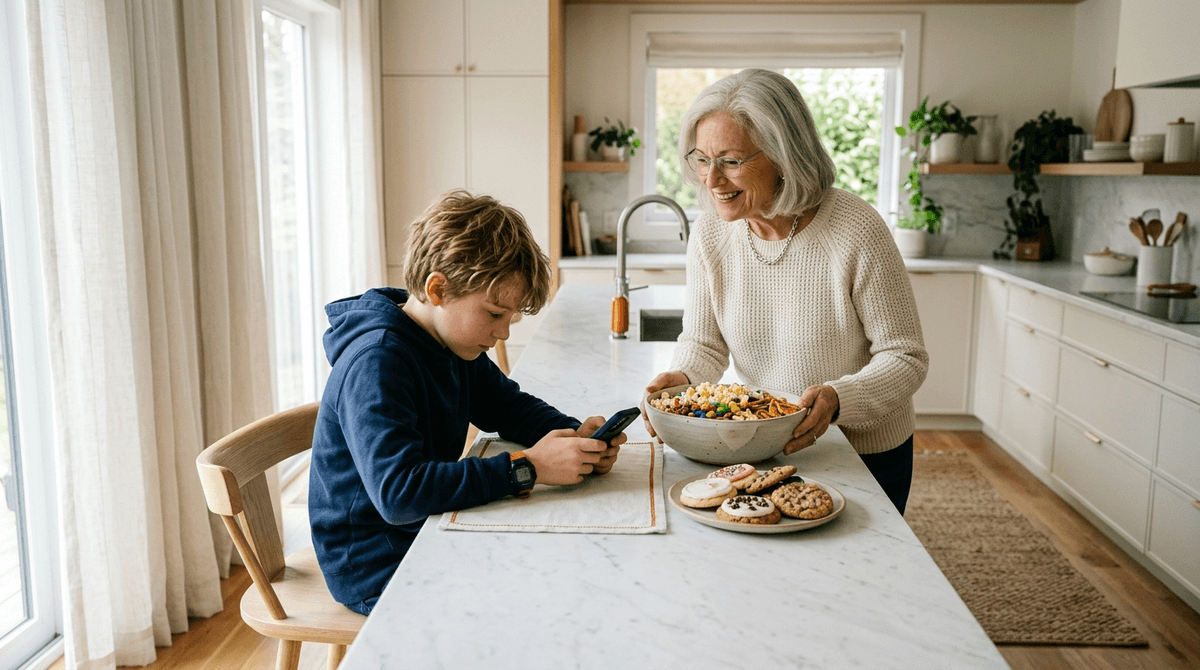
Grandparents are often the backbone of modern childcare, but their tendency to use treats as a tool for affection is linked to higher body weight and poor eating habits in grandchildren.
When grandparents provide regular childcare, children are significantly more likely to consume high-calorie snacks and face an increased risk of obesity due to a reliance on "treat culture" feeding habits.
For many families, grandparents aren't just the occasional babysitter—they are the primary childcare provider. If the "spoiling" that usually happens once a month becomes the daily routine, it fundamentally resets a child’s baseline for sugar and screen time. This research suggests the "grandparent effect" is large enough to show up in a child’s long-term health metrics and body mass index (BMI).
As childcare costs rise, more families are turning to multi-generational households or daily grandparent support. Researchers reviewed 24 studies covering tens of thousands of children to see if the traditional "indulgent grandparent" trope was actually impacting pediatric health. They found that the shift from parent-led to grandparent-led care often involves a significant collapse of nutritional boundaries.
Grandparents frequently rely on "discretionary" foods—items with high calories but low nutritional value—to manage children's behavior or express love.
- Food as a reward: Multiple studies identified using snacks to bribe or reward children as a hallmark of grandparental care.
- Liquid sugar: Grandchildren in these settings consumed more fruit juice and sweetened beverages compared to those in parental or daycare settings.
- Screen-side dining: Grandparents were more likely to allow screens during meals, a habit that disrupts a child’s ability to recognize when they are full.
- Higher energy intake: Across the board, grandparents provided more frequent between-meal eating and higher overall calorie counts.
There is a fundamental "conflict of interest" in grandparental care. Parents prioritize long-term health and discipline, while grandparents often prioritize immediate emotional bonding and "keeping the peace." This isn't a lack of care; it’s a difference in how love is expressed. For an older generation, providing food abundance was a sign of success, but in a modern environment of ultra-processed food, that instinct creates a health liability.
The majority of these 24 studies were observational. This means researchers found a correlation, but they cannot prove that grandparents caused the weight gain. It is possible that parents who rely heavily on grandparents also face other stressors, such as lower income or demanding work schedules, that independently affect nutrition. The high variation in study designs also prevented a precise mathematical meta-analysis.
- If a grandparent watches your child more than two days a week, provide a pre-packed lunch and snack box to remove the "what should we eat?" decision that often leads to junk food.
- If the "treat culture" is firmly established, suggest a "special experience" reward—like an extra 15 minutes of playtime or a new library book—to replace the reliance on sweets as behavioral bribes.
- If your child is eating in front of a screen at their house, explain the "mindless eating" link to weight gain and ask for a "table-only" food rule to keep eating and entertainment separate.
- If conflicts arise over food, frame the conversation around "dental health" or "consistent energy levels" rather than criticizing the grandparent’s caregiving style.
Occasional indulgence at Grandma's is a childhood rite of passage, but regular childcare requires the same nutritional rigor as a school or professional daycare. You can preserve the grandparent-grandchild bond without sacrificing your child’s metabolic health by shifting the focus from sweets to shared activities.
Yang WY, Duncanson K, Pursey K et al. (2026). Associations between Grandparental Involvement and Children's Diet-Related Behaviors and Weight Status: A Systematic Review. Nutrition reviews. doi:10.1093/nutrit/nuag073 — pubmed.ncbi.nlm.nih.gov