

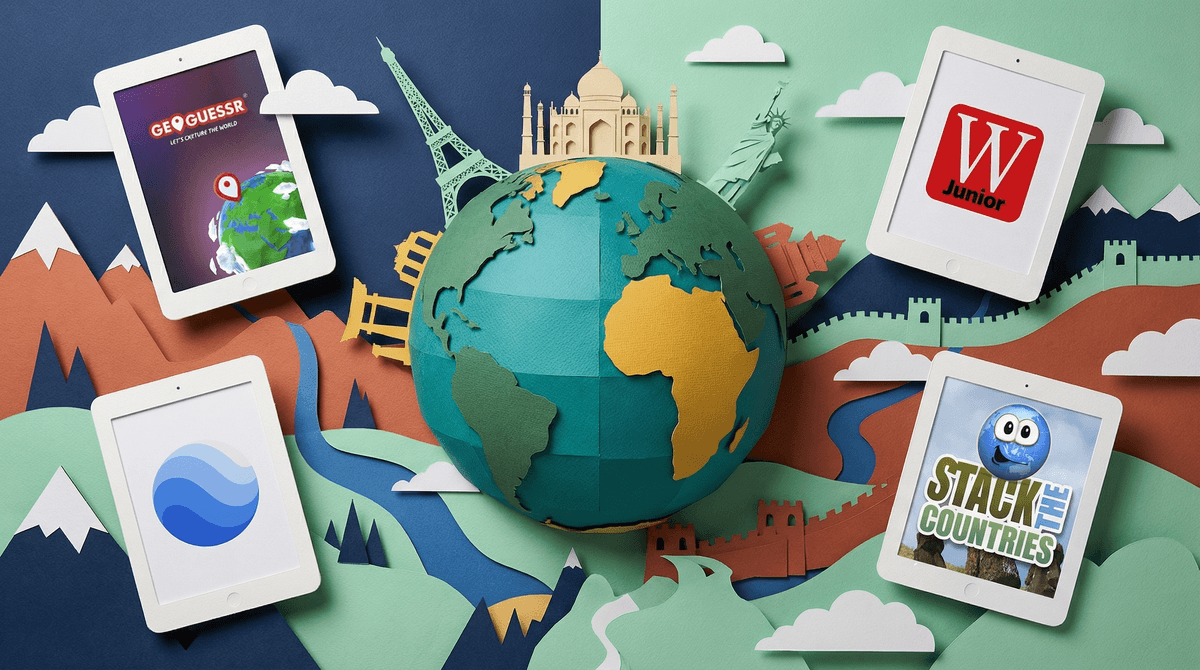
Global awareness apps are digital tools designed to teach kids about geography, world cultures, current events, and international perspectives—basically, everything that helps them understand that their neighborhood isn't the center of the universe (even if it feels that way).
These range from interactive geography games like GeoGuessr and [Stack the Countries](https://screenwiseapp.com/media/stack-the-countries-game to news apps designed for kids like NewsO, language learning platforms like Duolingo, and cultural exploration tools that let kids virtually visit museums, landmarks, and communities around the world.
The best ones make learning about the world feel less like homework and more like unlocking new levels in a game—which, let's be honest, is the only way most kids are going to voluntarily learn where Kazakhstan is.
Here's the thing: our kids are growing up in an incredibly connected world, but that doesn't automatically mean they're developing a global perspective. They might be watching YouTube creators from six different countries, but that's not the same as understanding how those countries function, what challenges their people face, or even where they are on a map.
The bubble is real. Most kids' default worldview is shaped by their immediate surroundings—their school, their neighborhood, their family's perspective. And while there's nothing wrong with that foundation, we're doing them a disservice if we don't actively expand their lens.
Global awareness apps can help with:
- Geography literacy (because yes, some high schoolers still think Africa is a country)
- Cultural empathy and understanding
- News literacy and critical thinking about world events
- Language exposure that goes beyond "hola" and "bonjour"
- Contextualizing their own lives within a bigger picture
Plus, honestly? Kids are naturally curious about the world. They just need the right entry points that don't feel like a social studies lecture.
Geography Games (Ages 6+)
Apps like [Stack the Countries](https://screenwiseapp.com/media/stack-the-countries-game, [Seterra Geography](https://screenwiseapp.com/media/seterra-geography-game, and GeoGuessr turn map knowledge into actual gameplay. Kids are dropping countries into place, guessing locations from street view images, and racing against the clock to identify capitals. These work because they're genuinely fun—not just educational content dressed up with cartoon characters.
News Apps for Kids (Ages 8+)
NewsO, SmartNews, and The Week Junior curate age-appropriate news stories that give kids context for what's happening beyond their bubble. These apps filter out the truly disturbing stuff while still treating kids like they're capable of understanding complex topics—which they absolutely are.
Language Learning (Ages 7+)
Duolingo has dominated this space with its gamified approach, but Babbel and Rosetta Stone offer more structured learning. Language apps don't just teach vocabulary—they open doors to understanding how other cultures think and communicate.
Cultural Exploration (Ages 8+)
Apps like Google Earth and Google Arts & Culture let kids virtually explore museums, historical sites, and natural wonders. Tinybop's apps often include global perspectives on topics like homes, schools, and daily life in different countries.
Not all "educational" apps are created equal. Some are genuinely engaging and well-designed. Others are basically digital worksheets with annoying sound effects. The difference usually comes down to whether the app was designed by educators who understand kids, or by tech people who think adding points makes something a game.
News apps require context. Even kid-friendly news apps are going to surface stories about conflict, natural disasters, and injustice. This isn't a bad thing—it's actually important—but it means you need to be available for follow-up conversations. A 9-year-old learning about climate change or refugee crises needs a trusted adult to help process that information.
Geography games can get weirdly addictive. This is actually a good problem to have. If your kid is spending 45 minutes trying to beat their high score on country identification, that's... fine? Better than a lot of alternatives, honestly.
Language learning apps have limitations. Duolingo will teach your kid Spanish vocabulary and basic grammar, but it won't make them fluent. Think of these apps as entry points that might spark deeper interest, not complete language education solutions.
Watch for cultural stereotyping. Some apps inadvertently reinforce stereotypes or present oversimplified views of complex cultures. Look for apps that show diversity within countries, acknowledge modern realities (not just traditional dress and folk dances), and present information with nuance.
Ages 6-8: Start with geography and cultural basics
Young kids do great with visual, interactive geography games that don't require reading heavy content. [Stack the Countries](https://screenwiseapp.com/media/stack-the-countries-game and Barefoot World Atlas are solid starting points. Keep news exposure limited and heavily curated—they're not developmentally ready to process global crises yet.
Ages 9-12: Add news literacy and deeper cultural exploration
This is the sweet spot for introducing age-appropriate news apps and more complex geography challenges. Kids this age can start understanding cause and effect in global events and making connections between different parts of the world. GeoGuessr becomes genuinely engaging, and NewsO provides good entry-level current events coverage.
Ages 13+: Focus on critical thinking and multiple perspectives
Teens can handle more complex news sources and should be encouraged to seek out multiple perspectives on global issues. This is also when language learning apps can really stick if they're motivated. Push them toward apps that encourage questioning sources and understanding bias, not just consuming information.
Global awareness apps aren't going to single-handedly turn your kid into a worldly, culturally sensitive citizen. But they're a genuinely useful tool in the larger project of helping kids understand that the world is big, diverse, and worth paying attention to.
The key is treating these apps as conversation starters, not replacements for actual engagement. When your kid learns about a country through an app, pull up photos, find a YouTube channel from someone who lives there, or cook a meal from that cuisine together. You can explore how to build these habits into your family's routine .
.
And honestly? In a digital landscape full of brain-rotting content and algorithm-driven rabbit holes, apps that help kids understand the world beyond their bubble are some of the better uses of screen time out there.
Start with one geography game this week. See if your kid takes to it. If they're into it, great—let them run with it. If not, try a different entry point.
If you have tweens or teens, try a news app together. Read a story, discuss it, and see where the conversation goes. Learn more about teaching news literacy to kids.
Use these apps as jumping-off points for real-world connections. The app is just the beginning—the real learning happens in the conversations and explorations that follow.
Want to see what other families in your community are doing around global awareness and educational apps? Screenwise can show you exactly how your family's approach compares and give you personalized recommendations based on your kids' ages and interests.