

Genshin Impact Age Rating: What Parents Need to Know Before Kids Play
TL;DR: Genshin Impact is rated PEGI 12+ (ESRB Teen 13+) for fantasy violence and in-game purchases. The combat is stylized and not gory, but the real concern is the gacha system—a gambling-like mechanic where kids spend real money hoping to unlock random characters. It's free to download but designed to encourage spending. If your kid can handle the monetization conversation and you set up parental controls, it's a visually stunning action RPG with genuinely great storytelling. If impulse control or spending limits are a challenge? This one's tricky.
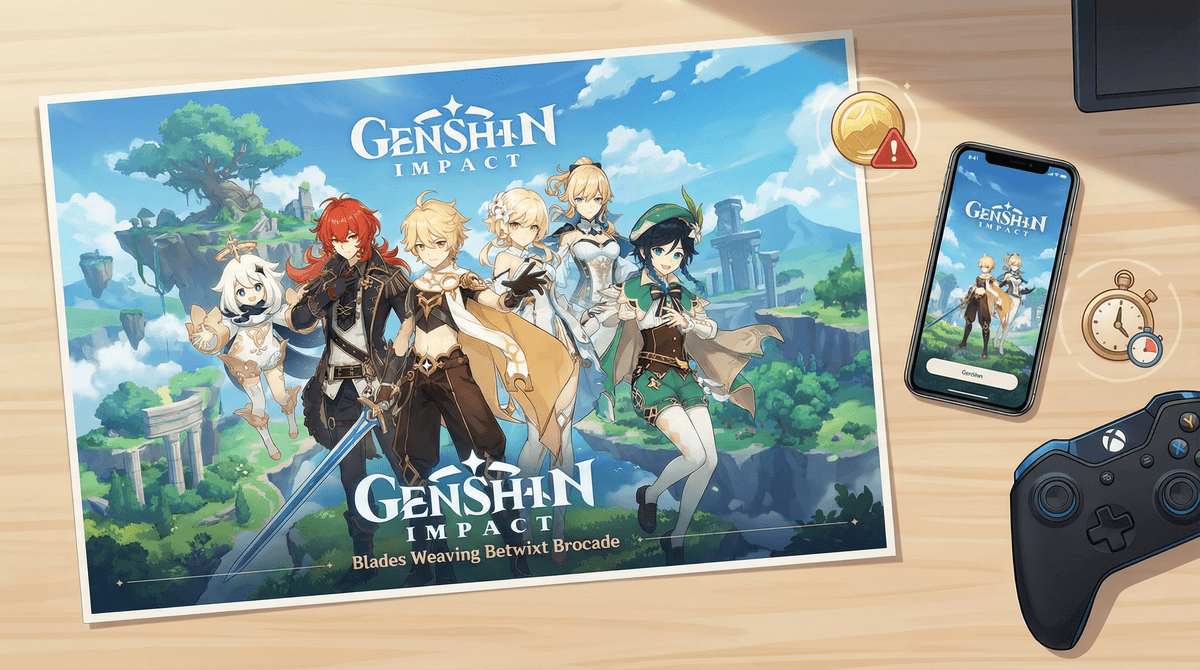
Genshin Impact is a free-to-play action RPG that exploded in popularity when it launched in 2020. Think Breath of the Wild meets anime—you explore a massive fantasy world called Teyvat, solve puzzles, fight monsters, and collect characters with different elemental powers. It's available on PC, PlayStation, mobile, and now Nintendo Switch.
The game is genuinely impressive. The world is gorgeous, the music is orchestral and sweeping, and the story is surprisingly deep with multiple regions inspired by real-world cultures (Japan, China, Germany, France). Kids aren't just button-mashing—they're building teams, strategizing elemental combos, and following complex storylines.
But here's the catch: it's free because it wants you to spend money. A lot of money.
- ESRB: Teen (13+) for "Fantasy Violence, Alcohol Reference"
- PEGI: 12+ for "Violence"
- Common Sense Media: 13+
The violence is fantasy-based—you're fighting slimes, robots, and mythical creatures with swords, bows, and magic. No blood, no gore, no realistic guns. Characters do "die" in combat but just disappear in a puff of light. There are occasional alcohol references (a tavern, characters mentioning wine), but nothing explicit.
The ratings are reasonable for content, but they don't capture the monetization complexity, which is honestly the bigger parenting issue here.
It's beautiful and immersive. The art style is anime-inspired but polished to a level most mobile games can't touch. Kids can glide off cliffs, climb mountains, swim across lakes, and discover hidden chests and puzzles. The exploration feels rewarding.
The characters are collectible and beloved. Each character (there are 80+) has a unique personality, backstory, and combat style. Kids get attached—they'll tell you about Hu Tao's pranks or Zhongli's deep voice or how Kazuha is "literally the best." It's like Pokémon but with more emotional investment.
It's social without being chaotic. You can play solo or co-op with up to 3 friends. It's not a battle royale, there's no voice chat with strangers, and the multiplayer is cooperative. Kids help each other farm materials or take down tough bosses.
It's cross-platform. Your kid can play on their phone during a car ride, then pick up on PlayStation at home. That flexibility is huge.
Genshin Impact uses a gacha system—a monetization model common in Japanese mobile games that works like a slot machine. You spend in-game currency (which you can buy with real money) to "wish" for characters and weapons. Each wish is random. You might get the character you want, or you might get a duplicate weapon for the 47th time.
Here's why this matters:
It's gambling-adjacent. The game uses psychological tricks—limited-time banners, flashy animations, the thrill of "just one more pull." Kids (and adults) can spend hundreds or thousands of dollars chasing a single character. The mechanics are designed to exploit FOMO .
.
You can play for free, but it's harder. The game is totally playable without spending money—plenty of players do it. But the "meta" characters (the strongest ones) are often locked behind gacha, and kids feel the pressure when their friends have characters they don't.
The in-game currency obfuscates real costs. You buy "Genesis Crystals" which convert to "Primogems" which you spend on "wishes." A single 10-pull costs about $30, and you're not guaranteed anything good. Kids lose track of how much they're actually spending.
There's a pity system, but it's expensive. The game guarantees a 5-star character after 90 pulls (about $270), but that's still a LOT of money for a single character in a video game.
Ages 10-12: Probably too young unless you have very tight spending controls and your kid has shown they can handle delayed gratification. The gacha system is genuinely predatory, and younger kids are more vulnerable to the "just one more" mentality. If you do allow it, play together and talk openly about how the monetization works.
Ages 13-15: This is the ESRB's target range, and it's reasonable if you set boundaries. Kids this age can understand the gacha mechanics if you explain them clearly. Some families set a monthly spending limit (like $10-20) and treat it like an allowance. Others allow gameplay but zero spending. Both approaches work if you're consistent.
Ages 16+: Teens can handle the content and complexity, but the spending risk is still real. Plenty of adults have gacha addiction stories. Have the conversation about how free-to-play games make money and why these systems are designed to feel so compelling.
The game is a significant time investment. Daily commissions (mini-quests) take about 15-20 minutes, and events run constantly. Kids will want to log in every day to maximize rewards. If you're trying to limit daily screen time, this game will push against those boundaries.
The story is actually good. If your kid is into fantasy novels or anime, they'll love the lore. There are complex themes—loss, war, identity, betrayal—that are handled thoughtfully. It's not just mindless grinding.
The community is huge and creative. YouTube is full of Genshin content—guides, lore videos, character showcases. Kids will want to watch streamers and theory-crafters. The fan community also creates tons of art and memes. It's mostly positive, though like any fandom, there are shipping wars and drama.
Co-op is safe but not monitored. You can only co-op with people you've added as friends (via UID codes), so there's no random matchmaking with strangers. But there's a text chat, and you can't monitor it. If your kid is playing with school friends, it's fine. If they're adding people from Discord servers, that's a different conversation.
You can absolutely play without spending. The free characters you get through the story are totally viable. The game showers you with free primogems early on. But the drip slows down, and the temptation ramps up. If your kid has impulse control issues or has struggled with in-app purchases before, this is a red flag game.
On mobile (iOS/Android):
- Disable in-app purchases through your device settings (Screen Time on iOS, Google Play parental controls on Android)
- Require a password for every purchase
- Set up a separate Apple/Google account with no payment method attached
On PlayStation:
- Go to Settings > Parental Controls/Family Management
- Set spending limits for the child account
- Require approval for every purchase
On PC:
- This is harder—there's no built-in parental control for in-game purchases
- Don't save payment info in the game
- Monitor account activity through the HoYoverse account dashboard
In-game:
- Link the account to your email, not your kid's
- Set a strong password they don't know
- Check the purchase history regularly (it's in Settings > Account)
Learn more about managing in-game purchases.
If you like the idea of a big exploration game but want to avoid gacha mechanics:
- The Legend of Zelda: Breath of the Wild or Tears of the Kingdom – The obvious comparison. One-time purchase, no microtransactions, similar exploration feel.
- Immortals Fenyx Rising – Greek mythology, colorful art style, puzzle-heavy. Also a one-time purchase.
- Minecraft – Different vibe, but also endless exploration and creativity without predatory monetization.
If your kid specifically wants the anime aesthetic and character collecting, you're kind of stuck—most games in that space use similar gacha systems. Honkai: Star Rail is from the same developer and has the same issues.
Genshin Impact is a legitimately great game trapped inside a monetization model designed to extract maximum spending. The content itself is age-appropriate for teens—the violence is mild, the story is engaging, and the gameplay is skill-based and rewarding.
But the gacha system is the real conversation. If you're going to allow this game, you need to:
- Set hard spending limits (ideally zero, or a small monthly allowance)
- Explain how the system works and why it's designed to feel so compelling
- Monitor account activity regularly
- Be prepared for FOMO. Your kid will see friends with characters they don't have. That's by design.
Some families navigate this beautifully—they treat it like a monthly subscription or allowance, and kids learn budgeting and delayed gratification. Other families find the constant pressure exhausting and decide it's not worth it.
You know your kid. If they've shown they can handle in-app purchases responsibly, if you can set firm boundaries, and if they're genuinely interested in the gameplay (not just the gambling rush of pulling characters), then Genshin can be a fun, social, and visually stunning experience.
But if impulse control is a struggle, if you've had issues with spending in other games, or if you just don't want to deal with the constant monetization pressure? There are so many other great games out there. You're not depriving your kid by saying no to this one.
- Try it yourself first. Download it on your phone and play for an hour. You'll immediately see how the gacha system works and whether it feels manageable for your family.
- Have the money conversation early. Don't wait until they've already spent $50. Explain the system upfront and set expectations.
- Check in regularly. Ask what characters they want, how they're earning primogems, whether they feel pressure to spend. Keep it conversational, not interrogational.
- Revisit the decision. If it's working, great. If it's causing stress or conflict, it's okay to pull the plug.
Find answers to your questions for personalized advice based on your kid's age and gaming habits.