

Is Zelda: Breath of the Wild Appropriate for My Child?
TL;DR: The Legend of Zelda: Breath of the Wild is one of the best games ever made, and it's generally appropriate for kids 10+. The fantasy violence is mild (enemies poof into smoke when defeated), there's zero blood or gore, and the gameplay encourages exploration, problem-solving, and creative thinking. The main concerns? It's long (60+ hours for main story, 100+ for completionists), requires reading skills, and involves some genuinely challenging puzzles that might frustrate younger kids. If your child loved Minecraft and is ready for something more structured, this is an excellent next step.
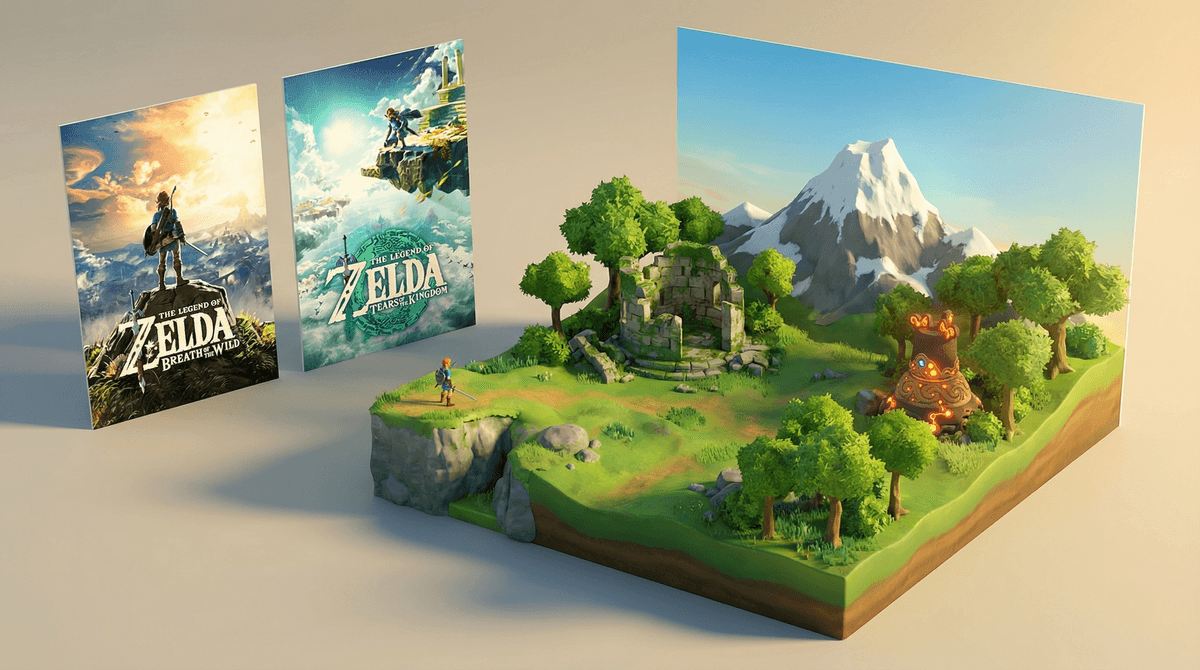
Released in 2017 for the Nintendo Switch (and Wii U, but who's counting), Breath of the Wild revolutionized the Zelda franchise by creating a massive open world where you can go literally anywhere from the start. You play as Link, who wakes up after a 100-year nap to find that Hyrule has been destroyed by Calamity Ganon. Your job is to explore, get stronger, and eventually save Princess Zelda and defeat Ganon.
Unlike previous Zelda games with linear progression, this one says "here's a huge world, go nuts." Want to fight the final boss immediately after the tutorial? Technically possible (though you'll get destroyed). Want to spend 40 hours climbing mountains, cooking food, and taming wild horses? Also completely valid.
The sequel, Tears of the Kingdom, came out in 2023 and is equally excellent with similar content considerations.
Freedom. After years of games that hold your hand and tell you exactly where to go, Breath of the Wild trusts players to figure things out. See that mountain in the distance? You can climb it. See that glowing shrine? Go check it out. The sense of discovery is intoxicating.
Experimentation. The physics engine is remarkably robust. Kids quickly learn they can use fire to create updrafts for their glider, roll boulders onto enemies, freeze objects in time and whack them to build momentum, or conduct electricity through metal weapons. It's basically a giant playground for creative problem-solving.
Progression without pressure. There's no timer, no lives system, no game over screen that kicks you back to a menu. You can tackle challenges in any order, and if something's too hard, you can just... leave and come back later when you're stronger.
Violence and Combat
The violence is fantasy and bloodless. When you defeat enemies (skeleton monsters, lizard creatures, etc.), they disappear in a puff of smoke and drop items. Link can use swords, bows, bombs, and various magical abilities, but there's zero gore, no blood, and honestly less intense combat than your average superhero movie.
The ESRB rates it E10+ (Everyone 10 and older) for "Fantasy Violence and Mild Suggestive Themes." The "suggestive themes" part refers to some characters wearing revealing clothing and a few NPCs making flirtatious comments—nothing remotely explicit, just fairy characters in somewhat skimpy outfits and the occasional "tee hee" dialogue.
Real talk: If your kid has watched any Marvel movie, they've seen more intense violence. This is firmly in the "cartoon violence" category.
Scary Moments
Some enemies and situations can be genuinely creepy:
- Guardians (ancient robot spiders) are legitimately terrifying when they lock onto you with their targeting laser
- Lynels (centaur-like mini-bosses) are intimidating and difficult
- Some shrines have darker, more ominous atmospheres
- Blood Moon sequences (when enemies respawn) have a spooky red sky
That said, the game's art style is colorful and painterly, not realistic. It's more "mildly spooky" than nightmare-inducing. Most 10-year-olds handle it fine, but if your child is particularly sensitive to tense gaming moments, you might want to watch them play the first few hours.
Let's be honest: This is the bigger issue for most families.
- Main story only: 40-60 hours
- Main story + decent exploration: 80-100 hours
- Completionist (all shrines, all Korok seeds): 150-200+ hours
This isn't a game you "beat" in a weekend. Kids get absorbed. The "just one more shrine" mentality is real. You'll hear "I just need to finish this quest" approximately 847 times.
What this means practically:
- If your family has a 1-hour daily screen time limit, this game will be their life for months
- It's excellent for long-term engagement but terrible if you want gaming variety
- The lack of natural stopping points means transitions can be tough ("But I'm in the middle of a shrine!")
Some families find this depth wonderful—one quality game that holds attention for months. Others find it becomes all-consuming. Learn more about managing long-form games .
.
Ages 8-9: Probably Too Early
The content is fine, but the complexity is the issue. The game requires:
- Strong reading skills (lots of dialogue and quest text)
- Spatial reasoning (navigating a huge map)
- Problem-solving (puzzles can be genuinely difficult)
- Frustration tolerance (you will die. A lot.)
Some advanced 8-9 year-olds can handle it, especially with parent support, but many will find it overwhelming and quit.
Ages 10-12: Sweet Spot
This is the target demographic. Fifth and sixth graders typically have the cognitive skills and patience to really engage with the game's systems. They can read the quest text, navigate the map, and persist through challenging sections.
Community data: In our surveys, about 45% of 10-year-olds and 65% of 11-year-olds have played at least one Zelda game, with Breath of the Wild being the most common entry point.
Ages 13+: Absolutely
Teens can fully appreciate the game's depth, tackle the hardest challenges, and engage with the more subtle storytelling. Many adults consider it one of the best games ever made, so there's no upper age limit on enjoyment.
The Good Stuff
It's genuinely educational. Not in a "learning game" way, but in developing:
- Problem-solving skills: Shrines are essentially puzzle boxes requiring creative thinking
- Resource management: Limited inventory means strategic decisions about what to keep
- Experimentation: The physics systems reward trying new approaches
- Perseverance: Difficult challenges teach persistence
It's single-player. No online interactions, no chat, no strangers. Your kid is playing alone in a single-player adventure, which means no toxicity, no inappropriate content from other players, and no microtransactions.
Nintendo quality. Say what you will about Nintendo, but their first-party games are consistently polished, age-appropriate, and well-designed. No bugs, no crashes, no half-finished mess.
Potential Challenges
Difficulty spikes. Some shrines and enemies are genuinely hard. Your child will likely need to look up solutions online occasionally, which opens the door to YouTube walkthroughs and potential spoilers.
Weapon durability. Weapons break after extended use, which is a deliberate game design choice to encourage experimentation, but it drives some kids (and adults) absolutely nuts. "My favorite sword just shattered!" is a common complaint.
Vague objectives. The game intentionally doesn't hold your hand. Some kids love the freedom; others feel lost and frustrated without clear direction.
Play together. Even if you're not a gamer, watching and helping problem-solve can be great bonding time. "What if you tried using fire?" is often more helpful than taking the controller.
Set expectations about time. Before starting, agree on how much time they can spend and what "finishing a play session" looks like. "You can play until you complete this shrine" is clearer than "five more minutes."
Embrace the walkthrough. If they're stuck on a shrine for 30 minutes and getting frustrated, looking up a hint isn't cheating—it's learning. The game is meant to be enjoyed, not suffered through.
Watch for obsession. If they're thinking about the game constantly, dreaming about it, and struggling to engage with anything else, it might be time to take a break. This game's depth can be genuinely consuming.
If you like the idea of Breath of the Wild but want to explore other options:
- Immortals Fenyx Rising: Often called "Breath of the Wild with Greek mythology," slightly more colorful and humorous
- Genshin Impact: Free-to-play with similar gameplay, but includes gacha mechanics and online elements (more complicated for parents)
- Minecraft: Less structured but similar exploration and creativity
- Other Zelda games: Link's Awakening (shorter, more linear) or the upcoming Echoes of Wisdom
Check out our guide to open-world games for kids for more options.
Breath of the Wild is one of the best games of the last decade and is absolutely appropriate for most kids 10 and up. The content is mild, the gameplay is engaging and mentally stimulating, and it's the kind of game that creates lasting memories.
The real question isn't "is it appropriate?" but rather "does my family have space for a 100-hour gaming commitment?" Because that's what you're signing up for. If your child has the maturity to handle challenging puzzles, can manage frustration when they die repeatedly, and your family can accommodate the time investment, this is an excellent choice.
Bottom line: It's not going to rot their brain, it's not going to make them violent, and it might actually teach them some valuable problem-solving skills. The biggest risk is that they'll want to play it constantly because it's genuinely that good.
- Watch gameplay footage together on YouTube to see if the art style and gameplay appeal to your child
- Check if you have a Nintendo Switch (this is Switch-exclusive, though the sequel Tears of the Kingdom is also excellent)
- Set clear expectations about playtime before starting
- Consider starting together with you watching the first few hours to help them learn the systems
Still have questions? Get answers about specific concerns or check out our complete guide to Nintendo Switch games for families.