

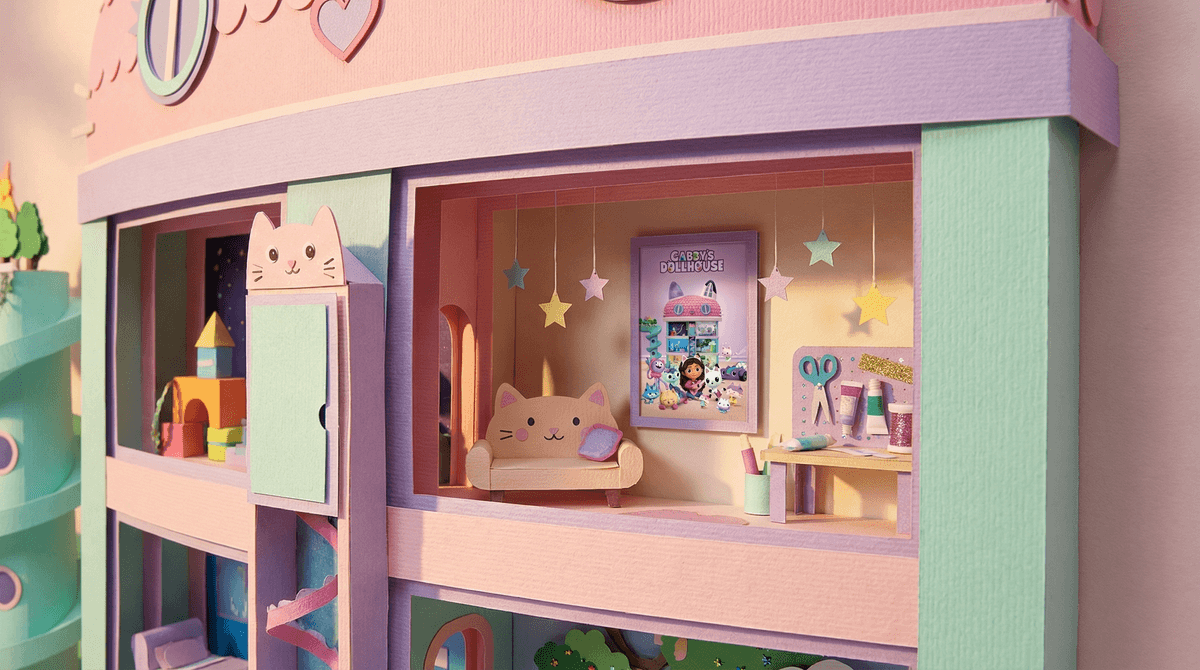
Gabby's Dollhouse is a Netflix original preschool series that launched in 2021, blending animation with live-action segments. The show follows Gabby (played by Gabby Bernstein), a cheerful girl who shrinks down to enter her magical dollhouse filled with cat characters. Each 24-minute episode mixes animated adventures inside the dollhouse with live-action craft segments where Gabby creates projects viewers can try at home.
The show's format is part Blue's Clues, part craft tutorial, with a heavy dose of pastel aesthetic that appeals to the preschool set. Think of it as if Peppa Pig met a Pinterest board and decided to teach emotional intelligence.
With 40% of families in our community using Netflix regularly for their kids, and 92% of families having TV in their homes, chances are you've either heard the theme song or are about to. The good news? This is one of those shows where you won't need noise-canceling headphones.
The appeal is pretty straightforward: cats, crafts, and predictability. Each episode follows a reliable structure that preschoolers find comforting. Gabby receives a "surprise box" at the start, does a craft, then enters the dollhouse where she and her cat friends solve a problem using the craft or a related skill.
The show leans hard into the unboxing trend that dominates kids' content (yes, even preschoolers are influenced by this), but channels it into something more constructive than watching someone else open toys. The surprise boxes create anticipation, the crafts offer hands-on engagement, and the cat characters each have distinct personalities that kids latch onto—whether it's Pandy Paws (the loyal best friend), Cakey Cat (the enthusiastic baker), or DJ Catnip (the music-loving party cat).
The aesthetic is aggressively cheerful—bright colors, sparkles, and a dollhouse that looks like it was designed by someone who really, really loves the color pink. For kids who are into this visual style, it's catnip (pun intended).
The Educational Angle Is Real
Unlike some preschool shows that claim educational value but mostly just keep kids quiet, Gabby's Dollhouse actually teaches problem-solving frameworks. Each episode presents a challenge—a broken toy, a friend feeling left out, a messy situation—and walks through solutions step-by-step.
The show emphasizes:
- Emotional regulation (taking deep breaths, talking about feelings)
- Creative problem-solving (trying different approaches when something doesn't work)
- Basic STEM concepts (patterns, measurements, cause and effect)
- Social skills (sharing, apologizing, helping friends)
The craft segments are legitimately doable with materials most families have around, though you'll need to be okay with glitter becoming a permanent household resident.
Screen Time Context
With kids averaging 4.2 hours of screen time daily in our community (4 hours on weekdays, 5 on weekends), a 24-minute episode of Gabby's Dollhouse is relatively contained. The show's format actually encourages kids to stop watching and try the craft themselves, which is a feature not a bug.
That said, Netflix's autoplay means one episode can easily become three. Setting up Netflix profiles with viewing limits is worth the five minutes it takes.
The Merchandise Machine
Like most successful kids' shows, there's a full line of Gabby's Dollhouse toys, from the actual dollhouse playset to plushies of every cat character. The show will absolutely make your kid want these things. Whether you engage with the toy ecosystem is up to you—some kids genuinely extend the play patterns from the show into creative play with the toys, while others just want to collect them all and then forget about them.
Ages 2-4: This is the sweet spot. The pacing is gentle, the lessons are clear, and the repetition helps with learning. Younger kids in this range might need help with the craft segments, but the show is designed for co-viewing.
Ages 5-7: Still appropriate and many kids this age remain fans, though some will start aging out toward the upper end. The problem-solving elements can still be valuable even if the aesthetic feels "babyish" to some kids approaching first grade.
Ages 8+: Most kids will have moved on by now, though some may still enjoy it as comfort viewing or when babysitting younger siblings.
In the landscape of preschool television, Gabby's Dollhouse is genuinely one of the better options. It's not going to teach your kid to read or do calculus, but it models good emotional regulation, creative problem-solving, and prosocial behavior without being preachy.
The craft segments offer a built-in transition away from passive viewing, and the show's structure gives kids a framework for thinking through problems that they can apply beyond the screen. Yes, it's very pink, very sparkly, and you will have the theme song stuck in your head. But if your preschooler is going to watch TV—and with 92% of families having TV in their homes, most are—this is a pretty solid choice.
- Try one episode together to see if it fits your family's vibe
- Gather basic craft supplies (construction paper, glue, scissors, markers) if your kid seems interested in the hands-on segments
- Set viewing limits on your Netflix profile to prevent autoplay marathons
- Check out other quality preschool shows to rotate in your viewing mix
Remember: the goal isn't perfect screen-free childhood. It's making intentional choices about what your kids watch and how much. Gabby's Dollhouse can be part of a balanced media diet, especially if you're leveraging those craft segments to get off the couch together.