

How to Find Family-Friendly Podcasts Everyone Will Actually Enjoy
Look, I get it. You're stuck in the car for another 45-minute drive to soccer practice, and if you hear "Baby Shark" one more time, you might actually drive into a lake. Meanwhile, your tween is begging to listen to some YouTuber's podcast that you're pretty sure isn't appropriate, and you're just... tired.
Podcasts can be absolute magic for families — they spark conversations, teach cool stuff, and give everyone something to talk about that isn't Skibidi Toilet. But finding ones that work for your whole crew? That's where it gets tricky.
The podcast universe is massive and completely unregulated. There's no rating system like movies have. No content warnings that actually mean anything. And the stuff that shows up when you search "kids podcasts" ranges from genuinely educational brilliance to... well, let's just say not all podcast creators understand how children's brains work.
Plus, what works for a 6-year-old will bore a 12-year-old to tears, and what entertains a 12-year-old might be wildly inappropriate for younger siblings. And if you're trying to find something the whole family can enjoy together? Good luck.
The other issue: kids are discovering podcasts on their own now, especially once they get their own devices or accounts. They're finding stuff through YouTube, through friends, through TikTok recommendations. And some of it is great! But some of it is true crime shows with graphic details, or comedy podcasts with language that would make a sailor blush, or influencer content that's basically just consumerism wrapped in a friendly voice.
Before we dive into how to find good ones, let's talk about why this matters.
Podcasts are genuinely different from screens. They encourage imagination (kids have to picture what's being described), they build listening skills, and they can turn car time into conversation time instead of everyone staring at their own device.
Good podcasts can:
- Make learning feel like entertainment (science, history, storytelling)
- Introduce kids to new interests they didn't know existed
- Model good conversation and critical thinking
- Give families shared references and inside jokes
- Fill time without requiring visual attention (perfect for car rides, cooking, bedtime routines)
The best family podcasts work because they don't talk down to kids but also don't assume kids know everything adults know. They're genuinely interesting to multiple age groups.
For Younger Kids (Ages 5-8)
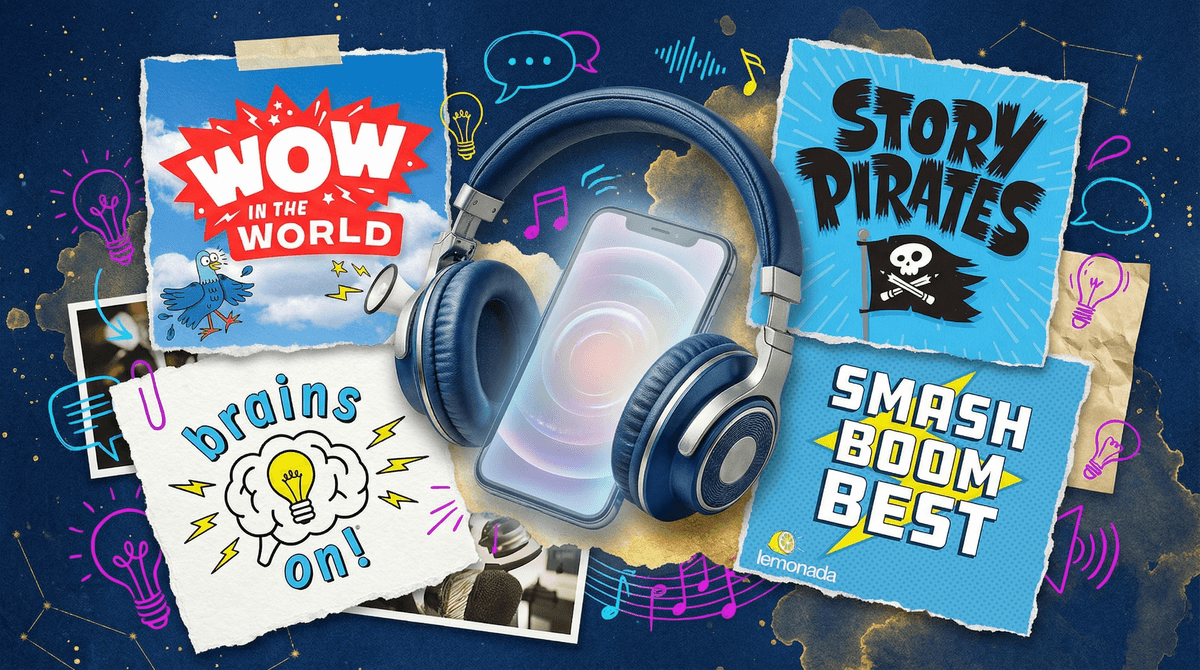
Wow in the World is the gold standard here. It's science-based, genuinely funny, and doesn't make adults want to claw their ears off. Hosts Mindy and Guy have incredible chemistry, and they make topics like "why do we have snot?" actually fascinating.
Story Pirates takes stories written by real kids and turns them into full-cast musical productions. It's creative, celebrates kids' ideas, and is entertaining for adults too.
Brains On! answers science questions submitted by kids. It's educational without being preachy, and the kid co-hosts make it feel more like a conversation than a lecture.
For Middle Grades (Ages 8-12)
Smash Boom Best is a debate show for kids — think "pirates vs. ninjas" or "breakfast vs. dinner" — that teaches critical thinking and argumentation in the most entertaining way possible.
The Past and The Curious makes history actually interesting by telling weird, funny, and surprising stories from the past. It's not your boring textbook version of history.
Book Club for Kids features actual kids discussing books they've read. It's great for sparking interest in reading and showing kids how to think critically about stories.
For Teens and Whole Families
Radiolab is technically an adult podcast, but it's appropriate for older kids and genuinely fascinating. They tackle big questions about science, philosophy, and human behavior in incredibly creative ways.
Short Wave from NPR is daily science news that's accessible and interesting. Episodes are short (around 10 minutes), which is perfect for shorter car rides.
This American Life has some episodes that work beautifully for families — just preview them first, as not every episode is kid-appropriate. When it works, it really works.
Not all "kids podcasts" are created equal. Here's what to watch out for:
Thinly veiled ads: Some podcasts are basically just marketing to kids. If every episode mentions the same toy brand or app, that's not a podcast — that's a commercial.
Poor audio quality: If you can barely hear what's being said, or there's constant background noise, kids will tune out fast.
Adult podcasts marketed to kids: Some creators just slap "for kids!" on their regular content. Always preview first.
No clear age range: If a podcast doesn't specify who it's for, it probably hasn't thought carefully about its audience.
Overstimulation: Some kids podcasts try so hard to be "fun" that they're just chaos — constant sound effects, yelling, random noises. That's not engaging; that's exhausting.
Start with trusted sources. Organizations like NPR, PBS, and Smithsonian make excellent kids podcasts. They have editorial standards and educational goals.
Preview everything. Listen to at least part of an episode yourself before playing it for your kids. Yes, this takes time. Yes, it's worth it.
Check reviews from other parents, not just star ratings. Look for specific mentions of age appropriateness and content.
Ask other families what they're listening to. The best recommendations often come from parents whose judgment you trust.
Use the search function strategically. Instead of just searching "kids podcasts," try "science podcasts for kids" or "story podcasts for families" to narrow down results.
Create a family podcast playlist with pre-approved shows. Let kids choose from that list rather than having to vet every single request.
Have podcast conversations. After listening together, talk about what you heard. "What was the most interesting thing you learned?" or "Would you have made the same decision as that character?"
Balance education and entertainment. Not every podcast needs to teach something. Sometimes Story Pirates is just fun, and that's okay.
Set boundaries for solo listening. If your older kid wants to listen to podcasts on their own device, establish which shows are pre-approved and which need to be discussed first.
Don't force it. If your family just doesn't vibe with podcasts, that's fine. Not every family needs to be a podcast family.
Finding family-friendly podcasts takes some upfront work, but once you've got a solid rotation, they can transform car time, chore time, and downtime. The key is being intentional about what you're introducing, previewing content before sharing it with kids, and choosing shows that respect both children's intelligence and their developmental stage.
Start with one or two trusted podcasts, see what resonates with your family, and build from there. And remember: if your kids are begging to listen to something you're not sure about, Check if a podcast is appropriate for your kids before making a decision.
The podcast universe is huge and sometimes overwhelming, but there really is gold in there — you just need to know where to dig.