

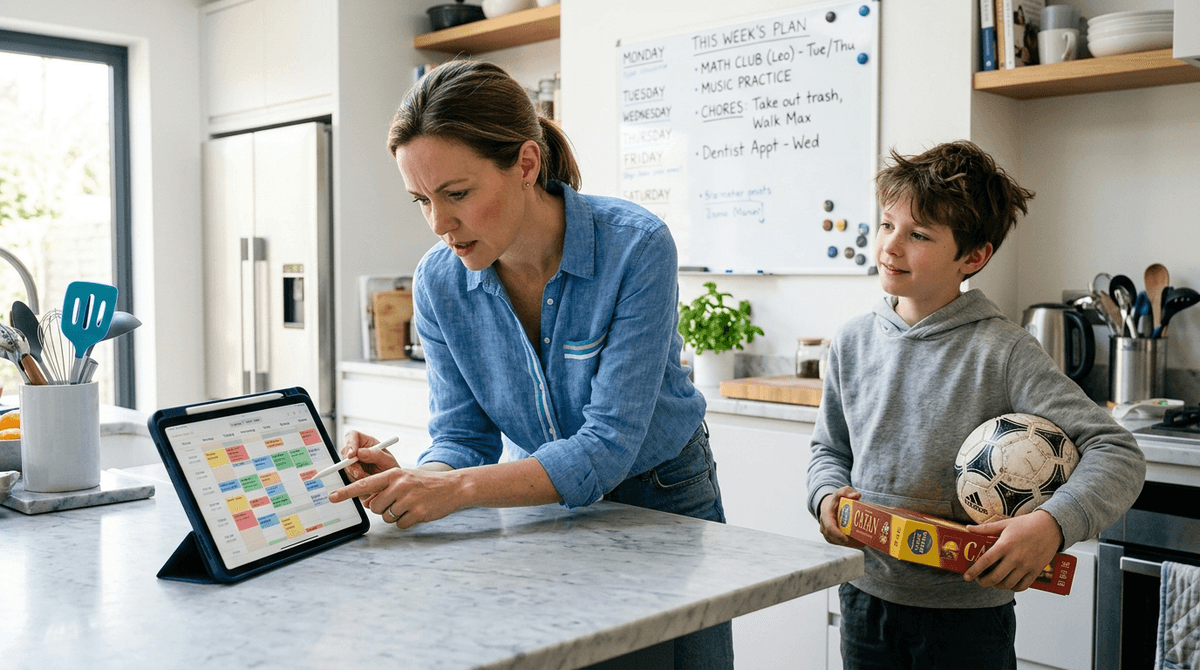
Parents value play but are losing the battle against busy schedules, often squeezing in less than an hour of daily interaction while multitasking through chores.
Portuguese parents struggle to prioritize dedicated play, with nearly half managing less than an hour on weekdays despite 100% of them believing it is vital for development.
This isn’t about parental guilt; it’s about schedule design. If you are packing your child’s calendar with structured extracurriculars to give them an "edge," you may be accidentally crowding out the very thing you value most: connection through play. When play becomes a "fit it in where I can" activity, it usually ends up being diluted by household chores or work distractions.
Modern parenting culture increasingly treats "unstructured" time as a vacuum to be filled. Researchers wanted to understand why, despite a universal consensus that play is critical for growth, the actual practice of play is being squeezed by the logistics of modern life. They looked at the gap between what parents say they value and what they actually do on a Tuesday afternoon.
Domestic chores are the silent killer of playtime. While every parent in the study acknowledged the importance of play, the reality of their daily schedules tells a different story.
- Nearly 9 in 10 parents cite household duties as their primary barrier to playing with their children.
- About half of parents are multitasking—folding laundry or managing the house—while they "play" with their kids.
- Three-quarters of children are enrolled in extracurricular activities, which correlates directly with a drop in parent-child engagement during the week.
- Television remains the king of screens, used by about 70% of children, far outpacing newer digital mediums.
- Outdoor play is becoming a luxury. Boys, rural children, and families with lower education levels play outside significantly more than urban or highly educated families.
High parental education and urban living often function as "play traps." While these parents likely have the resources to provide structured opportunities, their children play outdoors significantly less than their peers. The "optimal" childhood many strive for—filled with enrichment classes and city conveniences—might actually be more restrictive for a child’s natural play instincts than a simpler, rural environment.
The data relies entirely on parental self-reporting, which is notoriously prone to "social desirability bias." Parents likely over-reported their engagement and under-reported their children’s screen time to look better to researchers. Furthermore, the findings are specific to Portuguese social structures and school schedules, which may not mirror the exact pressures of families in other countries.
- If you feel pressured to enroll your child in multiple after-school programs... remember that 93% of parents agree school-based play cannot replace the play that happens at home.
- If you find yourself multitasking while playing... try setting a timer for 15 minutes of "undivided" attention where chores and phones are off-limits, rather than an hour of distracted presence.
- If you live in a city or have a high-pressure career... be more deliberate about facilitating outdoor play, as these demographics are statistically the most likely to keep children indoors.
You cannot outsource the developmental benefits of home-based play to a coach or a classroom. Reclaiming even twenty minutes from the "chore-and-activity" cycle to engage fully with your child is a more effective developmental tool than another structured lesson.
Martins Carvalho M, Nico JF, Rebelo A et al. (2026). Practices and Parental Perspectives on Children's Play in Portugal: A Cross-Sectional Survey. Acta medica portuguesa. doi:10.20344/amp.24268 — pubmed.ncbi.nlm.nih.gov