

What Does PG-13 Really Mean? A Parent's Guide to the Movie Rating That Confuses Everyone
Look, we've all been there. Your 10-year-old desperately wants to see the latest Marvel moviee](https://screenwiseapp.com/guides/the-ultimate-guide-to-marvel-movie-age-ratings)e](https://screenwiseapp.com/guides/every-marvel-movie-age-rating-explained) because "literally everyone at school has seen it," and you're staring at that PG-13 rating wondering if you're about to traumatize your kid or if you're being the overly cautious parent who's ruining their social life.
The PG-13 rating is genuinely confusing because it covers an enormous range of content — from relatively tame action movies to films with surprisingly intense violence, mature themes, and language that'll have you side-eyeing the MPAA. Let's decode what PG-13 actually means and how to make informed decisions for your family.
The PG-13 rating was created in 1984 (after parents lost their minds over Indiana Jones and the Temple of Doom showing a still-beating heart being ripped from someone's chest in a PG movie). It means "Parents Strongly Cautioned" — some material may be inappropriate for children under 13.
Here's what the MPAA officially allows in PG-13:
- Violence: Can be intense, but if it's realistic and extreme, it pushes toward R. Action violence and fantasy violence get more leeway.
- Language: You get ONE "f-bomb" used non-sexually. Yes, one. After that, it's R-rated territory. Other profanity is allowed but shouldn't be "persistent."
- Nudity: Brief nudity is okay if it's not sexual in nature. No explicit sexual content.
- Drug use: Can be present but not glorified or pervasive.
- Mature themes: Mental health, death, war, discrimination — all fair game.
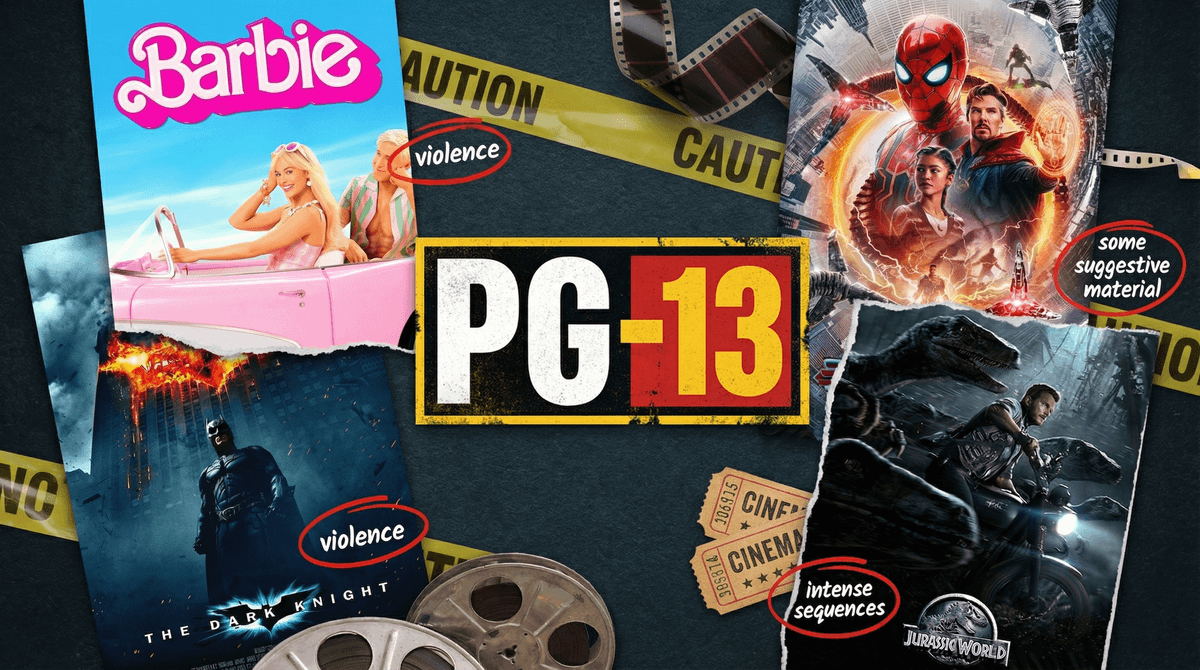
The problem? These guidelines are wildly subjective. What counts as "intense"? What's the difference between "brief" and "persistent"? This is why The Dark Knight and The Hunger Games share a rating with Freaky Friday.
PG-13 is the most commercially valuable rating in Hollywood. It lets studios include enough action and edge to appeal to teens and adults while theoretically remaining accessible to younger audiences. This is why nearly every major blockbuster aims for PG-13.
But here's the thing: the rating has gotten more permissive over time. What would've been R-rated in the 1980s often gets a PG-13 today. Studios have figured out exactly how far they can push the boundaries — lots of violence is fine as long as there's minimal blood, intense peril is okay if it's not "too realistic," and mature themes get a pass if they're wrapped in a fantasy or sci-fi setting.
This rating creep means you can't assume a PG-13 movie today is equivalent to what PG-13 meant when you were a kid.
The rating tells you almost nothing about age-appropriateness for YOUR kid. A mature 11-year-old might handle Spider-Man: No Way Home just fine, while a sensitive 14-year-old might be genuinely disturbed by A Quiet Place.
Here's what actually matters more than the rating:
Content Descriptors Are Your Friend
The rating always comes with descriptors like "intense sequences of violence and action" or "thematic material" or "brief strong language." Read these. They're more useful than the rating itself.
- "Intense sequences of sci-fi violence" = lots of action, probably not too graphic
- "Some disturbing images" = there might be something that sticks with your kid
- "Thematic material" = mature topics like death, mental illness, or trauma
- "Brief strong language" = someone says "fuck" exactly once
Your Kid's Sensitivity Matters More Than Age
Some kids are ready for Jaws at 9. Others aren't ready at 15. You know your kid better than the MPAA does. Consider:
- How do they handle suspense? Movies like Jurassic World have long, tense sequences.
- Are they bothered by jump scares? Horror-adjacent PG-13 movies can be genuinely scary.
- How do they process death or violence? Even "bloodless" action movies show people dying.
- What themes hit close to home? A movie about parental abandonment might be fine for most kids but devastating for yours.
Social Pressure Is Real (And That's Okay)
When "everyone" has seen Barbie or the latest Guardians of the Galaxy, there's legitimate social currency in being able to participate in those conversations. That doesn't mean you have to say yes, but it's worth factoring into your decision alongside content concerns.
Here's a rough framework, but please adjust for your actual child:
Ages 8-10: Most kids this age aren't ready for most PG-13 content, especially violence-heavy action movies or anything with mature themes. Exceptions might include lighter PG-13 movies like Paddington or The Greatest Showman that barely earned their rating.
Ages 11-12: This is the gray zone where it really depends on the kid and the specific movie. Many families start allowing Marvel movies, adventure films, and comedies with mild language. Preview content yourself or check detailed reviews.
Ages 13+: Most PG-13 content is designed for this age group, though even teens can be affected by intense content. Keep communication open about what they're watching.
1. Do your homework. Check Common Sense Media or other parent review sites. Read the "what parents need to know" section. Skim user reviews from other parents.
2. Watch the trailer (but know it won't show everything). Trailers give you a sense of tone and intensity.
3. Ask other parents whose judgment you trust and whose kids are similar to yours. Not "did your kid see it?" but "how did it go?"
4. When in doubt, preview it yourself or watch it together the first time. Yeah, this is time-consuming. Yes, it's worth it for movies you're unsure about.
5. Have an exit strategy. Let your kid know they can leave if it's too much, no judgment. Create a code word if they don't want to say it out loud in front of friends.
The PG-13 rating is a starting point, not a decision-maker. It tells you the movie might be inappropriate for kids under 13, but it doesn't tell you if it's inappropriate for YOUR kid, or even which kids under 13.
The good news? You don't have to be perfect at this. If you let your kid watch something that turns out to be too intense, you can talk about it, process it together, and make a different call next time. If you say no to a movie and they're the only kid who hasn't seen it, they'll survive (even if they're convinced they won't).
Trust your instincts, do a little research, and remember that media literacy includes learning what content works for you and what doesn't. That's a skill worth developing, even if it means occasionally getting it wrong.
- Check out our guide on how to preview movies and shows before your kids watch
- Wondering about specific movies? See if a specific movie is appropriate for your kid
 about age-appropriateness for your family
 - Read about how to talk to kids about scary or mature content