

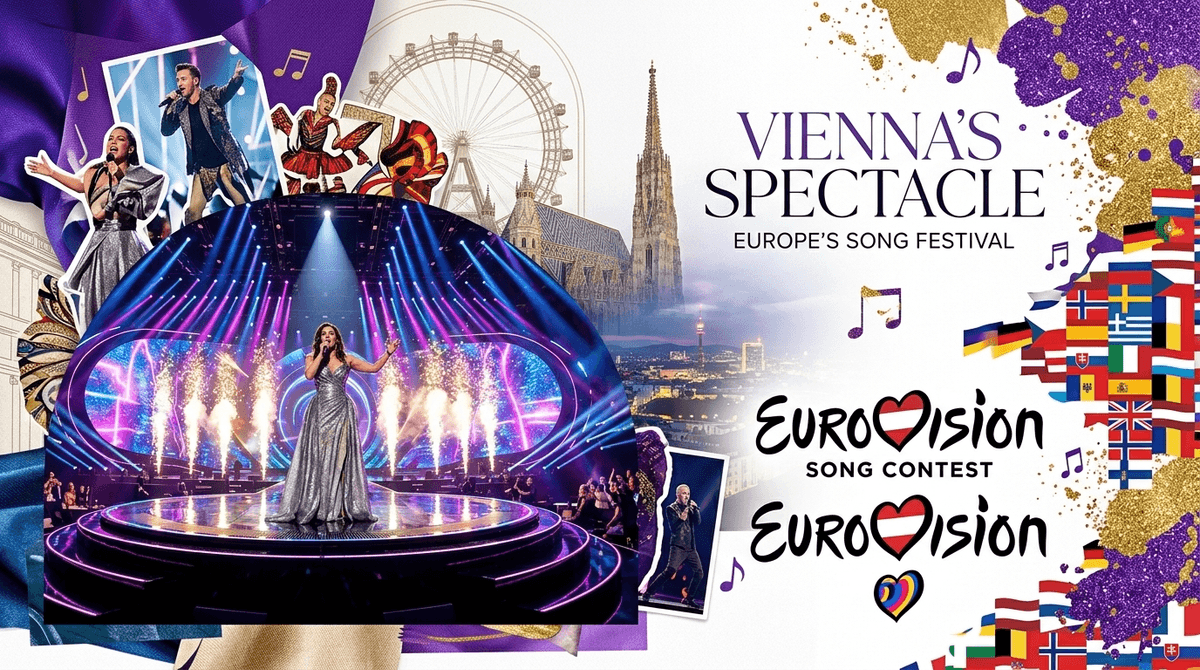
Eurovision is a glittery, high-octane geopolitical mess masquerading as a talent show—and it’s arguably the best thing on television if you know how to navigate the four-hour runtime and the inevitable protest drama. As the contest hits its 70th anniversary in Vienna this week, it’s less of a "singing competition" and more of a massive, neon-soaked crash course in European sociology, avant-garde fashion, and the absolute limits of pyrotechnics.
TL;DR: Eurovision 2026 in Vienna is a 70th-anniversary spectacle that blends world-class staging with high-camp kitsch. For families, the secret weapon is the Family Show—a non-televised afternoon rehearsal that is identical to the final but happens at a human hour. It’s a perfect entry point for global culture and geography, provided you’re ready for some "Euro-chaos" and the occasional political boycott.
Let’s be real: Eurovision has never been "just about the music." It was literally founded to bring a war-torn continent together, and 70 years later, the friction is still the point. In Vienna this year, the atmosphere is charged. Between the milestone anniversary and the ongoing debates over participating nations, the "chaos" in the subtitle isn’t hyperbole—it’s the brand.
If your kid is watching, they’re going to see flags, they’re going to hear booing (or strategic "anti-booing" sound mixing), and they’re going to see performers using their three minutes to make a statement. It’s not something to shield them from; it’s the best possible opening to talk about why countries don't always get along and how art becomes a proxy for politics.
You can’t go into Eurovision expecting a standard Top 40 concert. To enjoy it, you have to appreciate the three distinct lanes every entry falls into:
1. The "Ethno-Bop"
This is the sweet spot. It’s when a country takes a traditional instrument (think a Bulgarian bagpipe or a Finnish kantele) and mashes it into a heavy techno beat. It’s usually high-energy, visually stunning, and the reason most kids get hooked. It feels like a video game boss battle come to life.
2. The "Serious Ballad"
Every year, about five countries decide to bring the mood down with a dramatic, mid-tempo song about heartbreak or world peace. Unless the singer is literally on fire or suspended from a 50-foot crane, this is usually the "snack break" portion of the evening.
3. The "What Did I Just Watch?" (The Joke Entry)
From guys in giant hamster wheels to grandmother groups baking bread on stage, the "joke" entry is a Eurovision staple. These acts are leaning into the camp, and they’re usually the ones kids remember most. They aren't trying to win; they're trying to become a meme.
The Grand Final is a marathon. By the time the voting starts—which is the best part for data nerds and geography buffs—it’s usually midnight in London and 1:00 AM in Vienna. If you aren't down for a late-night sugar crash, look for the Family Show.
The Family Show is the full dress rehearsal held on Saturday afternoon. It is exactly the same production, the same costumes, and the same performances, but without the live voting segments (they use "dummy" results to test the graphics). It’s the pro move for families who want the spectacle without the sleep deprivation. If you're watching the televised version, the Semi-Finals (usually Tuesday and Thursday) are often tighter, weirder, and more manageable than the four-hour Saturday finale.
Eurovision is a "lean-in" experience. If you just leave it on in the background, it’s just noise. If you engage with it, it’s a masterclass in several skills:
- The Geography Game: Keep a map (or Google Earth) open. When a country is introduced, find it. Talk about why Cyprus always gives Greece 12 points and why the Scandinavian countries move in a pack. It’s a lesson in "voting blocs" that makes more sense than any civics textbook.
- The Data Dive: The voting is complex. It’s a mix of professional juries and public "televoting." For kids who like math or spreadsheets, tracking the scores as they come in is the highlight.
- Language Curiosity: While many songs are in English to appeal to a broader audience, the best ones usually aren't. If a song hits, it's a great excuse to fire up Duolingo or look up the lyrics in the original language.
The content is generally "family-friendly" in the sense that there’s no graphic violence or explicit language (the EBU is very strict about the three-minute rule). However, "Eurovision friendly" includes a high degree of theatricality: skimpy costumes, suggestive choreography, and pyrotechnics that would make a 1980s hair metal band blush. It’s all very "Vegas-meets-Olympics." If your family is sensitive to gender-bending performances or flamboyant self-expression, Eurovision isn't going to hide that—it celebrates it.

Q: Is Eurovision appropriate for a 7-year-old? Yes, but they’ll probably find the ballads boring and the voting segment confusing. The "Family Show" or the Semi-Finals are better entry points. The costumes are theatrical and sometimes revealing, but in a "circus" way rather than a "gritty" way.
Q: Why is Australia in Eurovision? The short answer: they love it there. The long answer: it’s about the broadcaster (SBS) being part of the European Broadcasting Union. It’s a great "wait, what?" moment to research with your kid.
Q: How long is the Eurovision Grand Final? It’s a beast. Usually 4 hours. The first 2 hours are the songs, the last 2 hours are the voting and the winner’s encore. If you’re watching live in the US, it’s a perfect Saturday afternoon watch. If you’re in Europe, it’s a "stay up late" event.
Q: Where can I watch Eurovision 2026? In the US, it’s usually on Peacock. In the UK, it’s the BBC. Everywhere else, the Eurovision Song Contest YouTube Channel often livestreams it, though it might be geo-blocked depending on local broadcast rights.
Eurovision is the one time of year when the whole world agrees to be deeply, unapologetically weird together. It’s a celebration of "too muchness." If you can ignore the occasional mid-tempo ballad and the groan-worthy host jokes, it’s a fantastic way to expand a kid’s cultural horizon beyond the usual domestic pop culture bubble.
- For more high-energy viewing, check out our best shows for kids list.
- If the music sparked an interest in performance, see our best apps for creative kids.
- Explore more global culture through our digital guide for elementary schoolers.